
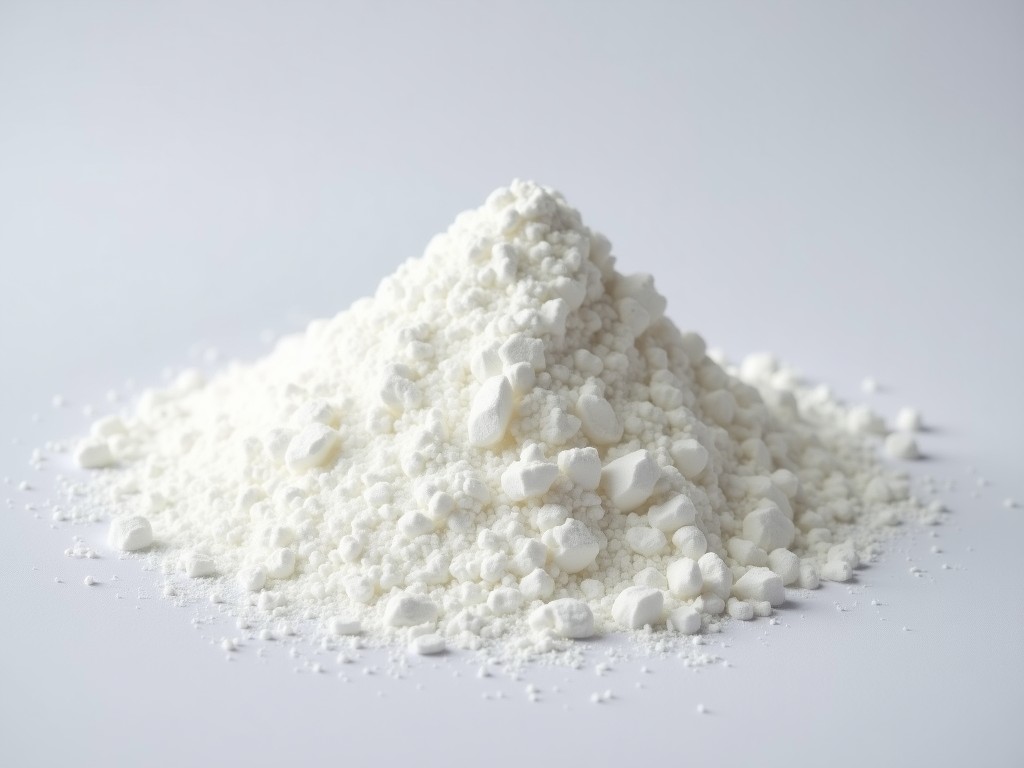
Calcium Carbonate Powder Exporter
Calcium Carbonate Powder Exporter – Technical Overview
Calcium carbonate (CaCO₃) powder is a widely used inorganic filler derived from limestone, marble, or precipitated synthesis. Its performance in industrial formulations depends on chemical purity, particle size distribution, whiteness, and surface treatment.
Chemical Composition and Purity
Typical grades contain 98%–99.5% CaCO₃ by weight, with the remainder consisting of silica, magnesium oxide, and trace metals. Loss on ignition (LOI) values below 0.5% indicate minimal moisture and volatile content, which is critical for polymer processing where volatiles can cause defects.
X‑ray fluorescence (XRF) analysis is routinely used to verify elemental composition, while acid‑insoluble residue testing quantifies silicate impurities that could affect abrasiveness in high‑speed extrusion.
Physical Properties
Bulk density ranges from 0.5 g/cm³ for loosely packed grades to 1.1 g/cm³ for compacted powders, influencing dosing accuracy in gravimetric feeders. Specific gravity of the solid phase is approximately 2.71, which contributes to reinforcement stiffness in composite matrices.
Whiteness measured by ISO brightness typically falls between 85% and 98%, with higher values preferred in coatings and paper where opacity and color stability are required. Mohs hardness of 3 ensures the powder is non‑abrasive to most processing equipment while still providing reinforcement.
Moisture content is kept below 0.2% through controlled drying and packaging under inert conditions, preventing hydrolysis reactions in moisture‑sensitive resins such as polyurethanes.
Particle Size Distribution and Morphology
Laser diffraction analysis provides D10, D50, and D90 values; typical D50 ranges from 1 µm for ultrafine grades to 20 µm for standard filler grades. Narrow distributions improve packing efficiency and reduce viscosity spikes in high‑filled systems.
Morphology varies from rhombohedral crystals in ground limestone to scalenohedral shapes in precipitated calcium carbonate (PCC). Surface area, measured by BET, can range from 5 m²/g for coarse grades to over 25 m²/g for nano‑precipitated grades, affecting polymer interfacial adhesion.
Production Overview
Ground calcium carbonate (GCC) is produced by crushing, grinding, and classifying limestone or marble in closed‑circuit mills with air classifiers to achieve target particle sizes. PCC is synthesized via carbonation of calcium hydroxide slurry, allowing precise control over crystal form and size.
Post‑milling, the powder may undergo surface treatment with stearic acid, silanes, or coupling agents to improve compatibility with hydrophobic polymers. Each treatment step is monitored by Fourier‑transform infrared spectroscopy (FTIR) to confirm functional group attachment.
Applications – Why the Powder Fits Specific Industries
In polyvinyl chloride (PVC) compounds, calcium carbonate acts as a cost‑effective rigidity enhancer while improving flame retardancy through its endothermic decomposition at ~825 °C. The filler’s low oil absorption number prevents excessive plasticizer migration, maintaining long‑term flexibility.
For paper coating, the high brightness and controlled particle size provide excellent light scattering, increasing opacity without compromising runnability on high‑speed presses. Its platy morphology in certain PCC grades improves coating smoothness and ink holdout.
In sealants and adhesives, the powder contributes to thixotropy and sag resistance; surface‑treated grades reduce agglomeration, ensuring uniform dispersion and consistent cure rates across batches.
- PVC pipe and profile extrusion
- Automotive under‑body coatings
- Thermoplastic elastomer compounds
- Paint and ink pigments
- Construction joint fillers
Quality Control and Testing
Each batch undergoes a standardized test protocol: laser diffraction for particle size, XRF for chemical purity, loss on ignition for moisture, ISO brightness for whiteness, and oil absorption number (OAN) for resin compatibility. Results are recorded in a batch traceability system linked to the shipment documentation.
Statistical process control (SPC) charts monitor D50 and brightness trends; any deviation beyond ±2σ triggers a hold and investigation before release. This approach reduces the risk of off‑spec material reaching the customer’s production line.
Packaging Options
Packaging is selected based on particle size, flowability, and customer handling equipment. Fine grades (<5 µm D50) are typically packed in multi‑wall paper bags with polyethylene liners to prevent moisture ingress and dust emission. Coarser grades can be shipped in bulk polypropylene big bags (500 kg–1 t) with top‑spout discharge for pneumatic conveying.
- 25 kg multi‑wall paper bag + inner PE liner
- 500 kg PP big bag with discharge spout
- 1 t bulk container liner bag for ship‑hold loading
- Custom palletized configurations upon request
Export Logistics and Compliance
Shipments are prepared according to INCOTERMS® 2020 terms commonly FOB or CIF, with full documentation including commercial invoice, packing list, certificate of analysis, and material safety data sheet (MSDS). Hygroscopic grades are shipped with desiccant packs and sealed container liners to maintain moisture limits during transit.
Lead times depend on order volume and packaging type; standard bagged orders typically leave the port within 7‑10 working days after receipt of confirmed letter of credit or advance payment. Custom surface treatments may add 3‑5 days for process validation.
Typical Specifications
| Property | Typical Range | Test Method |
|---|---|---|
| CaCO₃ Purity (%) | 98.0 – 99.5 | XRF / Titrimetric |
| Loss on Ignition (%) | ≤0.5 | ASTM D4373 |
| ISO Brightness (%) | 85 – 98 | ISO 2470 |
| D50 (µm) | 1 – 20 (grade dependent) | Laser Diffraction |
| Oil Absorption Number (g/100g) | 15 – 35 | ASTM D281 |
| Moisture Content (%) | ≤0.2 | Karl Fischer |
Frequently Asked Questions
Can the particle size be customized for specific processing equipment?
Yes, grinding mills and classifiers can be adjusted to produce D50 values from 1 µm to 30 µm. Customers provide target D50, D90, and flowability requirements; trial batches are evaluated before full‑scale production.
What information is needed to prepare a quotation?
Required details include desired grade (GCC or PCC), purity level, particle size distribution, whiteness, any surface treatment, order quantity, preferred packaging, and delivery incoterm. Providing the end‑use application helps us recommend suitable additives.
How is product quality verified before shipment?
Each lot is accompanied by a certificate of analysis reporting results for purity, loss on ignition, brightness, particle size, and moisture. Independent third‑party testing can be arranged upon request for additional assurance.
For technical data sheets, sample requests, or to discuss a custom specification, please contact our export team. We provide detailed engineering support to ensure the calcium carbonate powder meets your performance and processing targets.
Request Technical Consultation