Calcium Carbonate Powder in Construction Materials
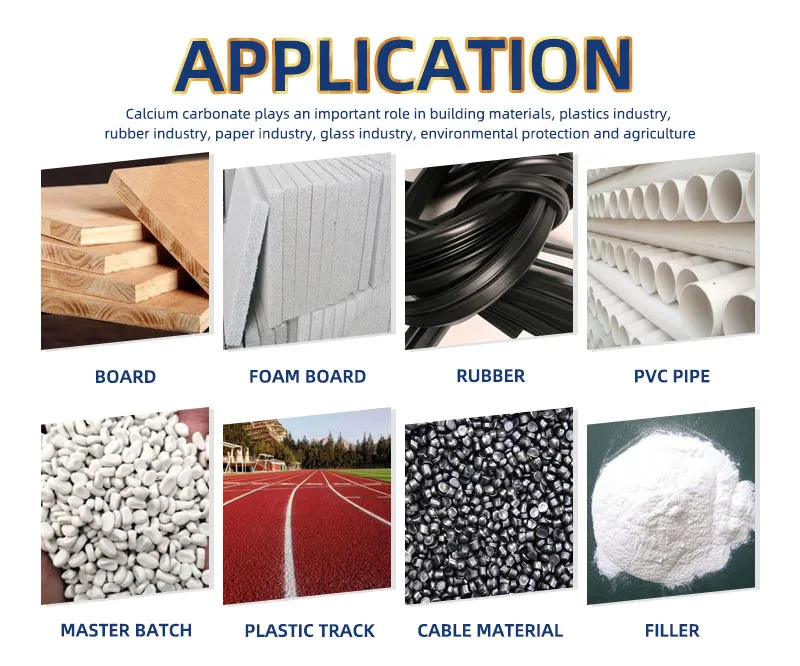
Ultrafine heavy calcium carbonate powder plays a vital role in the paper industry by enhancing brightness, opacity, and printability, resulting in high-quality super white paper products. Its fine particle size ensures uniform distribution, improving the physical properties of paper without compromising its aesthetic appeal.
In plastics and PVC manufacturing, this heavy calcium carbonate variant serves as a cost-effective reinforcing agent, improving mechanical strength and dimensional stability while reducing material costs. Its compatibility with polymers facilitates the production of lightweight, durable products with superior performance characteristics.
Overall, ultrafine heavy calcium carbonate powder exemplifies how precision and purity in raw materials can drive innovation and efficiency across diverse industrial applications.
Enhancing Concrete Performance and Durability
Calcium Carbonate Powder is a vital and essential component in diverse construction materials, playing a profound and irreplaceable role in enhancing their overall performance across multiple dimensions. The construction industry, a cornerstone of global development, has long pursued materials that perfectly balance exceptional durability with economic cost-effectiveness. Calcium carbonate powder emerges as a standout solution, impeccably meeting these dual demands. When integrated into concrete, it meticulously adjusts the particle size distribution of the mixture, optimizing the packing density of solid particles to minimize voids between aggregates and cement particles. This compact structure not only substantially enhances compressive strength—allowing structures like high-rise buildings and large-span bridges to bear heavier loads—but also drastically reduces permeability. This reduced permeability acts as a robust barrier, preventing water, chloride ions, and other harmful substances from seeping into the concrete matrix. Over extended periods, such seepage can cause internal corrosion of steel reinforcements and degradation of the concrete itself. By inhibiting this, calcium carbonate powder significantly extends the service life of buildings and structures, reducing the frequency of maintenance, repairs, and reconstructions, which translates to substantial savings in economic resources and labor for construction projects.
Optimizing Wall Materials for Modern Construction
In the production of various wall materials, from widely used cement bricks to high-performance autoclaved aerated concrete blocks gaining popularity in modern construction, calcium carbonate powder serves as a critical additive with precise regulatory functions. It plays a key role in fine-tuning the setting time of raw material mixtures, a factor directly influencing production efficiency and final quality. By controlling the setting rate, calcium carbonate powder ensures the formation of a uniform internal structure during curing, free from defects like internal cracks or uneven density. This uniform structure endows wall materials with excellent mechanical properties, including sufficient flexural strength and impact resistance, enabling them to withstand external forces during transportation and construction. A notable advantage of wall materials containing an appropriate proportion of calcium carbonate powder is their reduced weight compared to traditional materials. This lightweight characteristic does not compromise strength but instead achieves a harmonious combination of lightness and sturdiness. For construction projects, this translates to a significant reduction in the load on building foundations, allowing for optimized foundation designs that use less concrete and steel, thereby reducing project costs. Furthermore, the lightweight feature simplifies transportation and construction. More material can be loaded per trip, lowering transportation costs and reducing carbon emissions. On site, workers can handle and install the lighter materials more easily and efficiently, shortening construction periods and improving overall productivity.
Contributing to Sustainable Development Goals
Sustainable development has become a core and non-negotiable focus in the global construction industry, as the sector strives to minimize its environmental footprint while meeting growing infrastructure demands. Calcium carbonate powder makes a substantial and multifaceted contribution to advancing this goal. As a naturally occurring mineral, calcium carbonate is widely distributed and abundant globally, with reserves capable of supporting long-term industrial use. Unlike some rare or synthetic raw materials, its mining and processing generate relatively low environmental impact. Modern mining practices prioritize environmental protection, including land reclamation and dust control, further mitigating potential ecological disturbances. Compared to other industrial raw materials like metal ores or synthetic additives, the energy consumption and pollutant emissions associated with calcium carbonate are significantly lower. Integrating calcium carbonate powder into construction materials also plays a pivotal role in reducing dependence on non-renewable resources. It can partially replace materials that are scarce or energy-intensive to produce, such as certain fine aggregates or specialized cementitious materials. This substitution conserves valuable resources and reduces overall energy consumption in the production chain. Additionally, construction materials infused with calcium carbonate powder exhibit superior thermal insulation performance. This creates a more effective thermal barrier between the interior and exterior of buildings, reducing energy required for heating in cold climates and cooling in hot climates, directly supporting global energy-saving and emission-reduction targets.
Advancing Urban and Rural Infrastructure
Urban infrastructure construction, encompassing roads, bridges, tunnels, and municipal pipelines, reaps substantial benefits from the widespread application of calcium carbonate powder. Roads endure constant wear and tear from heavy traffic and harsh environmental conditions. Asphalt mixtures containing calcium carbonate powder exhibit significantly improved wear resistance, as the powder reinforces the asphalt matrix and reduces abrasion from vehicle tires. It also enhances anti-aging properties, slowing degradation from prolonged exposure to sunlight, oxygen, and temperature fluctuations. These roads can withstand heavy traffic loads and extreme weather without significant damage like potholes, cracks, or surface peeling. Bridges and tunnels, which require unparalleled structural stability for public safety, rely on concrete mixed with calcium carbonate powder to enhance durability against corrosion. Rainwater, especially in polluted areas, often contains acidic substances that can corrode concrete and steel reinforcements. Calcium carbonate powder modifies the concrete's pore structure and chemical composition, creating a more corrosion-resistant barrier that prevents harmful substances from penetrating deep into the structure, significantly extending service life. Beyond urban areas, rural renovation projects also leverage calcium carbonate powder. In village road construction, it enhances the durability of local materials against agricultural vehicles and harsh conditions. In residential houses and public facilities, calcium carbonate-infused materials improve structural stability and thermal insulation, enhancing living and working conditions for rural residents while adhering to strict environmental protection standards.
Versatility Across Construction Scenarios
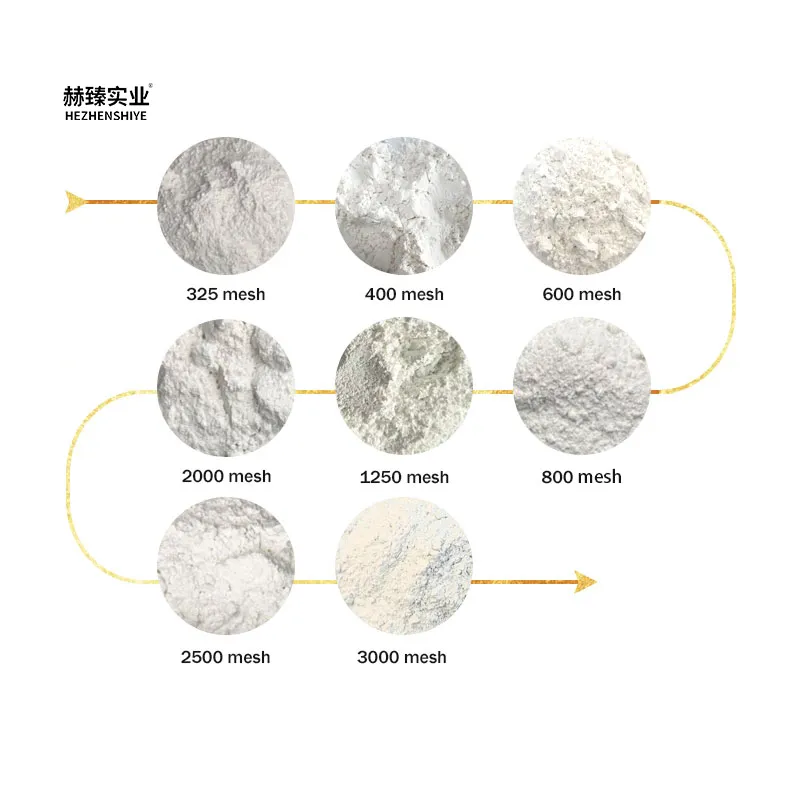
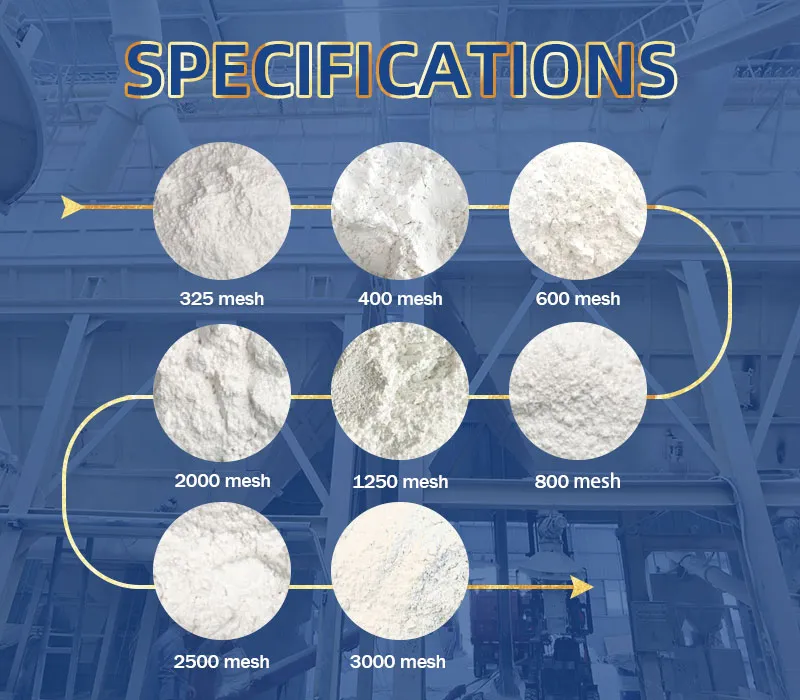
Calcium Carbonate Powder demonstrates remarkable adaptability across a wide array of construction scenarios, thanks to its adjustable properties and compatibility with different material formulations. In regions characterized by high humidity, construction materials containing calcium carbonate powder exhibit superior moisture resistance. The compact structure minimizes the material's water absorption rate, preventing moisture from infiltrating walls, floors, or other structures. This inhibits mold and mildew growth and prevents material deterioration such as warping, swelling, or rotting, ensuring long-term stability. In cold regions where freezing and thawing cycles are a persistent challenge, calcium carbonate powder enhances frost resistance. It reduces porosity, limiting water infiltration and expansion during freezing, thus preventing cracking caused by repeated freeze-thaw cycles. This makes the materials suitable for cold northern climates and high-altitude areas. Moreover, calcium carbonate powder can be processed into a diverse range of particle sizes through specialized grinding and classification technologies. Fine-grained powder, with particles ranging from a few micrometers to tens of micrometers, is ideal for high-performance concrete in high-rise buildings, precision engineering, and decorative materials like wall putty and decorative stones. Coarse-grained powder is well-suited for road construction as a component of asphalt mixtures or as a filling material for foundations, contributing to overall structural integrity. With continuous advancements in processing technologies, such as ultra-fine grinding and surface modification, calcium carbonate powder is poised to play an even more pivotal role in the construction industry.