
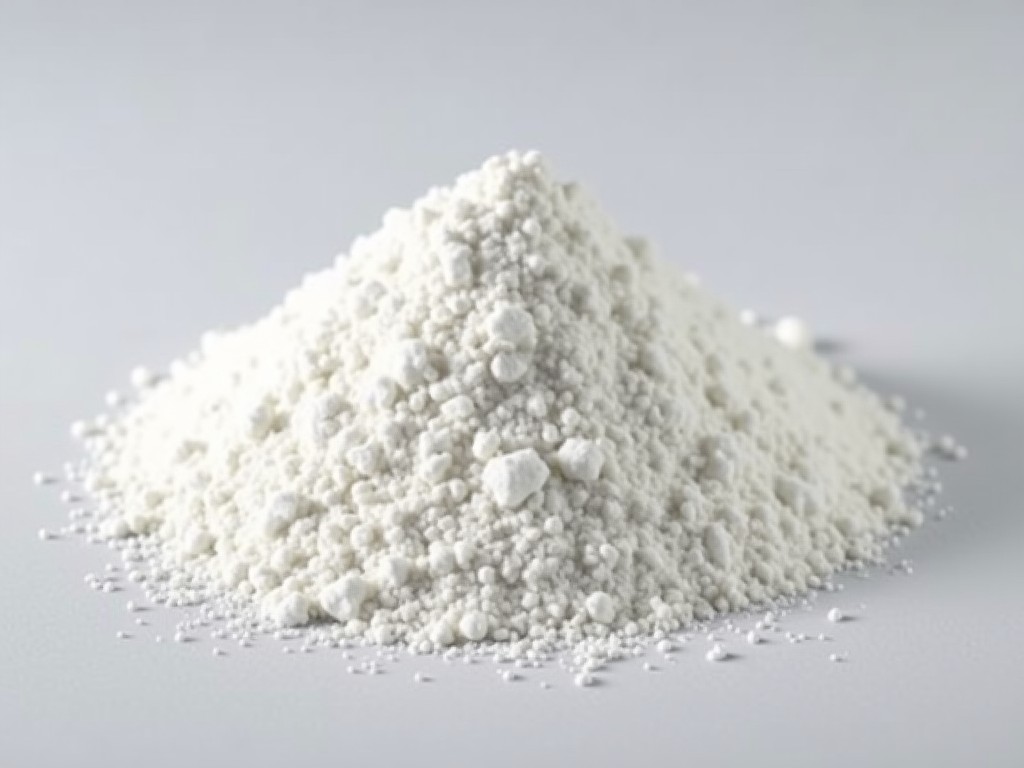
Ce Certification Calcium Carbonate Powder
CE Certified Calcium Carbonate Powder
Product Overview
Calcium carbonate powder is a widely used inorganic filler derived from natural limestone or synthesized via precipitation. The CE‑certified grade meets the safety, health, and environmental requirements of the European Union’s Machinery Directive and related regulations. Typical material characteristics include a calcium carbonate content of 98–99.5 % by weight, a whiteness index above 95, and a controlled particle‑size distribution suitable for polymer compounding.
Technical Specifications
The following table lists typical values for key parameters that influence processing performance and end‑product properties. Exact values can be adjusted according to project requirements and are confirmed during lot‑specific testing.
| Parameter | Typical Value | Unit | Test Method |
|---|---|---|---|
| Calcium carbonate content | 98.5–99.5 | % (wt) | ISO 5988 |
| Whiteness (ISO 2470) | ≥95 | % | ISO 2470 |
| Specific surface area (BET) | 5–12 | m²/g | ASTM D6556 |
| Moisture content | ≤0.2 | % (wt) | ISO 787-2 |
| pH (10 % slurry) | 8.5–9.5 | – | ISO 787-9 |
| D50 particle size | 1.8–3.5 | µm | ISO 13320 |
| Oil absorption (DBP) | 15–25 | g/100g | ASTM D2414 |
| Bulk density (loose) | 0.45–0.60 | g/cm³ | ASTM D1895 |
Applications and Industry Fit
In polyvinyl chloride (PVC) compounds, the filler contributes to increased stiffness and impact resistance while reducing material cost. The narrow particle‑size distribution allows for uniform dispersion, which minimizes agglomeration and improves surface finish of extruded profiles.
For architectural paints and coatings, calcium carbonate provides high hiding power and acts as a rheology modifier that prevents settling. Its alkaline nature helps neutralize acidic degradation products, extending the service life of exterior finishes.
In rubber formulations such as EPDM and NBR, the powder functions as a reinforcing filler that enhances tensile strength and abrasion resistance. Compatibility with common curing systems ensures that vulcanization kinetics remain unchanged, preserving processing windows.
Quality Control and Certification
CE marking is granted after verification that the product complies with the relevant EU directives, including limits on heavy metals and permissible substances. Each production lot undergoes systematic testing for chemical purity, particle size, and moisture content, with results recorded in a traceable batch record.
The manufacturing facility follows ISO 9001 quality‑management procedures, and environmental controls are in accordance with ISO 14001. These standards ensure consistent product performance and support customers’ own compliance obligations.
Packaging and Handling
The powder is supplied in multi‑layer polyethylene bags equipped with an inner moisture‑barrier liner, each bag holding 25 kg net weight. For bulk shipments, the material can be loaded into pneumatic tankers or flexible intermediate bulk containers (FIBCs) with optional nitrogen purging to limit oxidation.
Storage recommendations advise keeping the bags in a dry, well‑ventilated area away from direct sunlight. Under these conditions, the product retains its specified properties for at least 24 months from the date of manufacture.
Customization Options
- Particle‑size adjustment (coarser or finer grades) to match specific processing equipment.
- Surface treatment with stearic acid, silane coupling agents, or fatty acids to improve polymer compatibility.
- Whiteness enhancement through additional bleaching or selection of high‑purity limestone.
- Moisture control levels ranging from <0.1 % to 0.5 % depending on application sensitivity.
- Alternative packaging such as valve bags, bulk bags, or customized pallet configurations.
Frequently Asked Questions
Q: Can the particle size be tailored to my extrusion line?
A: Yes, the D50 can be adjusted within the 1.0–5.0 µm range based on milling conditions and classifier settings.
Q: What information is required before a quotation is issued?
A: Required details include intended application, target filler loading, desired particle size or surface treatment, annual volume, and preferred packaging.
Q: Which surface treatments are available for improved polymer adhesion?
A: Stearic acid coating (1–2 wt %), silane coupling agents (e.g., γ‑methacryloxypropyltrimethoxysilane), and fatty acid esters are offered as standard options.
Q: How is quality inspected for each lot?
A: Each lot undergoes full chemical analysis (ICP‑OES for impurities), laser diffraction particle‑size distribution, BET surface area, moisture content (Karl Fischer), and pH measurement, with results supplied in a certificate of analysis.
Contact for Technical Inquiry
For further technical details, sample requests, or project‑specific pricing, please reach out to our engineering team.