
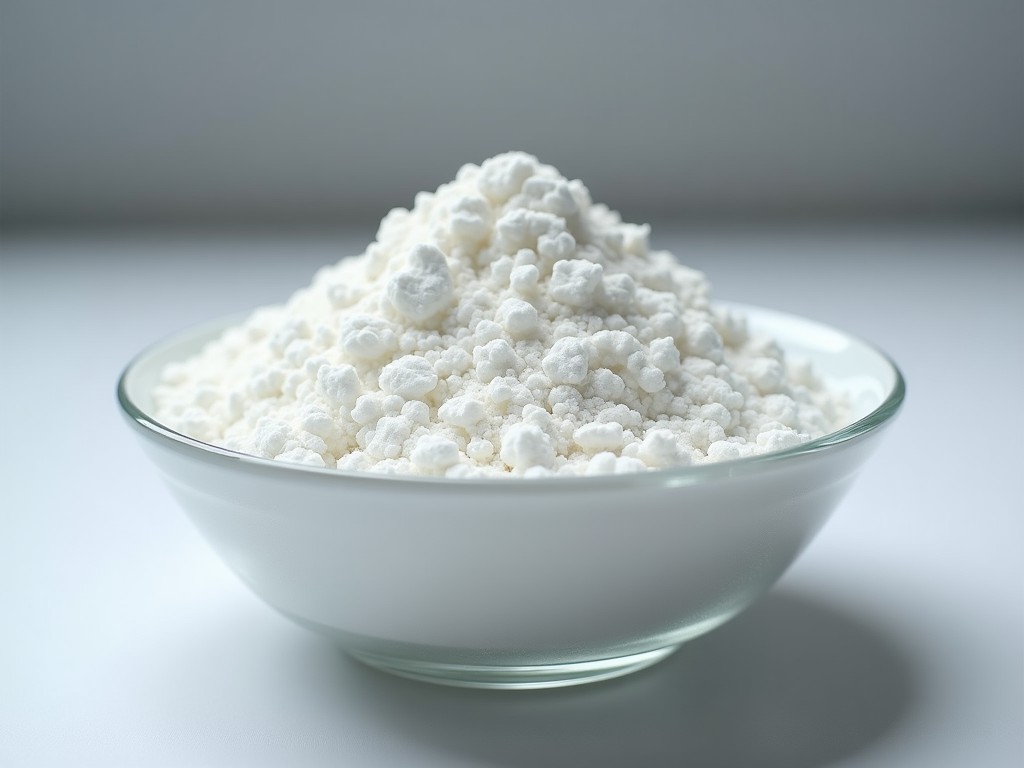
Oem Calcium Carbonate Powder Factory
OEM Calcium Carbonate Powder Factory – Custom Powder Solutions
As an OEM supplier, we produce calcium carbonate powder tailored to the specific particle size, purity, and surface treatment requirements of downstream manufacturers. Our facility operates continuous milling and classification lines that enable tight control over top‑cut and bottom‑cut limits, ensuring consistent feed for compounding, coating, or filler applications.
Material Characteristics
Calcium carbonate (CaCO₃) exists in two primary crystalline forms: calcite (rhombohedral) and aragonite (needle‑like). Our standard product is ground calcite with a specific surface area ranging from 1 to 5 m²/g, depending on the milling grade. The powder is white, with a typical L* value above 92 in CIE Lab space, indicating high brightness suitable for pigment and filler use.
Key parameters that can be adjusted include:
- Particle size distribution (D50) from 0.5 µm to 45 µm
- Top‑cut (D97) controlled to ±2 µm
- Moisture content <0.1% (Karl Fischer)
- Loss on ignition (LOI) ≤45% (theoretical for pure CaCO₃)
Typical Specification Table
| Parameter | Typical Range | Test Method |
|---|---|---|
| D50 (micrometers) | 0.5 – 45 | Laser diffraction (ISO 13320) |
| D97 (micrometers) | ≤ 2 µm tolerance | Laser diffraction |
| Brightness (L*) | ≥ 92 | ISO 2470 (reflectance) |
| Moisture content | <0.1% | Karl Fischer titration |
| Loss on ignition | ≤45% | Thermogravimetric analysis (TGA) |
Production Capabilities
Our factory runs three parallel grinding circuits equipped with jet mills, ball mills, and air classifiers. Each circuit can be isolated to produce different grades without cross‑contamination. The combined annual capacity exceeds 120,000 tonnes of finished powder, allowing us to accommodate both trial batches (<5 tonnes) and long‑term supply contracts.
Process control is maintained via inline laser diffraction sensors and periodic manual sampling. Adjustments to feed rate, classifier speed, and grinding pressure are made in real time to keep the particle size distribution within the agreed specification window.
Applications in Industry
Calcium carbonate functions as a filler, extender, and sometimes a functional additive. Its value derives from a combination of low cost, high whiteness, and ability to modify rheology and mechanical properties of the host matrix.
- Plastics & Compounding: Increases stiffness and reduces shrinkage in PVC, PP, and PE while improving heat deflection temperature.
- Paints & Coatings: Provides hiding power, reduces TiO₂ demand, and enhances scrub resistance in architectural emulsions.
- Rubber: Acts as a reinforcing filler in EPDM and SBR, improving tensile strength and abrasion resistance.
- Adhesives & Sealants: Adjusts viscosity and reduces formulation cost without compromising bond strength.
- Paper: Used as a coating pigment to improve brightness and ink hold‑out.
Quality Assurance & Testing
Every lot undergoes a full certificate of analysis (CoA) that includes particle size distribution, moisture, LOI, brightness, and trace metal content. Sampling follows ISO 2859‑1 (AQL 0.65) for critical attributes.
Our laboratory is equipped with:
- Laser diffraction particle size analyzer (repeatability ±0.5 µm)
- X‑ray fluorescence (XRF) for elemental purity (Fe, Mg, Si <0.02%)
- pH meter (slurry pH 8‑9)
- Thermogravimetric analyzer for LOI and decomposition temperature
Customization Options
Beyond standard grades, we can modify the powder surface to improve compatibility with specific polymers or resins. Surface treatment options include stearic acid coating, silane coupling agents, or fatty acid esters, each applied at a controlled dosage to achieve a target hydrophobic balance.
- Particle size tailoring (custom D50, D97, D10)
- Surface treatment (steartic acid, silane, zirconate)
- Moisture reduction (drying to <0.02%)
- Special packaging (anti‑static bags, moisture barrier liners)
- Private labeling and OEM branding
Packaging & Logistics
Standard packaging consists of 25 kg multi‑wall paper bags with an inner polyethylene liner, palletized at 40 bags per pallet (1 tonne). For bulk shipments we offer 1‑tonne flexible intermediate bulk containers (FIBCs) with optional moisture‑barrier liners. All pallets are stretch‑wrapped and fitted with corner protectors for safe handling.
Lead time from order confirmation to ex‑works readiness is typically 10‑15 working days for stock grades and 20‑25 working days for customized surface‑treated grades, depending on batch size and testing requirements.
Frequently Asked Questions
Can the particle size distribution be adjusted after a sample is approved?
Yes. Once a target D50 and D97 are confirmed, we lock the classifier settings and feed rate for the production run. Any deviation beyond the agreed tolerance triggers a hold and re‑work before shipment.
What information is required to obtain a quotation?
We need the desired particle size range (D50, D97), any surface treatment specification, required quantity per shipment, preferred packaging, and the destination port for freight estimation.
Are you able to provide regulatory documentation for food‑contact or pharmaceutical use?
Our calcium carbonate is produced from limestone quarried under controlled conditions. While the base material meets FCC and USP purity criteria, additional validation steps (e.g., endotoxin testing) would be performed on a project‑by‑project basis upon request.
Get a Quote
To discuss your specific calcium carbonate powder requirements, please provide the details outlined above. Our technical team will respond with a formal quotation and estimated lead time.
Request a Quote