
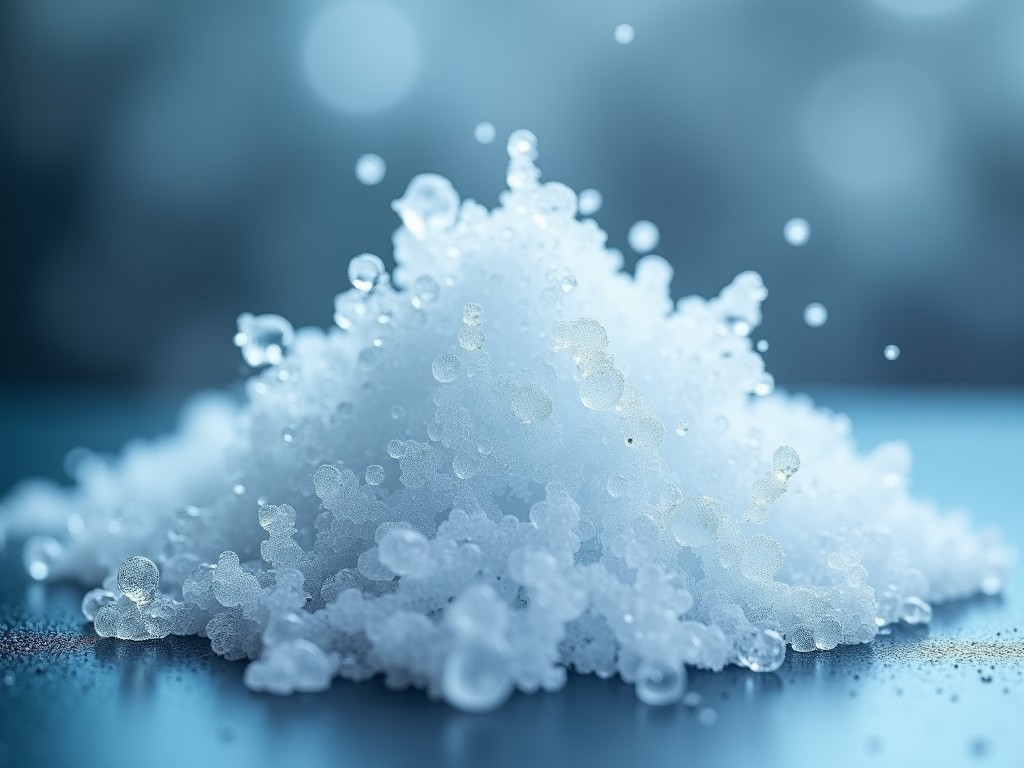
Buy Fumed Silicon Dioxide Dry Water
Buy Fumed Silicon Dioxide Dry Water
Fumed silicon dioxide dry water is a free‑flowing powder formed by dispersing ultrafine silica nanoparticles in a minimal amount of water, then removing the bulk liquid under controlled conditions. The result is a hygroscopic, low‑density aggregate that retains the high surface area of fumed silica while behaving like a dry solid for handling and dosing.
What Is Fumed Silicon Dioxide Dry Water?
The product originates from flame‑hydrolysis of silicon tetrachloride, yielding primary particles typically 5–50 nm in diameter. During the dry‑water process, a precise quantity of water is adsorbed onto the silica surface, forming a stable hydration shell that prevents agglomeration. When the water is subsequently removed under low‑pressure drying, the particles remain separated, delivering a powder that pours freely and disperses readily in polar media.
Key Technical Characteristics
| Property | Typical Value | Note |
|---|---|---|
| Specific Surface Area (BET) | 150–300 m²/g | Dependent on fumed grade |
| Primary Particle Size | 5–50 nm (aggregates 0.1–0.5 µm) | Measured by TEM/DLS |
| pH (5 % slurry) | 3.5–4.5 | Acidic due to surface silanols |
| Loss on Drying (105 °C, 2 h) | ≤0.5 wt % | Residual adsorbed water |
| Bulk Density | 30–60 g/L | Highly porous, low tap density |
Manufacturing Overview
Production begins with high‑purity fumed silica generated in a hydrogen‑oxygen flame reactor. The silica is then transferred to a controlled‑humidity chamber where a metered amount of deionized water is introduced via spray drying. The water forms a monolayer on each nanoparticle, creating the dry‑water structure. Finally, the product undergoes low‑temperature vacuum drying to remove excess moisture while preserving the surface hydration layer. Each step is monitored for particle size distribution and water content to ensure batch‑to‑batch consistency.
Typical Applications
- Anti‑settling agent in paints and coatings: The high surface area and hydrophilic silica network inhibit pigment sedimentation by increasing the yield stress of the liquid phase without raising viscosity significantly.
- Carrier for active ingredients in agrochemicals: The dry‑water particles adsorb and protect sensitive compounds, releasing them gradually when exposed to soil moisture, which improves field efficacy.
- Thickener for silicone‑based sealants: When dispersed, the silica forms a reversible hydrogen‑bonded network that imparts shear‑thinning behavior, facilitating extrusion while maintaining sag resistance after curing.
- Free‑flow additive in powdered detergents: The low bulk density and non‑caking nature improve pourability and prevent clumping during storage and transport.
Quality Control & Testing
Each lot undergoes laser diffraction for agglomerate size, BET analysis for surface area, and thermogravimetric analysis to quantify bound water. pH is measured in a 5 % aqueous dispersion, and loss on drying is verified by gravimetric methods. A visual flow test (angle of repose) confirms the powder’s handling characteristics. Documentation includes a certificate of analysis that references the specific test methods (ASTM, ISO) used.
Specification Table
| Parameter | Standard Range | Customizable? |
|---|---|---|
| Specific Surface Area | 150–300 m²/g | Yes – select grade |
| pH (5 % slurry) | 3.5–4.5 | Limited – surface treatment |
| Loss on Drying | ≤0.5 wt % | Yes – drying cycle |
| Bulk Density | 30–60 g/L | Yes – milling conditions |
Frequently Asked Questions
- Can the particle size distribution be adjusted?
- Yes. By varying the flame reactor residence time and selecting different silica grades, the primary particle size and resulting aggregate size can be shifted within the typical 5–50 nm range.
- What information is required before quotation?
- Desired surface area, pH tolerance, moisture content, order quantity, and any specific packaging or labeling requirements.
- How is quality inspected for each batch?
- Each batch is tested for BET surface area, TGA water content, pH, loss on drying, and flow properties. Results are recorded on the certificate of analysis.
- What packaging options are available?
- Standard options include 25 kg multi‑wall paper bags with polyethylene liner, 500 kg flexible intermediate bulk containers, and custom‑sized bags upon request.
- Are export shipments protected against moisture?
- Yes. Products are packed with desiccant pouches and sealed in moisture‑barrier liners to maintain specification limits during transit.
Request a Quote or Sample
To discuss your specific requirements, obtain a formal quotation, or arrange a sample shipment, please contact our technical sales team. Provide the target surface area, pH range, and anticipated usage volume to accelerate the evaluation process.