
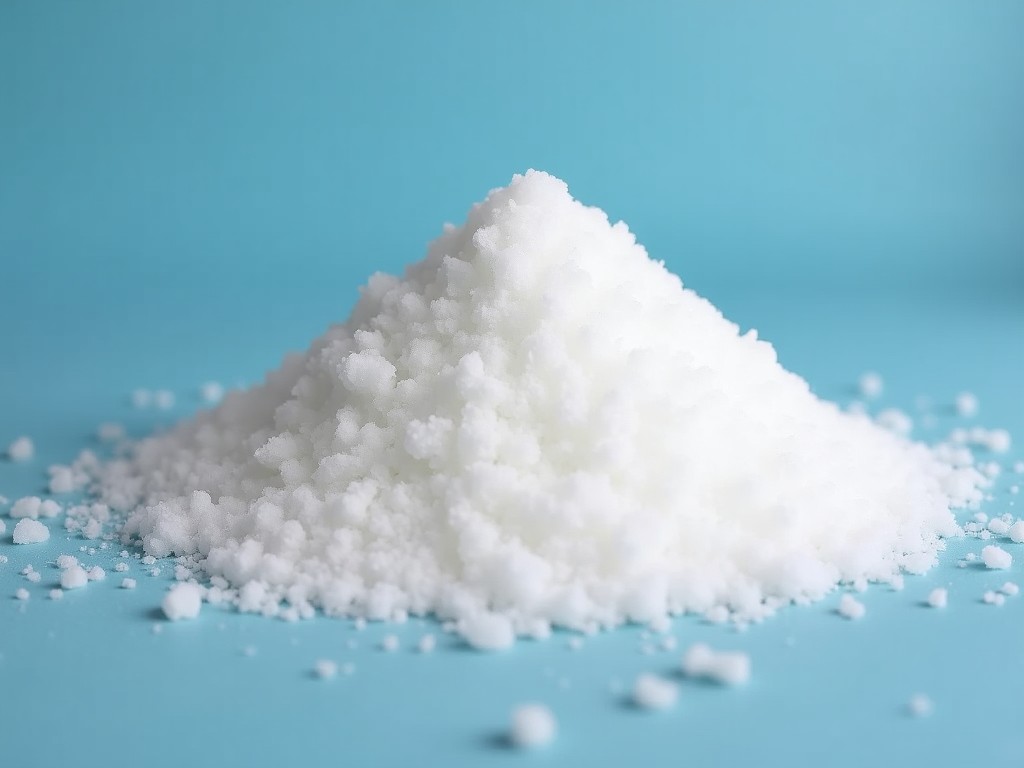
Buy Silica Anti Caking Flow Agent
Silica Anti-Caking Flow Agent for Bulk Powders
Anti-caking flow agents are finely divided solids added to powdered materials to reduce interparticle adhesion and improve flowability during handling, conveying, and dosing. Silica‑based agents achieve this by forming a thin, rigid coating on individual particles that increases the effective angle of repose and lowers the cohesive force between granules.
Key Technical Characteristics
- Typical primary particle size: 5 µm – 20 µm (laser diffraction)
- Specific surface area (BET): 150 m²/g – 250 m²/g
- Loss on drying (105 °C, 2 h): ≤ 0.5 %
- pH (10 % aqueous slurry): 5.5 – 7.0
- Bulk density: 0.30 g/cm³ – 0.45 g/cm³
Mechanism of Action
When silica particles adsorb onto the surface of hygroscopic or sticky granules, they create a physical barrier that prevents direct solid‑solid contact. This barrier reduces the formation of liquid bridges and diminishes van der Waals attraction, which are the main causes of caking. The effectiveness scales with the silica’s surface area and the uniformity of the coating, which is why a narrow particle‑size distribution and controlled surface treatment are critical.
Typical Applications
In food processing, silica anti‑caking agents keep powdered sugar, salt, and spice blends free‑flowing under humid storage conditions, which prevents clogging of auger feeders and ensures consistent batch weights. In pharmaceutical manufacturing, they improve the flow of active‑ingredient blends through tablet presses, reducing weight variation and minimizing machine downtime. The chemical industry uses them in fertilizer granules and detergent powders to maintain uniform particle size during bulk transport, while plastics compounders rely on silica to avoid agglomeration of pigment powders during extrusion.
Performance Comparison
| Property | Silica Anti‑Caking Agent | Magnesium Stearate | Calcium Silicate |
|---|---|---|---|
| Typical dosage (wt % of bulk) | 0.1 % – 0.5 % | 0.2 % – 1.0 % | 0.5 % – 2.0 % |
| Angle of repose reduction (°) | 3 – 6 | 2 – 4 | 1 – 3 |
| Moisture uptake at 80 % RH (%, 24 h) | ≤ 0.2 | 0.5 – 1.0 | 0.3 – 0.6 |
| Maximum service temperature (°C) | 250 | 180 | 300 |
Customization Options
Surface treatment with silanes or polymers can tailor the hydrophobicity of the silica, allowing the agent to perform in highly hygroscopic environments without attracting moisture. Particle‑size distribution can be narrowed to a D50 of 8 µm for applications requiring minimal impact on final product density, or broadened to improve interlocking in cohesive blends. Dosage recommendations are provided based on the bulk material’s flow function test results, ensuring the additive level is just sufficient to achieve the target flowability without affecting downstream processing characteristics such as compressibility or solubility.
Quality Control & Testing
Each batch undergoes laser diffraction for particle size, BET analysis for surface area, thermogravimetric analysis for loss on drying, and pH measurement in a 10 % slurry. Flow performance is validated using a standard Hall flowmeter and shear cell testing to quantify the angle of repose and cohesive strength before and after additive incorporation. Certificates of analysis include these parameters, and additional tests such as heavy‑metal content or food‑grade compliance are available upon request.
Frequently Asked Questions
Can the particle size be customized? Yes, we can adjust the milling and classification steps to meet a D50 range of 5 µm – 25 µm based on your process requirements.
What information is needed for a quotation? Please provide the base material type, target flowability metric (e.g., angle of repose or flow rate), required dosage range, and any regulatory constraints (food grade, pharma grade, etc.).
Is the product available in food‑grade certification? Food‑grade silica compliant with FCC and EU regulations is offered; documentation can be supplied with the shipment.
How is the product packaged for export? Multi‑wall paper bags with inner polyethylene liner (25 kg net) are standard; bulk sacks (500 kg) and anti‑static liners are available on request.
What is the typical lead time? Standard lead time is 2‑3 weeks for stocked grades; custom surface treatments may extend to 4‑6 weeks.
To obtain a sample, request a detailed technical data sheet, or discuss a formulation trial, please contact our technical team using the link below.
Contact Technical Team