
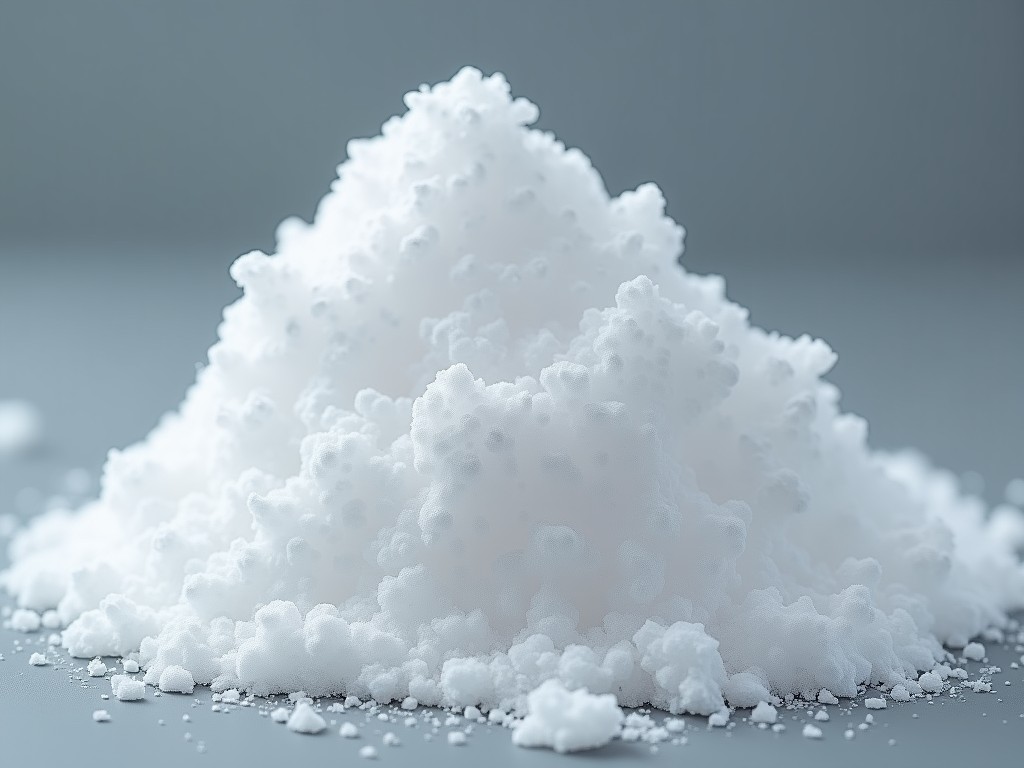
Buy Silicon Dioxide Safe For Pregnancy
Buy Silicon Dioxide Safe for Pregnancy
Silicon dioxide (SiO₂) exists as a crystalline or amorphous mineral that is chemically inert, thermally stable, and insoluble in water. Its primary value in industrial formulations stems from its high surface area, controllable porosity, and ability to modify powder flow without participating in chemical reactions.
For materials destined for prenatal supplements, pharmaceutical excipients, or food‑grade applications, impurity thresholds are far stricter than for general industrial grades. Limits on heavy metals (lead, arsenic, cadmium, mercury), residual solvents, and microbial content are defined by pharmacopeial standards such as USP <231>, EP 5.1.8, and EFSA guidance on contaminants in food additives.
Key Specifications
| Parameter | Typical Value | Test Method |
|---|---|---|
| Assay (SiO₂) | ≥ 99.5 % | gravimetric loss on ignition |
| Loss on Ignition (LOI) | ≤ 0.5 % | TG‑A 1000 °C |
| Particle Size D50 | 5–20 µm (adjustable) | Laser diffraction |
| Specific Surface Area (BET) | 150–300 m²/g | BET N₂ adsorption |
| Lead (Pb) | ≤ 0.5 ppm | ICP‑MS |
| Arsenic (As) | ≤ 0.2 ppm | ICP‑MS |
| Cadmium (Cd) | ≤ 0.1 ppm | ICP‑MS |
| Mercury (Hg) | ≤ 0.1 ppm | ICP‑MS |
| Total Aerobic Microbial Count | ≤ 10³ CFU/g | USP <61> |
| Yeast & Mold | ≤ 10² CFU/g | USP <61> |
These limits ensure that exposure to heavy metals, residual solvents, and microbial contaminants remains well below thresholds established by regulatory bodies such as the USP, EP, and EFSA for substances ingested during pregnancy.
Why Silicon Dioxide is Suitable for Pregnancy‑Related Applications
Its inert nature means it does not participate in metabolic pathways, nor does it interfere with the bioavailability of active nutrients such as folic acid, iron, or DHA when used as an excipient.
When used as an anti‑caking agent or flow aid in powdered prenatal supplements, the particle size distribution directly influences blend uniformity and content uniformity across doses, which is critical for accurate nutrient delivery.
Manufacturing and Quality Control
Production typically involves precipitation of silica from silicate solutions under controlled pH and temperature, followed by filtration, washing, and thermal treatment to achieve the desired porosity and surface characteristics.
Each lot undergoes laser diffraction analysis to verify D50 between 5 and 20 µm, depending on the grade, ensuring consistent flow behavior in high‑speed blending equipment.
Loss on ignition (LOI) is measured by thermogravimetric analysis, with acceptable values under 0.5 % for pharmaceutical grades, confirming minimal volatile content that could affect stability.
Applications in Prenatal Nutrition and Pharmaceuticals
Common uses include:
- Anti‑caking agent in powdered multivitamin and mineral blends
- Flow enhancer for tablet excipients containing folic acid or iron salts
- Carrier for volatile oils in nausea‑relief formulations (e.g., ginger or peppermint)
- Stabilizer in emulsified vitamin D preparations to prevent phase separation
- Adsorbent for moisture control in hygroscopic ingredients such as probiotic powders
Handling, Storage, and Safety
Although silicon dioxide is classified as non‑hazardous, proper handling practices protect both workers and product integrity by minimizing dust generation and preventing contamination.
Store in a dry, sealed container at temperatures below 30 °C to prevent moisture adsorption that could affect flow properties and increase the risk of microbial growth.
Inhalation of fine dust should be avoided; use local exhaust ventilation or wear N95 respirators when transferring bulk powder, and ensure that work surfaces are cleaned with HEPA‑filtered vacuum systems.