
China Freshwater Diatomaceous Earth Supplier
Freshwater Diatomaceous Earth – Technical Overview
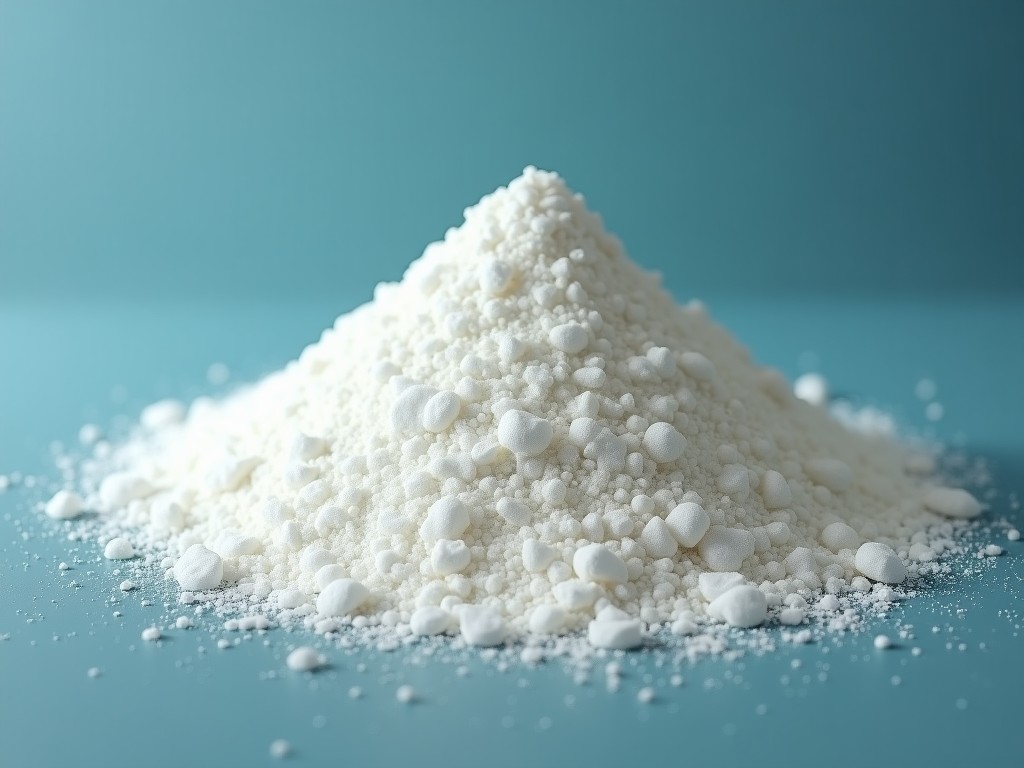
Freshwater diatomaceous earth is a naturally occurring siliceous sediment derived from the fossilized remains of diatoms that lived in ancient lake systems. Compared with marine deposits, freshwater origins typically yield a purer silica matrix with lower levels of associated metal oxides, which influences its behavior in filtration, absorption, and filler applications.
Material Composition and Properties
The primary constituent is amorphous silicon dioxide (SiO2), usually representing 90 % to 95 % of the dry weight. Minor components include iron oxide (Fe2O3), aluminum oxide (Al2O3), and trace alkaline earth metals. Loss on ignition (LOI) after heating to 1000 °C generally falls between 4 % and 6 %, reflecting the removal of physically adsorbed water and minor organic residues.
| Property | Typical Range |
|---|---|
| Silicon Dioxide (SiO2) | 90 % – 95 % |
| Iron Oxide (Fe2O3) | 0.5 % – 2.0 % |
| Aluminum Oxide (Al2O3) | 0.3 % – 1.5 % |
| Loss on Ignition (LOI, 1000 °C) | 4 % – 6 % |
| Bulk Density (loose) | 0.30 – 0.45 g/cm³ |
| Specific Surface Area (BET) | 15 – 30 m²/g |
| Particle Size D50 (laser diffraction) | 10 – 25 µm |
| pH (10 % slurry) | 7.5 – 9.0 |
Production Process for Freshwater Deposits
Extraction begins with selective quarrying of the freshwater stratum to avoid contamination from overlying clay layers. The raw material is then crushed to a manageable size, followed by low‑temperature drying (typically below 150 °C) to preserve the amorphous silica structure. Subsequent milling uses air‑classifying mills to achieve targeted particle‑size distributions, and a final screening step removes oversized fractions before product storage.
Key Performance Characteristics
The high porosity and irregular particle shape give freshwater diatomaceous earth a liquid absorption capacity that can exceed 1.5 times its own weight for water and up to 2.5 times for light oils. In filtration, the tortuous pore network provides a nominal retention rating of 1 µm to 5 µm depending on the grade, which translates to measurable turbidity reduction in beverage and process water streams.
When used as a functional filler in polymer compounds, the low abrasiveness (Mohs hardness ≈ 5‑6) minimizes wear on processing equipment while contributing to stiffness and dimensional stability. The inert nature of amorphous SiO2 ensures minimal interaction with most chemical additives, allowing predictable compound behavior.
Industrial Applications
In liquid filtration, the product serves as a pre‑coat or filter aid for rotary vacuum drum filters, belt filters, and cartridge systems, where its ability to form a permeable cake reduces pressure drop while capturing fine particulates.
As a carrier for catalysts, the high surface area and thermal stability (up to ≈ 800 °C before noticeable sintering) support the dispersion of active metals such as palladium or nickel, facilitating reactions like hydrogenation or oxidation.
In polymer compounding, grades with a D50 of 12‑18 µm are commonly blended into polypropylene and PVC to improve impact resistance and reduce shrinkage without significantly increasing melt viscosity.
For spill control and industrial absorbents, the material’s oleophilic surface enables rapid uptake of hydrocarbons, and its low dust generation (when handled with appropriate ventilation) improves workplace safety.
Typical Application Parameters
- Filtration: cake permeability 0.5‑2.0 Darcy, turbidity reduction > 90 % for 5 µm challenge particles.
- Catalyst support: surface area 15‑30 m²/g, pore volume 0.08‑0.12 cm³/g.
- Polymer filler: tensile modulus increase 10‑20 % at 5 wt% loading, melt flow index change < 5 %.
- Absorbent: oil uptake capacity 2.0‑3.0 g/g, water uptake 1.2‑1.8 g/g.
Quality Control and Testing
Each lot undergoes laser diffraction particle‑size analysis to verify D10, D50, and D90 values against the agreed specification. Chemical composition is confirmed by X‑ray fluorescence (XRF) for SiO2, Fe2O3, Al2O3, and moisture content is determined by thermogravimetric analysis at 105 °C. Filtration performance is evaluated using a standard slurry test with a defined challenge particle size, reporting pressure drop and clarity.
Customization Options
Customers can request specific particle‑size cuts, such as a fine grade (D50 < 8 µm) for ultra‑fine filtration or a coarse grade (D50 > 30 µm) for high‑flow applications. Surface modification with silane agents is available to enhance hydrophobicity for oil‑selective absorbents. Calcination temperature can be adjusted between 500 °C and 750 °C to control the degree of sintering and resulting surface area.
| Parameter | Adjustable Range |
|---|---|
| D50 (µm) | 5 – 45 |
| Surface Treatment | None, Silane (hydrophobic), Acid wash |
| Calcination Temp (°C) | 500 – 750 |
| Moisture Content (max) | 0.5 % (as‑dried) |
| Packaging | 25 kg multi‑wall bag, 500 kg bulk bag, loose bulk |
Packaging and Logistics
Standard packaging uses three‑ply kraft bags with an inner polyethylene liner to protect against moisture ingress during transit. For bulk shipments, the material is loaded into lined container‑ized flexi‑tanks or sealed bulk bags equipped with discharge spouts. All packages are marked with lot numbers, production date, and handling instructions to maintain traceability.
Frequently Asked Questions
A: Yes, air‑classifying milling allows selection of D50 values from 5 µm to 45 µm, which directly influences the nominal pore size of the filter cake.
Q: What information is required before a quotation can be issued?
A: Required details include the intended application, target particle‑size range, desired surface treatment (if any), estimated annual volume, and preferred packaging format.
Q: Which quality‑control tests are performed on each batch?
A: Each batch is tested for chemical composition (XRF), laser diffraction particle size, moisture content (105 °C TG), and filtration performance using a standard slurry challenge.
Q: How are export shipments protected against moisture and contamination?
A: Bags incorporate an internal polyethylene liner, and bulk containers are sealed with desiccant packs and humidity indicators; shipments are routed via covered vessels or containers with ventilation control.
Q: What is the typical production lead time for a standard order?
A: Lead times range from 2 to 4 weeks for stocked grades, with custom grades requiring an additional 1‑2 weeks for process adjustment.
Q: How can samples be arranged for evaluation?
A: Sample requests (up to 2 kg) are processed through the sales team; shipping costs are borne by the requester unless otherwise agreed.