
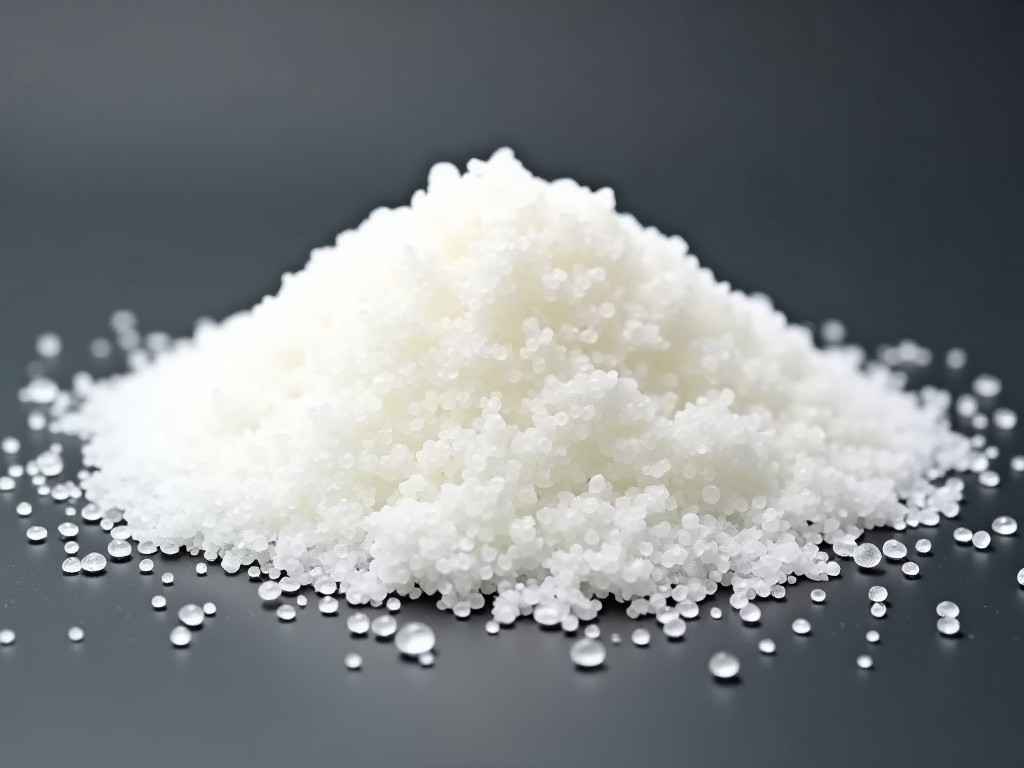
China Ts 720 Fumed Silica Top Manufacturer
China TS 720 Fumed Silica – Technical Overview for Industrial Applications
TS 720 is a specific grade of fumed silica produced by flame hydrolysis of silicon tetrachloride, yielding amorphous SiO₂ particles with a controlled primary particle size and surface area. This grade is positioned in the mid‑range of surface area, offering a balance between reinforcement capability and dispersion ease in polymer matrices.
The production process involves igniting a mixture of SiCl₄ vapor and hydrogen/oxygen flame, where silica nuclei form and agglomerate into chain‑like aggregates. The reactor temperature, residence time, and feed rate are precisely tuned to achieve the target BET surface area of approximately 200 m²/g and a primary particle diameter of 12‑15 nm.
Key Technical Properties
Typical measured values for TS 720 fumed silica are presented below. These figures are derived from standard test methods (BET nitrogen adsorption, BET surface area, sedimentation volume, pH of aqueous dispersion) and may vary slightly depending on lot and post‑treatment.
| Property | Typical Value | Test Method |
|---|---|---|
| BET Surface Area | 200 ± 15 m²/g | ASTM D3663 |
| Primary Particle Size | 12‑15 nm (TEM) | ISO 9277 |
| Density (bulk) | 40‑60 g/L (depends on agglomeration) | ASTM D1208 |
| pH (5 % dispersion) | 3.5‑4.5 | ISO 787‑9 |
| Loss on Ignition (1000 °C) | < 0.5 % | ASTM D1203 |
Manufacturing Considerations for Consistent Quality
Flame‑hydrolysis reactors are operated under strict temperature gradients (±5 °C) to control nucleation rate. Variations in precursor purity or water content directly affect hydroxyl group density on the silica surface, which influences both pH and compatibility with polar matrices.
Post‑reactor, the silica aerosol passes through a quenching zone where particle growth is arrested. The residence time in this zone determines the degree of agglomeration; longer times produce higher structure (more chain‑like aggregates) beneficial for rheology control in coatings.
Typical Industrial Applications
The combination of moderate surface area and controllable structure makes TS 720 suitable for applications where both reinforcement and processability are required.
- Reinforcing filler for silicone rubber and fluor elastomers, improving tear strength without excessive viscosity increase.
- Thixotropic agent in solvent‑based and water‑borne coatings, providing sag resistance and edge retention.
- Anti‑settling additive in pigment dispersions, enhancing storage stability of titanium dioxide and carbon black slurries.
- Carrier for catalytic active phases in petrochemical reactors, where high surface area supports metal dispersion.
- Dielectric filler in electronic encapsulants, contributing to low loss tangent and thermal stability.
Quality Control Philosophy
Each batch undergoes a defined set of inspections before release. The goal is to confirm that the silica meets the agreed‑upon specifications for surface area, structure, and surface chemistry, which directly affect end‑use performance.
- BET surface area measured on a calibrated Micromeritics instrument; acceptance window ±7.5 % of target.
- Sedimentation volume (oil absorption) assessed per ASTM D281 to verify aggregate structure.
- pH of a 5 wt % aqueous dispersion checked with a calibrated glass electrode.
- Loss on ignition tested to ensure minimal volatile content that could interfere with curing systems.
Customization Options
While the base TS 720 grade meets a standard specification, surface modification can be applied to tailor compatibility with specific matrices.
- Silane treatment (e.g., methacryl‑propyltrimethoxy silane) to increase hydrophobicity and improve dispersion in non‑polar elastomers.
- Controlled agglomeration via milling or spray‑drying to adjust bulk density and rheology profile.
- Particle size narrowing through classification to obtain a tighter distribution for optical applications.
Typical Values Table (Summary)
| Parameter | Range (Typical) | Relevance |
|---|---|---|
| BET Surface Area | 180‑220 m²/g | Determines reinforcement potency and interaction with polymers. |
| Primary Particle Size | 10‑18 nm | Influences transparency and scattering in optical composites. |
| Bulk Density | 30‑80 g/L | Affects handling, dosing, and final compound viscosity. |
| pH (5 % dispersion) | 3.0‑5.0 | Impacts cure kinetics of acid‑sensitive systems. |
Frequently Asked Questions
Can the particle size or surface area be adjusted for a specific project?
Yes. By modifying flame‑reactor temperature, precursor flow rate, or adding a classification step, the primary particle size and BET surface area can be tuned within the ranges shown above. Exact values are confirmed during pilot‑run sampling.
What information is required to obtain a quotation?
To generate a quote we need the required quantity (kg or tons), desired surface area range, any surface treatment (e.g., silane type), packaging preference (multi‑wall bag, bulk container), and delivery destination. Providing the target application helps us recommend the most suitable grade.
How is product quality verified before shipment?
Each lot is accompanied by a Certificate of Analysis reporting BET surface area, primary particle size (TEM), pH, loss on ignition, and sedimentation volume. All tests follow ISO/ASTM standards and are performed on retained samples.
What packaging options are available for export?
Standard packaging includes 25 kg multi‑wall polyethylene bags with inner liner, placed on pallets and stretch‑wrapped. For larger volumes, 500 kg flexible intermediate bulk containers (FIBCs) or bulk tanker transfer can be arranged, with moisture‑barrier protection as needed.
For technical discussions, sample requests, or to initiate a purchase inquiry, please contact our sales engineering team.
Contact Sales Team