
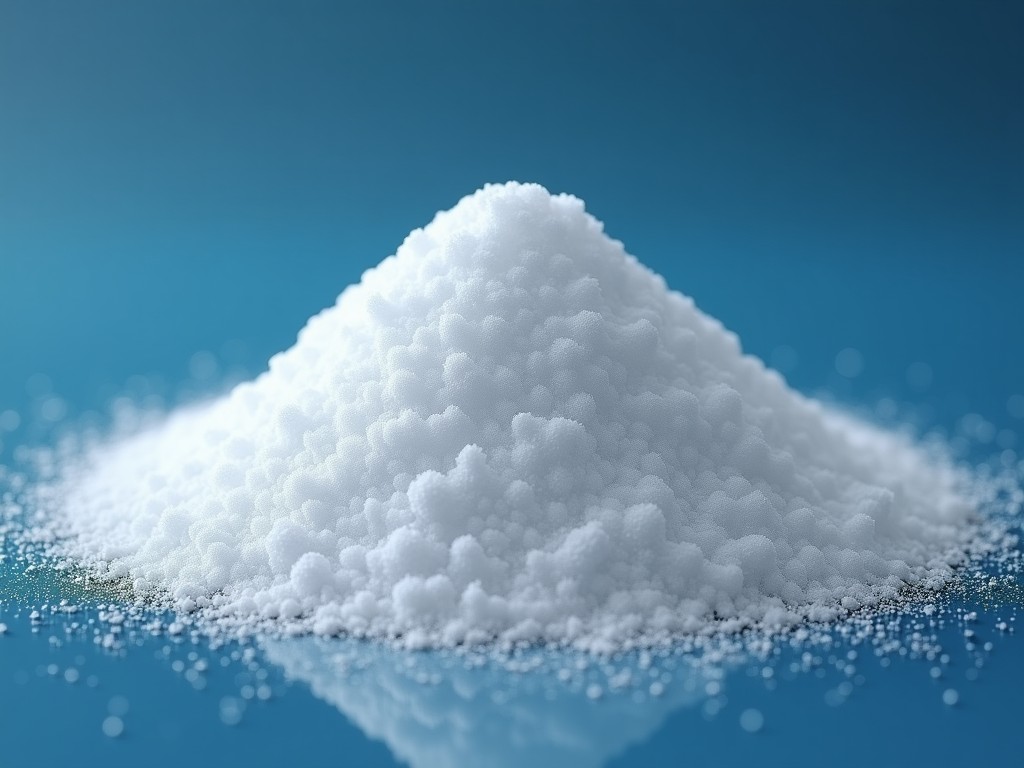
Colloidal Silicon Dioxide Nf Top Factory
Colloidal Silicon Dioxide | NF Top Factory – Industrial-Grade SiO₂ Manufacturing & Supply
Colloidal silicon dioxide (SiO₂·nH₂O) is not simply "fine powder." It is a nanoscale particulate system where individual particles range between 5 and 40 nanometers, suspended in an aqueous medium, and stabilized through controlled surface chemistry. That distinction – particle uniformity, hydrodynamic behavior, and long-term colloidal stability – separates a functional industrial feedstock from a batch that separates in storage or clogs a dosing line. NF Top Factory produces colloidal silicon dioxide at the level where those parameters are engineered, measured, and documented for every shipment.
What Colloidal Silicon Dioxide Actually Is
At the molecular level, colloidal silicon dioxide consists of amorphous silica particles whose surface hydroxyl (Si–OH) groups interact with surrounding water molecules, creating a hydration shell that prevents agglomeration. The resulting suspension remains in a pseudo-plastic rheological state – it flows under shear stress but resists settling when at rest. This behavior is what makes colloidal silica useful as an anti-settling agent, as a thickening modifier in cement paste, and as a high-surface-area fill in polymer composites.
The practical difference between colloidal silica and precipitated silica, which many buyers confuse, comes down to particle architecture. Precipitated silica is produced by neutralizing a silicic acid solution with an inorganic acid, yielding a flocculated, highly aggregated powder that requires mechanical dispersion for every use. Colloidal silica is synthesized by sol-gel hydrolysis under tightly controlled pH and temperature, producing individual primary particles that remain discrete in solution. For applications demanding consistent dosing – tire compound mixing, textile sizing, lithium-ion electrode slurry – that discrete particle state eliminates the viscosity spikes and batch-to-batch variation that aggregated powders introduce.
Particle size distribution is the single most consequential specification. A batch centered at 12 nm with a polydispersity index below 0.15 behaves predictably in a rheometer; a batch with a broad tail of 80 nm aggregates does not. NF Top Factory controls the hydrolysis rate, aging temperature, and ionic strength during production to hold the median diameter within ±2 nm of the target value, verified by dynamic light scattering on every lot before release.
Manufacturing Process & Factory Capabilities
The production line at NF Top Factory operates a continuous sol-gel synthesis followed by a multi-stage purification and concentration step. Sodium silicate solution is metered into a heated reactor, where controlled acidification at 80–110 °C initiates polysilicic acid condensation. Reaction kinetics are managed through inline pH feedback loops that adjust acid feed rate every 200 milliseconds, preventing the local over-acidification that produces heterogeneous particle sizes. After a defined aging period, the crude colloid passes through a membrane filtration train to remove residual sodium, chloride, and aluminum ions to levels below 20 ppm total inorganic impurity.
Concentration is achieved by ultrafiltration at 12–15 bar, which simultaneously removes excess solvent and tightens the particle size distribution. The final product can be discharged as a liquid colloid (solid content 15–50 %) or, for customers who require a dry form, through a spray-drying module that produces a free-flowing, non-caking powder with a specific surface area between 150 and 380 m²/g.
Current facility capacity supports continuous production in 6,000-liter reactor batches, with a maximum throughput of 180 metric tons per month for the liquid grade and 110 metric tons per month for the spray-dried powder grade. Lead time for standard catalog items is typically 10–14 working days from order confirmation; project-specific formulations that require a new particle size or solid content run add 5–7 days for pilot validation and first-article inspection.
Technical Specifications – Liquid Colloidal Silicon Dioxide
| Parameter | Typical Value / Range | Test Method |
|---|---|---|
| Median particle diameter (D50) | 5 / 10 / 15 / 30 nm (selectable) | Dynamic Light Scattering (DLS) |
| Solid content (SiO₂) | 15 %, 25 %, 40 %, 50 % | Gravimetric (ASTM D3385 adapted) |
| pH (1 % w/v suspension) | Typically 9.0–10.5; customizable to 7.5 | IEC 61131 |
| Specific surface area (BET) | 180–380 m²/g | BET N₂ adsorption |
| Residual sodium | < 500 ppm (50 % solid basis) | ICP-OES |
| Total inorganic impurities | < 20 ppm | ICP-OES |
| Stability at 40 °C / 90 % RH | No visible sedimentation > 12 months | Accelerated storage (in-house protocol) |
| Viscosity (0.5 s⁻¹ shear) | 25 % solid: 18–45 mPa·s; 50 % solid: 120–280 mPa·s | Rotational rheometry (cone-plate) |
Technical Specifications – Spray-Dried Powder Grade
| Parameter | Typical Value / Range | Test Method |
|---|---|---|
| Specific surface area (BET) | 150–380 m²/g | BET N₂ adsorption |
| pH of 1 % water suspension | 7.0–10.5 (customizable) | IEC 61131 |
| Loss on ignition (1000 °C, 2 h) | < 4 % | ISO 10480 |
| Sorption (10 % water) | > 50 g/100 g | In-house centrifugation method |
| Bulk density | 0.18–0.32 g/cm³ | Pycnometric |
| Fineness (mesh 200) | < 0.1 % residue | Sieve analysis |
Industrial Applications & Selection Logic
Choosing the correct grade of colloidal silicon dioxide is a process-design decision, not a commodity selection. The following applications explain why specific particle sizes, solid contents, and surface chemistries are matched to each use case:
- Cement & concrete admixtures. The 10–15 nm fraction at 40–50 % solid content provides sufficient steric stabilization to prevent pigment and polymer-latex settling during 72-hour storage in the admixture tank. Particles larger than 25 nm lose the necessary surface-area-to-volume ratio, and the thickening effect drops below the threshold needed to maintain a uniform slurry.
- Tire & rubber compound filler. Spray-dried powder with a BET surface area above 280 m²/g replaces a portion of carbon black in silica-silane systems, reducing hysteresis loss at 50 °C. The discrete, non-agglomerated particle structure allows silane coupling agents to graft onto individual Si–OH sites rather than being consumed at agglomerate interiors, improving wet-grip at a 15–20 % filler-reduction ratio.
- Lithium-ion battery electrode slurry. A 5 nm colloidal silica suspension at 15 % solid content, dispersed into NMC or LFP cathode slurries, acts as a thinning agent that counteracts the viscosity rise of PVDF binder above the 4,500 rpm mixing speed typically used in high-speed rotor-stator mixing. The result is a slurry that remains pourable for electrode coating without adding volatile thinners that must later be baked out.
- Textile & paper sizing. Liquid colloidal silica at 25 % solid, pH 9.5, is metered into a starch-based sizing bath where it contributes to the "body" of the dried size coat. The amorphous silica network cross-links with hydrogen-bonded starch helices, raising the tear index of the finished paper by approximately 12–18 % at a 3–5 % silica loading relative to dry paper weight.
- Pharmaceutical & food-contact co-milling. In applications where colloidal silica co-mills with active pharmaceutical ingredients or food additives, the powder grade is produced on a dedicated line with no shared equipment from non-food-contact batches, and the residual sodium is held below 200 ppm. This eliminates the need for a post-processing wash step that would alter particle morphology.
For buyers specifying a new formulation, the starting question is not "what size do you need?" but "what rheological target are you trying to hit at what shear rate, and how long must the slurry remain stable before the next process step?" NF Top Factory's technical team uses that answer to select the D50, solid content, and ionic additive package that will land the product inside your process window.
Quality Control & Inspection Philosophy
Every production lot is sampled at three points: reactor discharge, post-membrane-filtrate, and post-concentration. The sampled material is tested for D50, polydispersity index, solid content, pH, and residual inorganics. Results are recorded against the customer-specific specification sheet, not against a generic catalog range. If a parameter drifts – for example, a polydispersity index rising from 0.12 to 0.19 across a 12-hour continuous run – the lot is flagged, the reactor is pulled to steady state, and the flagged material is either reprocessed or diverted to a down-grade stock.
For export shipments, a Certificate of Analysis is generated per lot and scanned into a customer-accessible portal before the container is sealed. The CoA includes the DLS histogram, ICP-OES elemental report, and a stability test result from a 30-day accelerated aging run. Buyers who require a third-party verification – SGS, Intertek, or a mutually agreed laboratory – can request a pre-shipment inspection slot; NF Top Factory arranges the sampling point at the loading dock so the inspector works on the same material that will ship.
Raw material traceability is maintained through batch coding on the sodium silicate and sodium hydroxide feed drums. If a customer identifies a trace impurity in a finished lot, the code allows the quality team to pull the exact feed lots, re-run ICP, and determine whether the impurity originated upstream or was introduced during the synthesis step. This traceability chain is documented and retained for a minimum of 24 months.
Packaging, Shipping & Export Protection
Liquid colloidal silica is shipped in one of three configurations depending on volume and destination infrastructure:
- HDPE jerrican (25 kg / 200 kg). Suitable for small and mid-volume buyers. Containers are food-contact-grade, UV-stabilized, and fitted with a self-sealing bung. Each jerrican carries a batch code, D50 value, solid content, and production date on a tamper-evident label.
- Flexibag in 20-ft / 40-ft ISO container. A 1,000-liter PE flexi-bag sits inside a wooden frame within the container, reducing the container count per shipment by 40 % compared to jerrican packing. This option is the standard for shipments above 800 kg.
- ISO tank (26,000 L) or bulk road/tank rail. For recurring quarterly supply agreements, an ISO tank or dedicated tank-truck provides continuous delivery without the intermediate storage step on the buyer's site.
Spray-dried powder is packed in 25 kg paper-PE-PP laminated bags (inner PE liner, outer kraft paper, outer polypropylene) or in 1,000 kg big bags (FIBC) for bulk pneumatic transfer. All powder bags are nitrogen-flushed to 5 % O₂ or below to slow moisture uptake during a 6-month transit window in high-humidity ports.
For sea-freight export, containers are palletized on 14.5-inch forklift-tuckable wooden pallets, shrink-wrapped, and strapped with 4 mm polypropylene banding. A desiccant pack (100 g silica gel, indicator-activated) is placed at each container corner. The booking documentation includes a pre-departure photo log so the buyer's receiving team can verify container condition before unloading.
Customization & Project Support
The standard catalog covers the most requested D50 and solid-content combinations, but approximately 30 % of annual production runs on custom specifications. Typical customization requests include:
- Non-standard solid content (e.g., 30 % for a specific dosing-pump viscosity window, or 60 % for a transport-cost optimization on a high-volume contract).
- Coated or surface-modified particles – silane-grafted, carboxylate-modified, or cationic variants for integration into specific polymer matrices without a separate coupling-agent step.
- Low-ash, low-metals grade for semiconductor-grade CMP slurry or electronic-grade dielectric coatings, where aluminum, iron, and calcium must each stay below 5 ppm.
- Dedicated lines for food-contact or pharmaceutical use, physically isolated from industrial batches with separate raw-material storage, dedicated CIP wash cycles, and no shared packaging stock.
To initiate a custom development, the technical team requests four data points from the buyer: target particle size and acceptable polydispersity window, required solid content or specific surface area, end-use process (mixing speed, residence time, temperature), and any impurity ceilings. A pilot batch of 50–200 kg is produced, tested against those criteria, and shipped as a sample with a full CoA and a suggested integration protocol. Pilot turnaround is typically 3–4 weeks from data receipt to sample dispatch.
Frequently Asked Questions from Industrial Buyers
Can dimensions and solid content be customized beyond the catalog range?
Yes. The reactor and concentration train are designed to flex across the 5–40 nm D50 range and the 15–50 % solid-content window. For particle sizes below 5 nm or solid content above 50 %, a formulation adjustment to the aging protocol is required, which adds roughly 2 weeks to the pilot schedule. The technical team will confirm feasibility against your target in a preliminary review before committing reactor time.
What information is required before requesting a formal quotation?
Minimum data: D50 (or BET surface area for powder), solid content or powder packing density, pH target, annual or per-order volume, delivery destination (Incoterms term), and any regulatory or food-contact compliance requirement. With that set, a quotation with packaging configuration, lead time, and CoA scope is issued within 2 working days.
How is batch-to-batch consistency guaranteed on a recurring supply contract?
The reactor recipe – acid feed rate, aging temperature, ionic strength, concentration pressure – is locked as a digital parameter set for each contract grade. Each lot is tested against the contract specification sheet, and a running control chart of D50 and solid content is reviewed weekly by the quality team. If a lot falls within 1 % of a specification boundary, it is held for a 72-hour stability check before release rather than being shipped at the limit. Contract buyers receive a quarterly consistency report summarizing the control-chart data across all delivered lots in that period.
What packaging methods are available, and can packaging be modified for our receiving line?
Standard options are listed in the packaging section above. Modifications – different jerrican volumes, FIBC with bottom-drawer for pneumatic transfer, custom container inner-liner thickness, or direct transfer into a customer's on-site IBC tote – are available. The buyer's receiving team should specify the filling valve type, drum ID, or tote standard they work with; the production scheduling team confirms tooling compatibility within 48 hours.
How are export shipments protected against temperature or humidity damage in transit?
Liquid colloidal silica is thermally stable between 5 °C and 45 °C in the sealed container; below 5 °C, a gel transition can form that requires 24–48 hours at ambient to reverse. For shipments to destinations where container temperatures may dip below 4 °C (e.g., Northern European winter, polar-region ports), a phase-change thermal liner is fitted inside the flexi-bag or ISO tank. Powder is nitrogen-flushed and humidity-buffered as described in the packaging section. All containers carry a temperature logger that records a 1 °C-resolution trace for the full transit; the data file is shared with the buyer on arrival.
What is the typical production lead time, and how are samples arranged?
Standard catalog grades: 10–14 working days. Custom grades: 21–28 working days including pilot validation. Sample requests for catalog items are fulfilled from finished-goods stock and dispatched within 3–5 working days, typically 1–2 kg for powder or 500 mL–1 L for liquid. For a custom development sample, the pilot batch is produced on schedule and shipped with a full CoA; transit is arranged by the buyer's forwarder or through NF Top Factory's logistics desk, which books carriage on the same vessel or flight as the first commercial order to avoid a separate sample transit.
Is the product suitable for food-contact or pharmaceutical applications?
A dedicated production line, physically separated from industrial batches, produces colloidal silicon dioxide to food-contact (EU 10/2011, FDA 21 CFR 178.3940/178.3295) and pharmaceutical (USP 661 / EP monograph for Microcrystalline Cellulose co-milling carriers) specifications. The raw silicate feed for this line is sourced from a supplier with its own food-grade audit, and the final product carries a food-contact migration test report covering total extractables at 45 °C in a simulated aqueous solution. Requests for this grade should be flagged in the initial inquiry so the production schedule is routed to the dedicated line from the first step.
Request a Specification Review or Pilot Sample
If you are specifying a colloidal silicon dioxide grade for a new formulation, a replacement of a current supplier, or a cost-optimization review of an existing recipe, the technical team can evaluate your process parameters against the available D50, solid-content, and surface-chemistry options. Send your target specifications – or simply describe the application and the performance problem – and you will receive a feasibility assessment, a recommended grade, and a CoA reference within 2 working days.
Contact the NF Top Factory technical desk →
For recurring annual or quarterly supply agreements, request a dedicated account engineer assignment to coordinate batch scheduling, CoA delivery, and quarterly consistency reporting under a single point of contact.
All technical values listed on this page represent typical ranges under standard production conditions. Specific values for a given lot are confirmed on the accompanying Certificate of Analysis. Custom specifications are confirmed in a mutual written agreement prior to the first commercial shipment. Product names and process descriptions do not constitute a warranty of performance in any specific end-use without prior technical validation by the buyer's engineering team.