
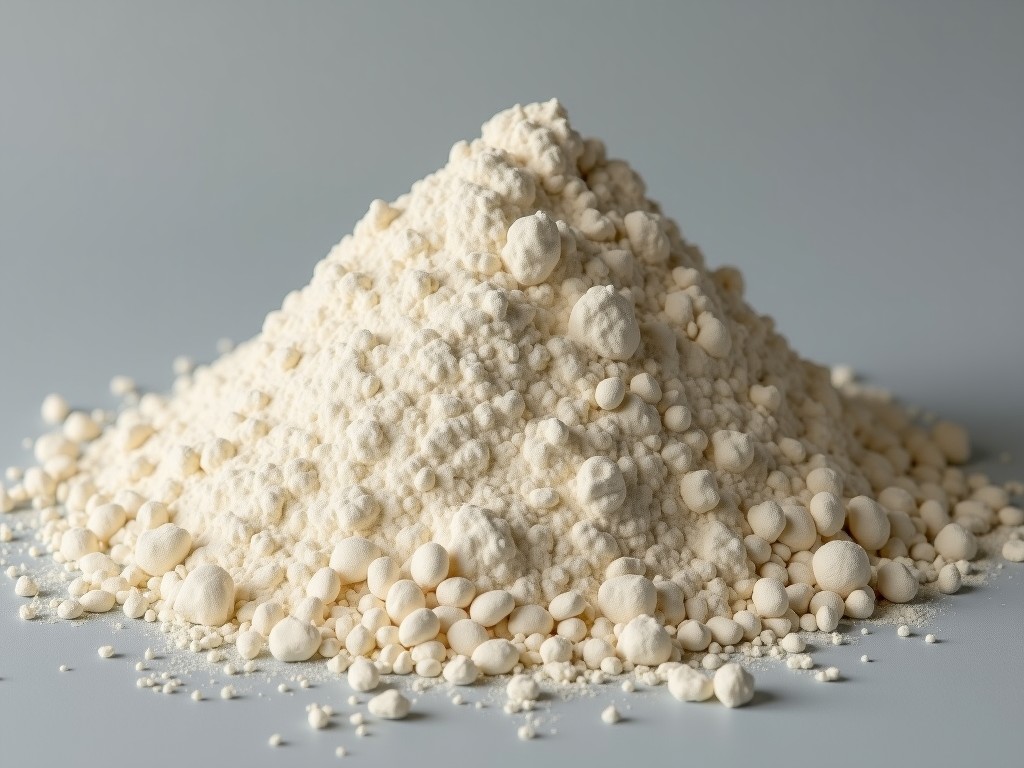
Diatomaceous Earth Clay Factory Exporter Supplier
Diatomaceous Earth Clay – Factory Direct Exporter & Supplier
Diatomaceous earth clay is a naturally occurring, siliceous sedimentary rock composed of the fossilized remains of diatoms, a type of hard-shelled algae. After mining, the material is milled, calcined, and classified to produce a range of grades with controlled particle size distribution and surface chemistry.
Technical Specifications
Typical values for our standard grade are shown below. Actual specifications can be adjusted according to project requirements.
| Parameter | Typical Value | Test Method |
|---|---|---|
| Silica (SiO2) content | ≥85% | XRF |
| Loss on ignition (LOI) | ≤6% | ASTM D1203 |
| Bulk density (loose) | 0.30–0.45 g/cm³ | ASTM D1895 |
| Specific surface area (BET) | 20–35 m²/g | BET |
| Particle size D50 | 10–25 µm | Laser diffraction |
| pH (10% slurry) | 7–9 | ASTM D1293 |
| Moisture content | ≤0.5% | Weight loss @105°C |
Industrial Applications
The functional properties of diatomaceous earth clay arise from its high porosity, inert silica matrix, and controllable particle size. These characteristics enable specific performance benefits in various process streams.
- Filtration aid for beverage clarifications (beer, wine, juice) where a uniform cake permeability ensures consistent flow rates and low turbidity.
- Absorbent for spill control and industrial cleaning; the material’s high surface area traps oils, solvents, and water-based liquids with retention capacities exceeding 1.5 g/g.
- Functional filler in paints, coatings, and plastics; the plate‑like particles improve rheology, reduce sag, and contribute to UV‑stable film formation.
- Carrier and diluent for agrochemical formulations; the porous structure adsorbs active ingredients, facilitating controlled release and reducing dust generation during handling.
- Insulating additive in lightweight concretes and plasters; the low thermal conductivity of the silica matrix lowers overall bulk density while maintaining compressive strength.
Quality Assurance and Testing
Each production lot undergoes a defined control plan to verify that critical attributes remain within agreed tolerances. The approach combines inline process checks with final product verification.
- Particle size distribution monitored every hour via laser diffraction; D10, D50, D90 recorded and compared to specification limits.
- Chemical composition verified by X‑ray fluorescence on a composite sample from each batch; silica, alumina, and iron oxides reported.
- Loss on ignition determined after heating to 1000 °C for 1 hour; indicates organic content and structural water.
- Surface area measured by BET nitrogen adsorption; ensures sufficient porosity for filtration or absorption duties.
- pH and conductivity assessed on a 10 % w/w slurry to detect any surface contamination that could affect downstream processes.
Documentation includes a certificate of analysis (CoA) covering the above parameters, plus optional third‑party inspection reports upon request.
Packaging Options and Logistics
To preserve product integrity during transit, we employ moisture‑barrier packaging suited to the ordered quantity and destination.
- Multi‑wall polyethylene bags (25 kg) with inner liner for small‑lot orders; palletized and stretch‑wrapped.
- Flexible intermediate bulk containers (FIBCs, 500 kg or 1000 kg) with UV‑stabilized fabric and discharge spout.
- Bulk shipments in closed hopper railcars or containerized bulk liners for volumes exceeding 20 t.
- All packages are marked with batch number, net weight, and handling symbols; optional pallet labeling for customs compliance.
Lead times vary from 7 to 14 working days after receipt of confirmed purchase order, depending on packaging selection and destination port.
Export Experience and Compliance
As a dedicated exporter, we manage the full suite of documentation required for smooth customs clearance in target markets.
- Preparation of commercial invoice, packing list, certificate of origin, and material safety data sheet (MSDS) aligned with GHS.
- Adherence to ISPM‑15 wood‑packaging regulations when pallets are used; alternative plastic pallets available upon request.
- Coordination with freight forwarders for FOB, CIF, or DDP terms; real‑time tracking provided.
- Experience shipping to Southeast Asia, Europe, North America, and the Middle East; familiar with regional import regulations for filtration aids and absorbent materials.
Frequently Asked Questions
Can the particle size be customized?
Yes. The milling and classification circuit can be adjusted to target D50 values ranging from 5 µm to 45 µm, with tight control on the span.
What information is needed for a quotation?
Required details include desired grade (if known), target particle size or surface area, estimated annual quantity, preferred packaging, and destination port.
Which quality standards do you follow?
Production adheres to ISO 9001 for quality management; testing follows ASTM and ISO methods as listed in the specification table.
How are shipments protected against moisture?
Inner polyethylene liners, moisture‑barrier bags, and desiccant packs (optional) maintain moisture content below specification limits during transit.
What is the typical production lead time?
Standard lead time is 7–10 working days for bagged orders; bulk or FIBC orders may require 10–14 days depending on slot availability.
To discuss your specific requirements or obtain a formal quotation, please contact our sales team.
Request Quotation