
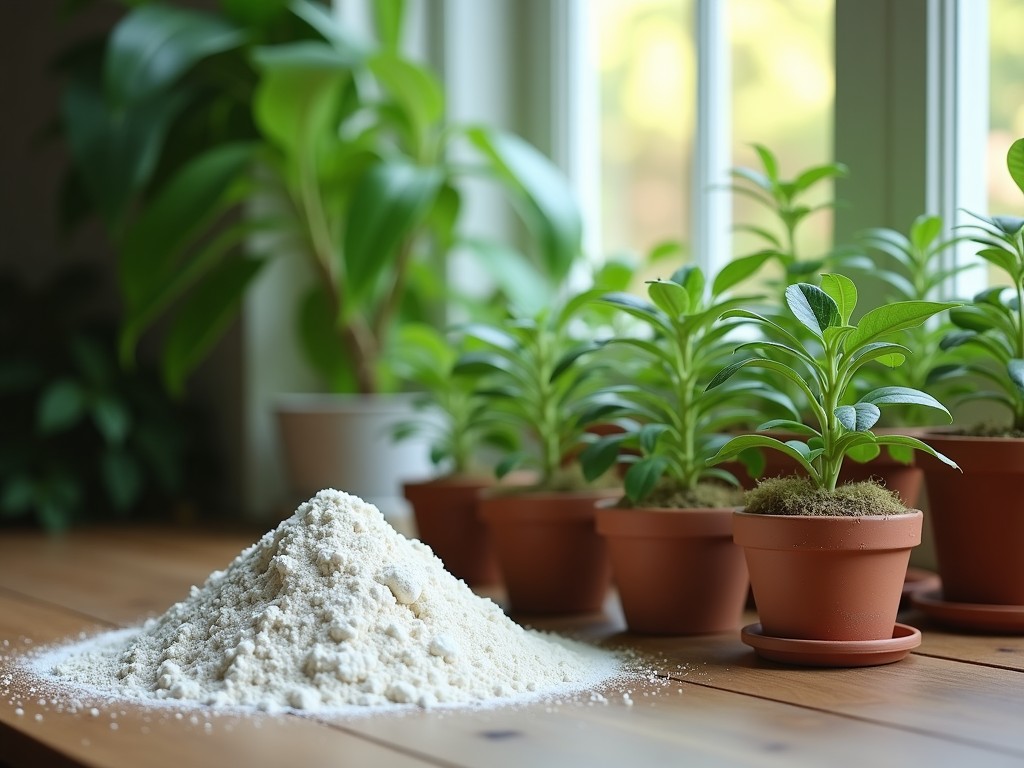
Diatomaceous Earth For House Plants And Potted Plants
Diatomaceous Earth for House Plants and Potted Plants
Technical Characteristics
The performance of DE in horticultural media is governed by its physical attributes rather than chemical reactivity. Key parameters include particle size distribution, bulk density, porosity, and moisture absorption capacity. These characteristics determine how the material interacts with water, air, and root systems in a confined pot environment.
| Property | Typical Value | Unit |
|---|---|---|
| Particle Size (D50) | 10–25 | µm |
| Bulk Density | 0.2–0.3 | g/cm³ |
| Porosity | 80–85 | % |
| pH (in water) | 6.5–7.5 | – |
| Moisture Absorption | Up to 150 | % of weight |
Benefits for Plant Health
When incorporated into potting mixes, DE functions as a physical amendment that improves moisture regulation and root zone aeration. Its porous particles absorb excess water during irrigation and release it gradually as the medium dries, reducing the risk of both overwatering and drought stress. The irregular shape of the particles creates interstitial spaces that facilitate oxygen diffusion to roots, supporting respiration and nutrient uptake.
- Mechanical barrier against soft‑bodied pests such as fungus gnat larvae and aphids; the sharp edges damage insect exoskeletons on contact.
- Inert nature prevents chemical reactions with fertilizers or pH adjusters, ensuring nutrient availability remains predictable.
- Low bulk density reduces overall pot weight, easing handling for large indoor installations.
- Silica content may contribute to improved cell wall strength in some plant species, though effects vary by taxon.
Application Methods
DE can be used either as a blend component in custom potting media or as a top‑dressing layer. For blending, a typical ratio ranges from 10% to 30% by volume depending on the desired water retention characteristics and the base constituents (peat, coir, perlite, vermiculite). When applied as a top dressing, a thin layer of 3–6 mm provides a protective barrier while still allowing gas exchange at the surface.
- Pre‑mix: Combine DE with other media components in a clean container; moisten slightly to reduce dust during handling.
- Top dressing: Sprinkle evenly over the soil surface after planting; lightly water to settle particles.
- Seed starting: Incorporate at 15% volume to improve moisture uniformity around germinating seeds.
Packaging and Storage
The product is supplied in multi‑wall paper bags with an inner polyethylene liner to prevent moisture uptake during transit and storage. Standard sizes include 5 kg, 10 kg, and 25 kg units, optimized for both small‑scale growers and commercial nursery operations. Palletized configurations incorporate corner protection and stretch film to maintain load stability.
- Store in a dry, well‑ventilated area away from direct sunlight to preserve flowability.
- Keep bags sealed when not in use to avoid clumping caused by ambient humidity.
- Shelf life is indefinite under proper storage; performance does not degrade over time.
Quality Control
Each production lot undergoes sieve analysis to verify particle size distribution conforms to the specified range. Representative samples are tested for loss on ignition, pH, and soluble salt content to ensure chemical neutrality. Additionally, heavy‑metal screening (lead, cadmium, arsenic, mercury) is performed to meet safety thresholds for use in food‑crop and ornamental environments.
Get More Information
For detailed technical data sheets, sample requests, or to discuss formulation support for specific plant species, please reach out to our technical team.