
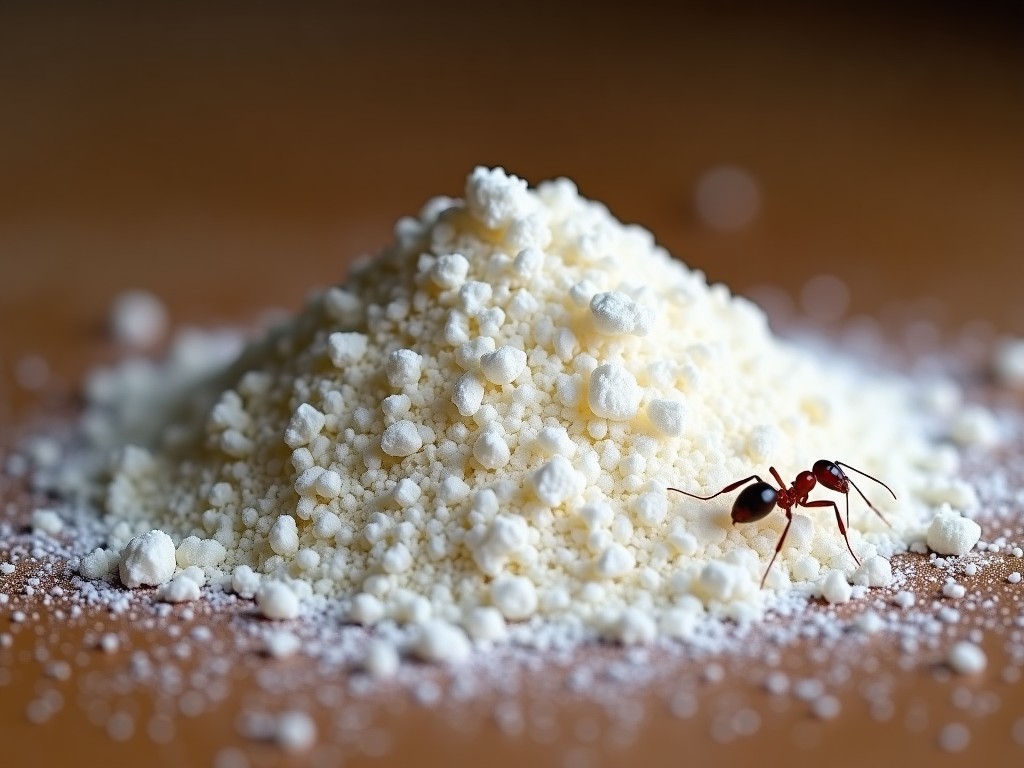
Diatomaceous Earth How To Use For Ants
Diatomaceous Earth for Ant Control: Technical Overview
This document explains the technical aspects of using diatomaceous earth (DE) as a mechanical ant control agent, focusing on composition, mode of action, application parameters, and handling considerations relevant to industrial procurement.
Material Composition and Physical Properties
Diatomaceous earth consists of the fossilized silica skeletons of diatoms, primarily amorphous SiO₂. Typical grades contain 85 % to 95 % silicon dioxide by weight, with the remainder comprising trace amounts of aluminum oxide, iron oxide, and organic residues.
Particle morphology is irregular and porous, giving a high surface area. Commercially available ant‑control grades are milled to a nominal size range of 10 µm to 200 µm, with a median diameter (D50) often between 30 µm and 60 µm. Bulk density falls in the 0.30 g/cm³ to 0.50 g/cm³ range, and moisture content is kept below 0.5 % to maintain flowability.
Mechanism of Action Against Ants
When ants contact DE particles, the sharp edges abrade the waxy cuticle that protects their exoskeleton. Simultaneously, the porous silica absorbs cuticular lipids and wax, accelerating water loss. The combined mechanical abrasion and desiccant effect leads to dehydration and mortality, typically within 24 to 48 hours of exposure.
Because the action is purely physical, resistance development is unlikely, and the material remains effective as long as particles remain dry and adherent to the ant’s body.
Recommended Application Rates and Methods
For indoor perimeter treatments, a dry dust application of 2 g to 4 g per square meter is standard. The powder is applied with a handheld duster or power‑fed applicator to create a thin, continuous barrier along baseboards, entry points, and ant trails.
In outdoor settings, higher rates of 5 g to 8 g per square meter compensate for wind displacement and moisture. A slurry formulation (DE dispersed in water at 10 % w/v) can be sprayed onto soil or mulch, then allowed to dry, leaving a residual dust layer.
Re‑application is advised after heavy rain, cleaning, or when visual inspection shows dust removal. Monitoring ant activity helps determine optimal intervals, which typically range from one to four weeks depending on environmental conditions.
Safety, Handling and Personal Protective Equipment
Food‑grade DE is classified as low toxicity (LD₅₀ > 5 g/kg oral, rat). The primary hazard is respiratory irritation from inhaled fine silica; therefore, a NIOSH‑approved N95 respirator or equivalent is recommended during bulk handling.
Eye protection (safety goggles) prevents mechanical irritation, and gloves reduce skin dryness. Work areas should be ventilated, and dust accumulation on surfaces should be minimized with vacuum equipped with HEPA filtration.
Storage Conditions and Shelf Life
To preserve efficacy, DE must be stored in a dry environment, preferably in sealed, moisture‑barrier containers (e.g., polyethylene‑lined drums). Exposure to humidity above 60 % RH can cause clumping, reducing flow and dust dispersion.
Temperature limits are not critical; storage between –20 °C and 40 °C is acceptable. When kept dry, the product retains its physical properties indefinitely, giving a functional shelf life limited only by container integrity.
Quality Considerations for Industrial Buyers
Key specifications include SiO₂ purity (≥ 85 %), loss on drying (≤ 0.5 %), and sieve analysis showing ≤ 5 % of particles below 5 µm to minimize respirable fraction. Heavy‑metal limits (e.g., Pb < 10 ppm, As < 5 ppm) are typical for food‑grade grades.
Suppliers should provide a certificate of analysis covering these parameters, along with batch‑specific particle size distribution (D10, D50, D90) and bulk density. Consistency in these metrics ensures predictable application rates and dust performance.
Comparison with Alternative Ant Control Methods
| Control Method | Mode of Action | Application Frequency | Environmental Impact | Residual Effect (days) | Relative Cost |
|---|---|---|---|---|---|
| Diatomaceous Earth (dry dust) | Mechanical abrasion & desiccation | 1‑4 weeks (re‑apply after cleaning/rain) | Low (inert mineral, non‑toxic) | 7‑30 (depends on moisture) | Low |
| Synthetic pyrethroid spray | Neurotoxic inhibition | 2‑4 weeks | Moderate (non‑target toxicity) | 14‑60 | Medium |
| Carbohydrate bait with borax | Slow‑acting stomach poison | 1‑2 weeks (until consumption) | Low to moderate (boron accumulation) | 7‑20 | Low |
| Ultrasonic repellent | Behavioral deterrence (questionable efficacy) | Continuous (requires power) | Negligible | 0 (no residual) | Medium |
Frequently Asked Questions
- Can the particle size be adjusted for specific substrates? – Yes, milling can produce finer grades for porous surfaces or coarser grades for outdoor use; custom sizes are available upon request.
- What information is needed to obtain a quotation? – Required details include desired grade (food‑ or feed‑type), target SiO₂ purity, particle size range, packaging format, and order volume.
- Is the product compatible with integrated pest management programs? – Because it acts mechanically and leaves no chemical residue, DE is compatible with biological controls and monitoring tools.
- How is product quality verified before shipment? – Standard practice includes lot‑based certificate of analysis, laser diffraction particle size report, and moisture content verification.
- Are there any regulatory restrictions for indoor use? – Food‑grade DE is exempt from pesticide registration in many jurisdictions when used as a mechanical barrier, but local regulations should be consulted.
Contact for Technical Inquiry
For detailed datasheets, sample requests, or application‑specific guidance, please reach out to our technical team via the contact form.
Request Technical Support