
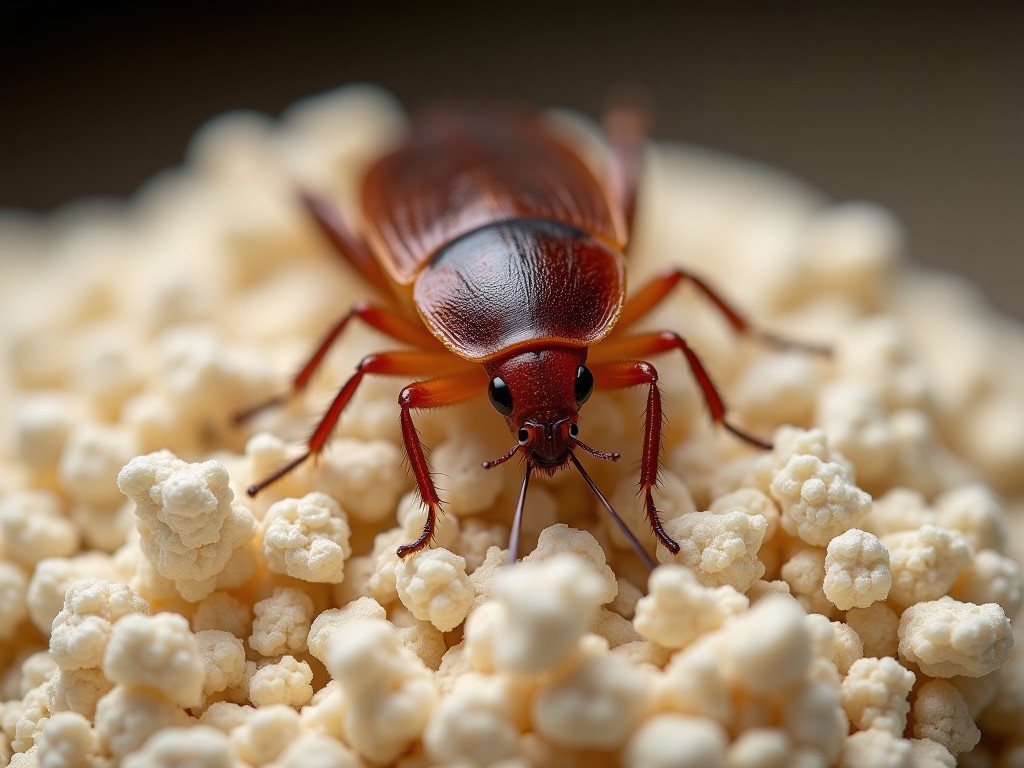
Diatomaceous Earth How To Use For Roaches
Diatomaceous Earth for Roach Control: Technical Overview
Diatomaceous earth (DE) is a naturally occurring siliceous sediment composed of fossilized diatom frustules. Its primary constituent is amorphous silicon dioxide, typically present as 80‑90 % SiO₂ by weight, with trace amounts of alumina and iron oxide.
The insecticidal action of DE relies on physical mechanisms rather than chemical toxicity. Microscopic shards with sharp edges abrade the waxy cuticle of insects, causing cuticular damage that leads to progressive desiccation.
Effectiveness against cockroach species such as Blattella germanica and Periplaneta americana is documented in laboratory studies where mortality exceeds 90 % within 48‑72 hours of continuous exposure to a dry dust layer.
Particle Characteristics Influencing Performance
The median particle size (D50) of food‑grade DE used for pest control typically ranges from 10 to 20 µm. Particles larger than 30 µm show reduced cuticular penetration, while sub‑5 µm fractions may become airborne and pose inhalation concerns.
Particle shape is predominantly irregular with a high aspect ratio, contributing to mechanical interlocking with the insect exoskeleton. Surface area measured by BET analysis commonly falls between 15 and 25 m²/g for grades suitable for indoor use.
Application Methods for Indoor Roach Management
DE can be applied as a dry dust, a wet slurry, or incorporated into bait matrices. Each method alters the effective exposure time and the likelihood of re‑entrainment by air currents.
- Dusting: DE is dispensed using a handheld powder duster to achieve a uniform layer of approximately 50 g/m² on harborages such as cracks, crevices, and behind appliances.
- Slurry application: DE is mixed with water at a ratio of 1:4 (DE:water) and sprayed onto surfaces; after drying, a residual film remains that retains abrasive properties.
- Bait incorporation: DE is blended with an attractant matrix at 5‑10 % w/w to create a dual‑action product that combines ingestion deterrence with cuticular abrasion.
Comparison of Application Techniques
| Method | Typical Application Rate | Coverage Area per kg | Recommended Frequency |
|---|---|---|---|
| Dry dust | 50 g/m² | 20 m² | Reapply after cleaning or if layer disturbed |
| Wet slurry | 200 g DE per L water | 10 m² (wet) | Once, until dry; re‑dust if humidity persists |
| Bait matrix | 5‑10 % DE w/w | Depends on bait placement | Replace bait every 4‑6 weeks or when consumed |
Safety and Handling Considerations
Although DE is classified as a low‑toxicity particulate, respirable crystalline silica content must be verified. Food‑grade DE typically contains <1 % crystalline silica, meeting OSHA permissible exposure limits when dust control measures are observed.
Personal protective equipment recommended during application includes a NIOSH‑approved N95 respirator, safety goggles, and gloves to prevent mechanical irritation of skin and eyes.
Environmental fate studies indicate that DE is inert in soil and does not bioaccumulate; however, large releases to aquatic systems may increase turbidity temporarily.
Selection Criteria for Industrial Users
Key specifications to verify before purchase include:
- Amorphous SiO₂ content ≥ 85 %
- Median particle size (D50) 10‑20 µm
- Loss on drying ≤ 5 % (moisture content)
- pH of aqueous slurry between 7 and 9
Suppliers should provide a certificate of analysis (CoA) referencing ASTM C618 or equivalent standards for mineral fillers.
Usage Instructions and Maintenance
For optimal roach suppression, apply DE to all potential harborage zones identified during an initial inspection. Focus on warm, humid locations such as under sinks, behind refrigerators, and within wall voids.
Re‑application is necessary when the visible dust layer is disturbed by cleaning, water exposure, or air movement. In high‑traffic commercial kitchens, a weekly inspection schedule is commonly adopted.
Monitoring can be performed using sticky traps placed adjacent to treated areas; a reduction in trap capture rate of > 70 % after two weeks indicates effective suppression.
Storage and Shelf Life
DE should be stored in a dry, sealed container away from direct sunlight. Moisture absorption reduces efficacy by causing particle agglomeration, which increases the effective D50 and diminishes cuticular penetration.
When kept under these conditions, the product maintains its physical properties for at least 24 months from the date of manufacture.
Frequently Asked Questions
Can the particle size be customized for specific equipment?
Yes, many suppliers offer jet‑milled or air‑classified fractions to achieve D50 values outside the standard range, subject to minimum order quantities and additional processing fees.
What information is required before a quotation can be issued?
Typical data include desired SiO₂ purity, particle size distribution, required packaging (e.g., 25 kg bags, bulk totes), and destination for freight calculation.
Is DE compatible with other pest‑control agents?
DE can be used concurrently with gel baits or insect growth regulators, as its mode of action is purely physical and does not interfere with biochemical pathways.
However, mixing DE with liquid pesticides may alter slurry viscosity and should be evaluated on a case‑by‑case basis.