
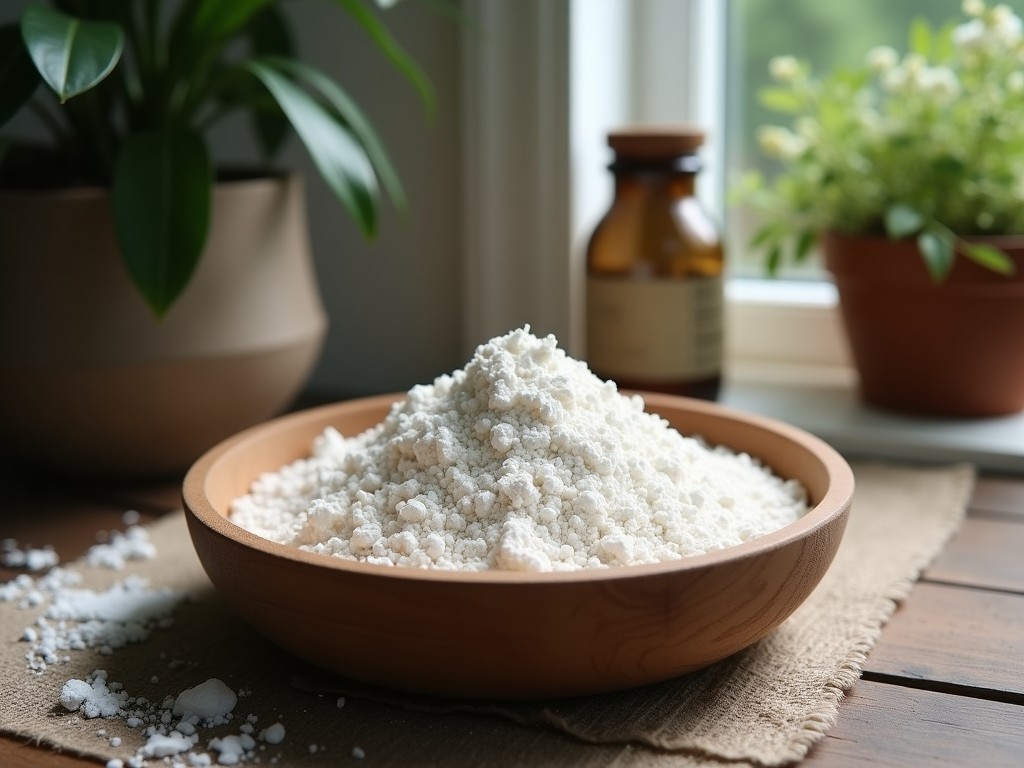
Diatomaceous Earth How To Use Indoors
Diatomaceous Earth for Indoor Use: Technical Overview
The material originates from fossilized silica shells of diatoms, primarily composed of amorphous silicon dioxide (SiO₂). Typical grades contain 80‑90 % SiO₂, with trace amounts of aluminum oxide and iron oxide contributing to bulk density values between 0.20 g/cm³ and 0.30 g/cm³.
Food‑grade diatomaceous earth is distinguished by low crystalline silica content (< 1 %) and compliance with FDA GRAS status for certain feed and food contact applications. Particle size distribution commonly spans 5 µm to 100 µm, with a median diameter (D50) around 15 µm, influencing flowability and surface area.
Indoor exploitation leverages the product’s high porosity and abrasive microstructure to achieve moisture adsorption, odor neutralization, and mechanical desiccation of insects. The adsorption capacity for water vapor can reach 150 % of its weight under 90 % relative humidity, while the sharp silica edges disrupt insect cuticles, causing lethal dehydration within hours.
- Pest control in stored product environments (e.g., grain bins, pantry shelves) where a thin layer creates a desiccant barrier.
- Additive to humidifier wicks or dehumidifier pads to enhance moisture capture without chemical additives.
- Carpet and upholstery freshener that absorbs spills and reduces volatile organic compounds.
- Litter box additive that reduces ammonia odor by adsorbing urea metabolites.
- Spill absorbent for oils, solvents, or water‑based liquids on workshop floors.
Application rates depend on target function and substrate porosity. For indoor pest suppression, a uniform dusting of 50 g – 100 g per square meter is typical, with re‑application advised after vacuuming or when surface coverage falls below 30 %. For moisture buffering in pads, a loading of 10 % – 20 % by weight of the substrate achieves measurable equilibrium humidity shift.
Safety considerations focus on dust inhalation. Use of a NIOSH‑approved N95 respirator is recommended during bulk handling, and application should be performed in well‑ventilated areas to keep airborne particulate concentrations below the OSHA PEL of 5 mg/m³ for respirable silica.
| Property | Typical Value |
|---|---|
| SiO₂ Content (amorphous) | 80 % – 90 % |
| Bulk Density | 0.20 g/cm³ – 0.30 g/cm³ |
| Particle Size (D50) | ≈ 15 µm |
| Moisture Adsorption (90 % RH) | Up to 150 % wt |
| pH (10 % slurry) | 8.0 – 9.0 |
Frequently Asked Questions
Can the particle size be adjusted for specific indoor equipment?
Yes, manufacturers can supply milled grades with tighter distributions (e.g., D50 < 10 µm) for use in fine‑filter media or low‑dust applications, subject to additional processing costs.
What information is required to obtain a quotation for bulk indoor‑grade material?
Key data include desired grade (food‑ vs filter‑grade), target particle size range, quantity (metric tons), delivery location, and any required documentation such as SDS or FDA compliance statements.
How is product quality verified before shipment?
Quality control typically involves laser diffraction for particle size, X‑ray fluorescence for silica purity, and loss‑on‑drying tests to confirm moisture content below 0.5 %. Certificates of analysis are provided upon request.
What packaging options are available for indoor use?
Standard offerings include multi‑wall paper bags (25 kg), polyethylene‑lined bags for moisture barrier, and reusable intermediate bulk containers (IBCs) of 500 kg capacity, all palletized for stable transport.