
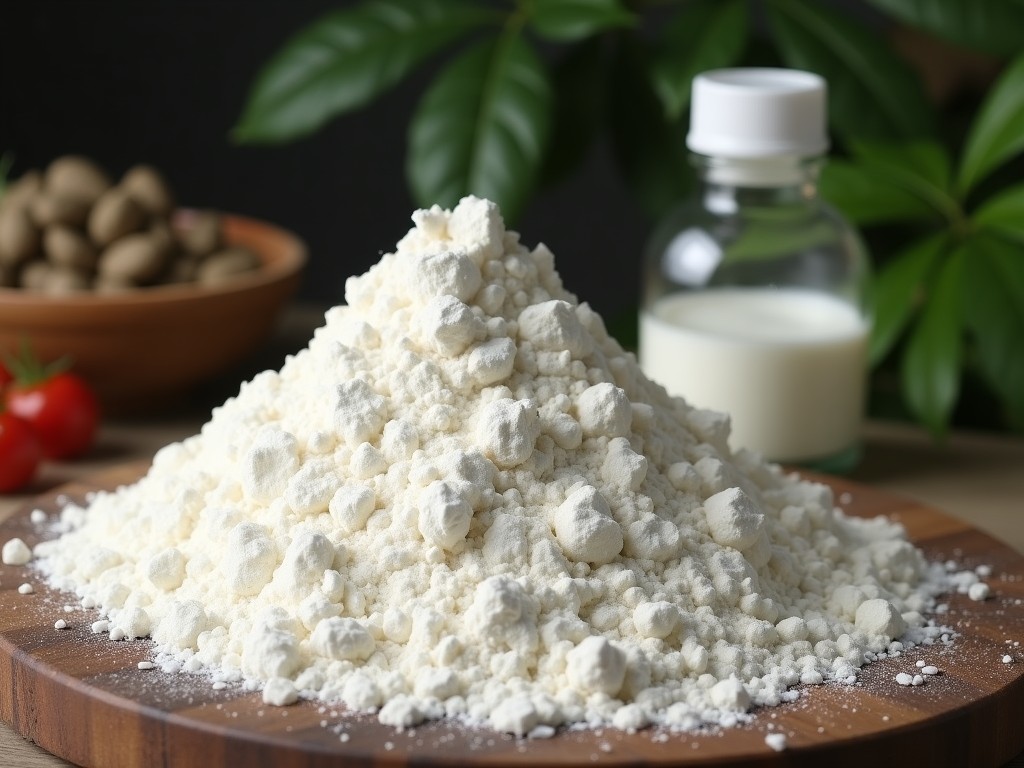
Diatomaceous Earth Insecticide How To Use
Diatomaceous Earth Insecticide: Technical Use Guide
Product Overview
Diatomaceous earth (DE) is a naturally occurring siliceous sediment composed of fossilized diatom frustules. When milled to a controlled particle size range of 10‑50 µm and bulk density of 0.3‑0.5 g cm⁻³, it functions as a mechanical insecticide that relies on physical interaction rather than chemical toxicity.
Mechanism of Action
The sharp edges of DE particles abrade the waxy cuticle of insects, creating micro‑abrasions that increase cuticular permeability. Simultaneously, the highly porous silica absorbs lipids and waxes from the cuticle, accelerating desiccation. Mortality typically occurs within 24‑48 hours under ambient humidity below 60 % RH.
Typical Applications
DE is employed where residual chemical exposure must be minimized, such as in stored grain facilities, organic livestock barns, mushroom houses, and greenhouse seedling trays. Its inert silica matrix does not react with fumigants or fertilizers, allowing integration into existing pest‑management programs without altering chemical compatibility.
- Protection of bulk commodities (wheat, corn, rice) against beetles and weevils.
- Control of mites and lice in poultry litter and cattle bedding.
- Barrier treatment for greenhouse benches to deter fungus gnat larvae.
- Perimeter dusting around food‑processing equipment to mitigate crawling insect ingress.
Recommended Application Rates
| Target Pest | Rate (g m⁻²) | Re‑application Interval |
|---|---|---|
| Stored‑product beetles | 2‑4 | Every 4‑6 weeks or after product turnover |
| Poultry mites | 5‑8 | After each litter change |
| Greenhouse fungus gnat larvae | 3‑5 (surface dust) | Bi‑weekly during seedling stage |
| Perimeter barrier (food plant) | 10‑15 (linear band 10 cm wide) | Monthly or after wet cleaning |
Application Methods
Three primary delivery techniques are used, each selected according to substrate geometry and required penetration depth.
- Dry dusting – Utilizes a rotary or bellows duster to apply a uniform layer of DE onto dry surfaces. Effective for bulk grain tops, litter, and equipment housings where moisture content is below 12 %.
- Slurry spray – DE is dispersed in water at 5‑10 % w/v with a mild surfactant (≤0.1 %) to prevent nozzle clogging. The suspension is applied via low‑pressure spray nozzles, allowing penetration into cracks and crevices before drying leaves a residual dust film.
- Electrostatic deposition – Charged DE particles adhere to grounded substrates, improving coverage on complex geometries such as conveyor rollers or poultry cages. Requires a dedicated electrostatic applicator and relative humidity below 50 % to avoid charge dissipation.
Handling and Safety
Although DE is classified as a nuisance dust, respirable silica fractions below 10 µm must be controlled. Use of NIOSH‑approved N95 respirators or equivalent is recommended during bulk handling. Local exhaust ventilation should capture dust at transfer points, and wet‑scrubbing methods are preferred for cleaning spills to avoid airborne re‑entrainment.
Eye protection (safety goggles) and impermeable gloves prevent mechanical irritation. DE does not pose a chemical hazard; however, prolonged skin contact may cause dryness, necessitating routine moisturizing after work shifts.
Storage and Stability
Store DE in a dry, covered environment to maintain flowability. Moisture uptake above 8 % w/w increases bulk density and reduces dispersibility, potentially requiring re‑conditioning via low‑temperature fluidization. Under controlled conditions (≤25 °C, ≤60 % RH) the product retains its insecticidal efficacy for at least 24 months without degradation.
Frequently Asked Questions
Can the particle size be customized for specific equipment?
Yes. Milling parameters can be adjusted to produce narrower distributions (e.g., D50 = 15 µm) for fine‑mist sprayers or broader ranges (D50 = 35 µm) for gravity feed dusters. Specify the required D10, D50, and D90 values during quotation.
What information is needed to obtain a price quote?
Provide target application rate, estimated annual volume, preferred packaging (e.g., 25 kg multi‑wall bag, 500 kg FIBC), and any required certifications (organic, food‑grade). Including the intended end‑use helps the technical team confirm compatibility with existing processes.
How is product quality verified?
Each lot undergoes laser diffraction particle‑size analysis, loss‑on‑drying moisture testing, and silica purity assessment via X‑ray fluorescence. Results are reported in a Certificate of Analysis available upon request.
Technical Support and Inquiry
For detailed dosing calculations, equipment recommendations, or safety data sheet requests, contact our application engineering team.