
Diatomaceous Earth Price Per Ton Top Suppliers
Diatomaceous Earth Price per Ton – Top Suppliers Overview
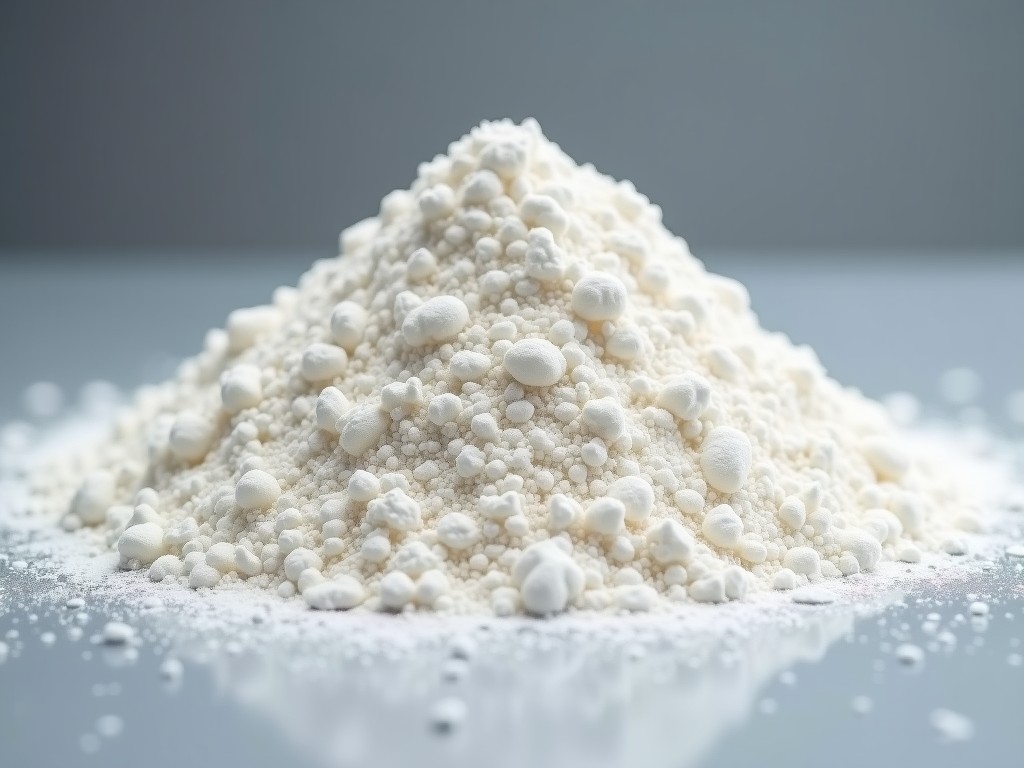
Diatomaceous earth (DE) is a naturally occurring siliceous sediment composed of fossilized diatom frustules. Its primary component is amorphous silicon dioxide, typically ranging from 80% to 94% SiO₂ by weight, with trace amounts of alumina, iron oxide, and moisture. Bulk density varies between 0.2 and 0.5 g/cm³ depending on processing grade and particle size distribution.
What Is Diatomaceous Earth?
The material originates from freshwater or marine deposits where diatomaceous skeletons accumulate over geological timescales. After mining, the crude ore undergoes drying, milling, and optionally calcination to alter surface chemistry and increase filtration efficiency. Raw DE retains a high porosity (often > 60 % void fraction) and a specific surface area of 20–45 m²/g, while calcined grades exhibit reduced surface area but enhanced hardness and chemical inertness.
Factors Influencing Price per Ton
Price fluctuations stem from several technical variables:
- Purity level – higher SiO₂ content and lower impurities command premium pricing.
- Processing type – raw, flux‑calcined, or heat‑treated grades differ in energy input and thus cost.
- Particle size specification – finer powders for filtration or coarser granules for absorbents require additional milling steps.
- Moisture content – low‑moisture (< 5 %) product reduces shipping weight and prevents clumping.
- Logistics – distance from mine to port, freight mode, and import duties affect landed cost.
- Purchase volume – tiered pricing structures often apply above 10 ton or 20 ton lots.
Typical Price Ranges by Supplier Region
| Supplier Region | Product Type | Typical Price (USD/ton) | Minimum Order | Notes |
|---|---|---|---|---|
| United States (Western) | Raw, < 45 µm | 250–320 | 5 ton | FOB mine, 88 % SiO₂ |
| United States (Western) | Flux‑calcined, < 20 µm | 340–410 | 5 ton | FOB, 90 % SiO₂, low loss on ignition |
| China (Northern) | Raw, < 75 µm | 180–240 | 10 ton | FOB port, 82 % SiO₂, higher moisture |
| Europe (Germany) | Calcined, < 15 µm | 380–460 | 3 ton | EXW, 92 % SiO₂, low Fe₂O₃ |
| India (Western) | Granular, 0.5–2 mm | 150–210 | 10 ton | FOB, used as absorbent carrier |
Top Supplier Categories
Suppliers fall into three functional groups based on value‑added services:
- Integrated miners – own quarries, perform drying and sizing, offer consistent grade control.
- Specialty chemical distributors – source raw or calcined DE, blend with functional additives, provide technical support.
- Process tollers – accept customer‑supplied ore, apply custom calcination or surface treatment per specification.
Quality Specifications to Consider
When evaluating quotations, request the following typical test data:
| Parameter | Typical Range (Raw) | Typical Range (Calcined) | Test Method |
|---|---|---|---|
| SiO₂ content (%) | 80–90 | 90–96 | XRF |
| Loss on Ignition (LOI, %) | 5–12 | < 2 | Thermogravimetric |
| Bulk Density (g/cm³) | 0.20–0.35 | 0.30–0.45 | ASTM C29 |
| pH (10 % slurry) | 7.5–9.0 | 7.5–9.0 | ASTM D1293 |
| Moisture (%) | 4–8 | < 0.5 | Karl Fischer |
Common Industrial Applications
In filtration, DE’s high porosity and inert surface enable removal of particulates down to 1 µm in beverage and pharmaceutical liquids; the required permeability is directly linked to particle size distribution and cake compressibility. As an absorbent, its low bulk density and high surface area facilitate spill containment for oils and chemicals, with capacity often expressed as grams of liquid absorbed per gram of DE. In agriculture, DE functions as a carrier for pesticide formulations, where its abrasive texture contributes to insect desiccation mechanisms; efficacy correlates with SiO₂ purity and sharpness of frustule edges.
Procurement Checklist
- Confirm SiO₂ purity and LOI limits match process requirements.
- Specify desired particle size (D₅₀) and distribution width.
- Request moisture content and packaging type (bag, bulk, super‑sack).
- Ask for recent test certificates (XRF, PSD, moisture).
- Clarify lead time for the ordered volume and any minimum run size.
- Verify freight terms (FOB, CIF) and insurance coverage for transit.
Frequently Asked Questions
Can dimensions be customized? Yes, particle size can be adjusted through milling or classification; suppliers typically offer standard cuts (e.g., < 45 µm, < 20 µm) and can produce custom grades upon request.
What information is required before quotation? Provide target SiO₂ range, maximum LOI, desired particle size (D₅₀), moisture tolerance, quantity, and delivery incoterm.
How is quality inspected? Reputable suppliers perform lot‑wise XRF for chemistry, laser diffraction for PSD, and gravimetric moisture analysis; certificates of analysis accompany each shipment.
What packaging methods are available? Options include 25 kg multi‑wall paper bags, 500 kg polypropylene bulk bags, and loose bulk in railcars or containers; moisture‑barrier liners are available for hygroscopic grades.
What is the typical production lead time? For stocked raw grades, lead time is usually 5–10 business days; custom calcined or sized products may require 2–4 weeks depending on furnace availability.
Request a Quote
To obtain a formal proposal tailored to your specification, please complete the inquiry form.
Submit Request for Quotation