
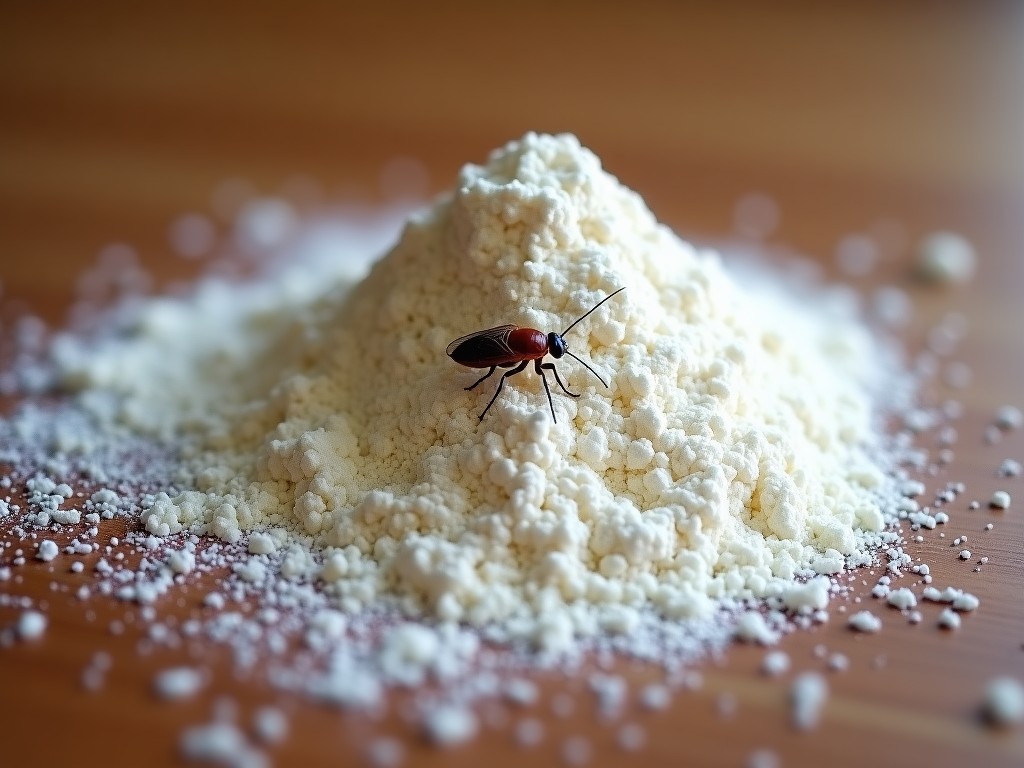
Diatomaceous Earth To Get Rid Of Fleas Ants Roaches
Diatomaceous Earth for Fleas, Ants & Roaches – Industrial & Commercial Pest Management
Diatomaceous earth (DE) controls crawling pests through a purely mechanical desiccation process. No active chemistry. No insect resistance. No chemical residue on product surfaces or in storage environments. For facilities managing flea infestations in animal handling areas, ant pressure around perimeter zones, or roach populations in warehouse corridors, DE offers a contact-action solution that integrates with existing GMP and HACCP protocols without triggering chemical hold-back procedures.
The material is processed from fossilized diatomite deposits into a fine amorphous calcium silicate powder. When a crawling insect walks across or through treated dust, the sharp siliceous edges abrade the waxy epicuticular layer of its exoskeleton. Loss of that waxy barrier accelerates water loss from the insect's body. Desiccation follows within 4–72 hours depending on species, humidity, and coverage density. The mechanism is physical, not biochemical—meaning no receptor site mutation, no target-site resistance, and no cross-resistance concerns with prior chemical programs.
How Diatomaceous Earth Eliminates Crawling Pests: The Mechanism
Most facility managers understand "desiccation" in theory but underestimate the surface-area requirement. Effective DE for pest control is ground to a particle size between 10 and 50 microns, with a median around 20–30 microns. At that fineness, each particle presents a high surface-area-to-volume ratio. The microscopic serrations on the diatom frustules act as thousands of tiny cutting edges. When an ant's tarsi contact the powder, the wax layer shears. A roach's thicker exoskeleton requires more contact time, which is why broadcast application into cracks and voids outperforms surface-only dusting for Blattella germanica and Periplaneta americana.
Critical operational variable: ambient relative humidity. Above approximately 60% RH, the hygroscopic surface of the diatom frustule rehydrates and the cutting action degrades significantly. In high-humidity basements, coastal warehouses, or tropical processing plants, coverage rates must increase or the product must be re-applied after humidity spikes. Dry conditions below 40% RH extend the service life of a single application substantially.
Fleas complicate the picture because the adult stage is mobile and the larval/pupal stages reside in debris. DE applied to the soil or substrate where flea pupae develop interrupts the life cycle at the resting stages. For established infestations in kennel facilities, veterinary clinics, or pet-care commercial spaces, a combination of targeted dusting into cracks plus a broadcast application over infested substrate is the standard approach. Repeat applications at 7- and 14-day intervals align with the flea life cycle to eliminate newly emerged adults before they reproduce.
Target Pest Profiles & Application Guidance
The following table summarizes typical application parameters. Actual rates depend on infestation density, ambient humidity, and surface porosity. These values serve as starting points for a facility's integrated pest management (IPM) protocol.
| Target Pest | Typical Application Rate | Application Method | Re-treatment Interval | Key Consideration |
|---|---|---|---|---|
| Fleas (Ctenocephalides spp.) | 30–50 g/m² broadcast; heavier into cracks | Broadcast over infested substrate; targeted dust into seams | Every 7–14 days × 3 cycles | Address pupal stage; vacuum before re-dusting |
| Ants (Camponotus, Tapinoma, Iridomyrmex) | 10–20 g/m² along entry points, under slabs, in voids | Targeted dusting into cracks, under door sweeps, along perimeter | Every 4–6 weeks; re-treat after rain/flood | Colony may retreat; combine with bait in food-processing zones |
| Roaches (Blattella, Periplaneta) | 20–40 g/m² in voids, behind equipment, in wall cavities | Dusting into cracks, behind baseboards, under shelving, into HVAC plenums | Every 4–6 weeks; monitor with sticky traps | Thicker exoskeleton; deeper void coverage required |
| Stored-product beetles (Tribolium, Rhyzopertha) | 15–25 g/m² in bin floors, under pallets, along wall bases | Broadcast thin layer; combine with sanitation | Seasonal; re-apply after bulk clean-out | Food-grade certification required for ambient contact zones |
Grade, Particle Size & Material Specification
DE is sold in several grades depending on source deposit, processing, and end-use. The distinction matters for food-safety and indoor-air-quality reasons. Two primary categories are available:
- Food-Grade (FG-DE): Amorphous calcium silicate. Typically processed by heat-treatment to below 40% total moisture. Suitable for application in food-processing environments, pet-care facilities, and indoor commercial spaces where occupants and product contact occur. Free of crystalline silica above detection limits in standard assay protocols.
- Industrial / Pool-Filter Grade (IG-DE): Lower particle fineness, higher moisture content, may contain trace crystalline silica. Cost-effective for outdoor agricultural structures, perimeter zones, and non-occupied crawl spaces. Not recommended for indoor food-contact or occupied commercial interiors.
Particle size is the single most variable parameter. Common commercial offerings span 20 mesh to 200 mesh. For crawling-pest control, the 80–100 mesh range (approximately 150–180 µm nominal, but with a fine fraction below 50 µm that does the actual exoskeletal abrasion) provides the best balance between ease of application, settling behavior, and contact efficacy. Finer 200-mesh powders generate more airborne dust during handling, which is a consideration for indoor occupied facilities without HEPA filtration.
Batch-to-batch variability in moisture content (commonly 4–12% as packed) affects shelf life, clumping tendency, and effective contact time. Buyers specifying a project should request a COA (certificate of analysis) per shipment confirming silica content (typically 75–97% SiO₂ for food-grade), moisture, pH, and heavy-metal limits if the application environment is regulated.
DE Versus Chemical Insecticide Programs: A Facility-Level Comparison
Many pest-management teams maintain a chemical rotation and ask where DE fits. The comparison below is not a blanket recommendation to replace all chemical treatments; it is a decision framework. DE's strengths are mechanical reliability, zero resistance development, no re-entry interval, and compatibility with food-safety auditing. Its limitations are humidity sensitivity, no action on flying insects, and no systemic (bait-take) kill of colony members that never contact the dust.
| Parameter | Diatomaceous Earth | Synthetic IGR / Pyrethroid / Neonic |
|---|---|---|
| Mechanism | Physical exoskeletal abrasion → desiccation | Neurotoxic, hormonal, or metabolic disruption |
| Resistance Risk | None (no biochemical target) | Documented in Blattella, Anoplolepis, and various ant species |
| Re-entry / Dwell Time | None for food-grade; area available immediately once settled | Typically 2–24 h depending on product label |
| Humidity Sensitivity | Significant above 60% RH; re-treat or supplement | Most synthetic actives less affected by RH |
| Flying Insects | Limited efficacy; not a primary tool | Effective with appropriate chemistry |
| Regulatory / Audit Footprint | No chemical log required (food-grade); record application volume and date | Chemical usage log, SDS on file, operator PPE records |
| Service Life (dry conditions) | Weeks to months; re-treat as coverage degrades | Varies by product; typically 30–90 days |
| Cost per Application (indoor, 500 m²) | Customizable according to project requirements; generally 40–60% less than equivalent synthetic program over 12 months | Depends on active ingredient, concentration, and re-treat frequency |
In practice, most large facilities run a hybrid program: DE in voids, crawl spaces, bin floors, and exterior perimeter zones; targeted chemical bait or IGR in food-handling areas where a re-entry interval is acceptable and humidity control is unreliable. The two approaches complement rather than compete.
Manufacturing, Packaging & Logistics
DE is mined as a friable sedimentary deposit, dried, milled, and optionally heat-treated to reduce crystalline-silica fraction below detection for food-grade specifications. Milling is the step that determines particle-size distribution. A 200-mesh output from a standard pin mill differs in shape, surface energy, and settling velocity from the same nominal mesh produced by a jet mill. Buyers who need consistent application behavior month-over-month should specify the milling method and request a laser-diffraction PSD curve with each lot.
Packaging options available to us include:
- 25 kg and 50 kg multi-wall paper or PP bags (standard unit for jobbers and facility stores)
- Bulk via 1,000 kg big-bags or palletized 50 × 25 kg configurations
- Food-grade 5 kg and 10 kg retail-ready pouches for end-user distribution
- Bulk tote or hopper delivery for on-site automated dusting equipment (available upon request for volumes exceeding 2,000 kg/month)
All shipments include a batch number, COA, and SDS (even though DE is generally not classified as hazardous under GHS, the document is standard for import/export compliance). For export, vacuum-sealed inner liners are available to protect against moisture ingress during ocean freight. Desiccant sachets can be included in the inner packaging for tropical-destination shipments where container humidity regularly exceeds 80%.
FAQ – Questions Facility & Procurement Teams Ask
Can particle size or mesh be customized for a specific application?
Yes. Standard SKUs run 20, 60, 80, 100, and 200 mesh. For projects requiring a tighter PSD (for example, an automated dusting system with a narrow orifice that clogs above 500 µm), we can run a dedicated jet-mill pass on a specific lot. Lead time for a custom mesh runs 10–15 business days from PO confirmation, depending on batch availability.
What information do you need before quoting a project quantity?
Target area (square meters or square feet), pest species (or at minimum: crawling or flying; ant species if known), ambient humidity range, whether the material will contact food/product (food-grade required), desired mesh, packaging format, and destination port or dock address. If you are a pest-control company quoting to a client, include your client's facility type and any GMP/HACCP constraints so we can flag whether food-grade certification documentation is needed.
How is product quality verified before shipment?
Each production batch is screened for moisture content, SiO₂ percentage, pH, and a heavy-metal panel (lead, cadmium, arsenic, mercury) within limits set by the destination-market regulation. Food-grade lots additionally undergo a crystalline-silica assay (XRD or DLS-based) confirming amorphous composition. The COA referencing the batch number ships with the goods. Third-party inspection (SGS, Bureau Veritas, Intertek) can be arranged at buyer's request.
What is the typical production and shipping lead time?
Standard-mesh, standard-pack orders under 5,000 kg ship from stock within 5–7 business days. Larger or custom-mesh orders typically run 15–25 business days from confirmed PO. Air-freight for urgent single-container needs is available; sea-freight timelines are port-dependent. For export, add 5–10 days for documentation and container stuffing.
Can samples be arranged before placing a full order?
Yes. We hold 1 kg and 5 kg sample quantities across our standard mesh range. Samples ship via express courier (2–4 days domestic; 4–7 days international). For buyers specifying a custom mesh or a food-grade lot with a particular origin deposit, sample lead time extends by 3–5 days for milling and assay. Samples are provided at no charge; courier cost is billed or prepaid depending on the buyer's preference.
Sourcing & Project Support
If your facility is transitioning a portion of its pest-control program to DE, or adding it to an existing hybrid IPM plan, the engineering conversation starts with site conditions. Ambient humidity profiles, the species list you are tracking, existing chemical rotation (to avoid redundant spend), and the physical access of voids, bin floors, and perimeter zones all shape which mesh, grade, and application cadence will hold up through a full seasonal cycle.
Send your facility specifications, target pest list, and approximate treated area to our technical sales team. We will return a matched mesh/grade recommendation, a projected annual volume estimate based on re-treat intervals, and a sample kit for your team to run a 2-week pilot in one corridor or zone before committing to a facility-wide rollout.
For distributors and jobbers evaluating a private-label or repack line, our technical file includes mill specifications, COA templates, labeling artwork support, and a suggested retail/wholesale margin model based on your region's input-cost baseline.
Request a Technical Consultation & Sample Kit