
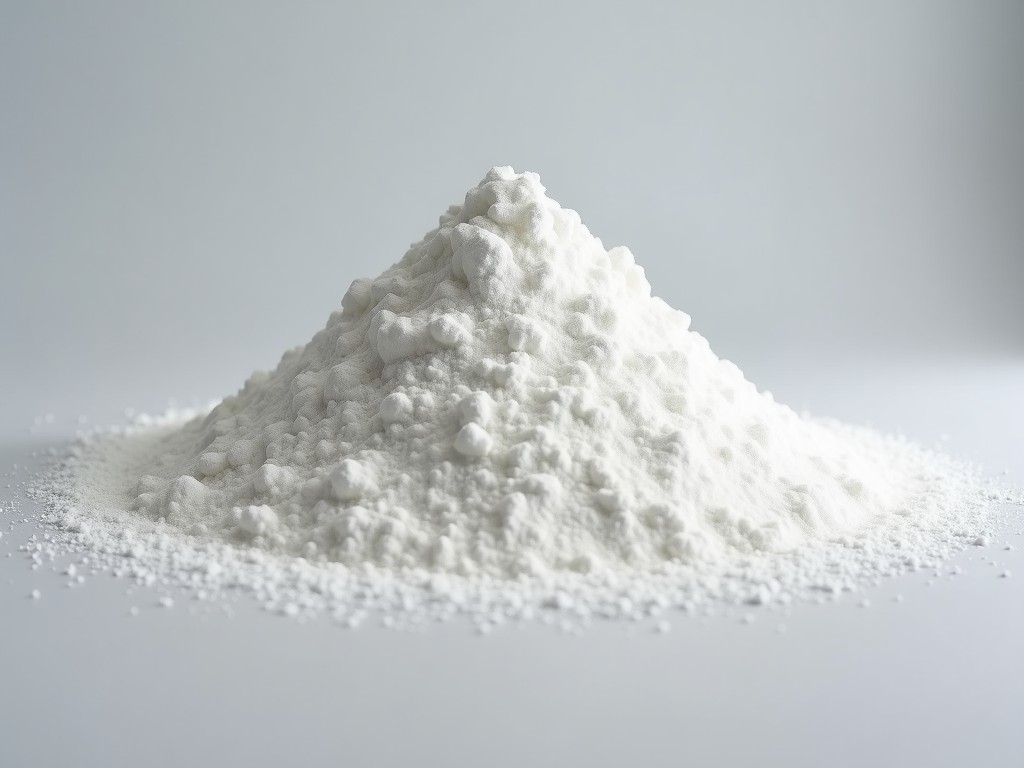
Fumed Silica Powder Price Per Ton For Sale
Fumed Silica Powder – Technical Overview and Pricing
Material Characteristics
Fumed silica is a synthetic amorphous silicon dioxide produced by flame hydrolysis of silicon tetrachloride. Primary particle size typically ranges from 5 nm to 50 nm, giving a specific surface area between 50 m²/g and 400 m²/g depending on grade. The bulk density varies from 0.03 g/cm³ for low‑density grades to 0.15 g/cm³ for densified types.
Surface chemistry is predominantly silanol (Si‑OH) groups, which can be left untreated for hydrophilic applications or modified with silanes to impart hydrophobicity. These surface traits directly influence rheology, reinforcement, and compatibility in polymer matrices.
Production Process
The flame hydrolysis reactor operates at temperatures above 1 200 °C, where SiCl₄ vapor reacts with hydrogen and oxygen to form SiO₂ nuclei. Rapid quenching arrests particle growth, preserving the nanoscale structure. The resulting aerosol is collected via bag filters and may undergo downstream densification or surface treatment.
Process parameters such as flame temperature, residence time, and precursor flow rate are tightly controlled to achieve target surface area and aggregate size distribution. In‑line laser scattering monitors particle size, enabling real‑time adjustments.
Typical Applications
- Thixotropic agent in silicone sealants and adhesives, where a 0.5 wt % addition yields a yield stress increase of 150 Pa.
- Reinforcing filler in epoxy resins, improving tensile strength by up to 30 % at 5 wt % loading.
- Anti‑settling aid in pigment dispersions, reducing sedimentation rate by 70 % in aqueous coatings.
- Carrier for catalytic active sites in petrochemical reactors, providing high surface area with inert silica backbone.
- Flow‑control additive in powdered pharmaceuticals, improving compressibility and reducing capping.
Each application exploits the interplay between surface area, silanol density, and aggregate structure to achieve specific performance targets such as viscosity modulation, mechanical reinforcement, or moisture resistance.
Pricing and Availability
Price per ton varies with purity, surface area, and any surface treatment. The table below shows indicative ex‑works prices for standard grades; final quotes depend on order volume, delivery terms, and customization requirements.
| Grade | Surface Area (m²/g) | Typical Use | Price Range (USD/ton) |
|---|---|---|---|
| Hydrophilic, low density | 200‑300 | Silicone sealants, adhesives | 1 200‑1 500 |
| Hydrophilic, high density | 100‑150 | Epoxy reinforcement, coatings | 900‑1 100 |
| Hydrophobic (trimethylsilyl) | 150‑250 | Water‑resistant composites, masterbatches | 1 400‑1 800 |
| Surface‑modified (amino, epoxy) | 100‑200 | Adhesion promoters, coupling agents | 1 600‑2 200 |
Minimum order quantities typically start at 5 tons for standard grades; smaller trial quantities are available upon request. Freight costs are not included and vary by destination and Incoterms.
Quality Control and Certification
Each batch undergoes laser diffraction for particle size distribution, BET analysis for surface area, and titration for silanol content. Moisture content is measured by Karl Fischer titration, targeting <0.05 wt % for hydrophobic grades. All tests follow ISO 9001‑aligned procedures.
Certificates of Analysis (CoA) accompany every shipment, reporting the aforementioned parameters plus heavy‑metal limits (Pb, Cd, Hg, As <10 ppm). Upon customer request, we can provide REACH compliance documentation and safety data sheets aligned with GHS.
Packaging and Logistics
Standard packaging includes 25 kg multi‑wall paper bags with polyethylene liner, placed on pallets (40 bags per pallet, ≈1 ton). For bulk shipments, we offer 500 kg flexible intermediate bulk containers (FIBCs) with antistatic coating, or pneumatic tanker delivery for volumes exceeding 10 tons.
Packaging is designed to prevent moisture uptake and contamination during transit. Pallets are stretch‑wrapped and corner‑protected; FIBCs are equipped with lift loops and discharge spouts. All materials meet UN packaging standards for non‑hazardous powders.
Lead Time and Ordering
Production lead time for standard grades is 2‑3 weeks after receipt of purchase order, assuming raw material availability. Custom surface treatments or specific particle size extensions may add 1‑2 weeks. We provide production scheduling updates via email upon order confirmation.
To initiate a quotation, please submit the desired grade, required surface area or treatment, quantity (tons), delivery location, and preferred Incoterm. Our technical team will respond with a formal offer, including CoA template and logistics options.
Frequently Asked Questions
Can the particle size distribution be customized? Yes, by adjusting flame reactor conditions we can shift the median primary size between 5 nm and 50 nm; surface area correlates inversely with size.
What information is needed for a surface‑treatment quote? Required details include target functional group (e.g., amino, epoxy, alkylsilane), desired degree of coverage (µmol/g), and any compatibility constraints with the host matrix.
How is batch‑to‑batch consistency verified? Each lot is assigned a unique identifier; CoA reports include test dates, instrument calibration records, and acceptance criteria based on historical control charts (±5 % for surface area).
What packaging options exist for hygroscopic grades? Hydrophilic grades are supplied in moisture‑barrier bags with desiccant packs; alternative is nitrogen‑purged FIBCs for long‑term storage.
Are samples available for evaluation? Yes, we can provide up to 2 kg of any standard grade free of charge; custom grades may incur a nominal preparation fee.