
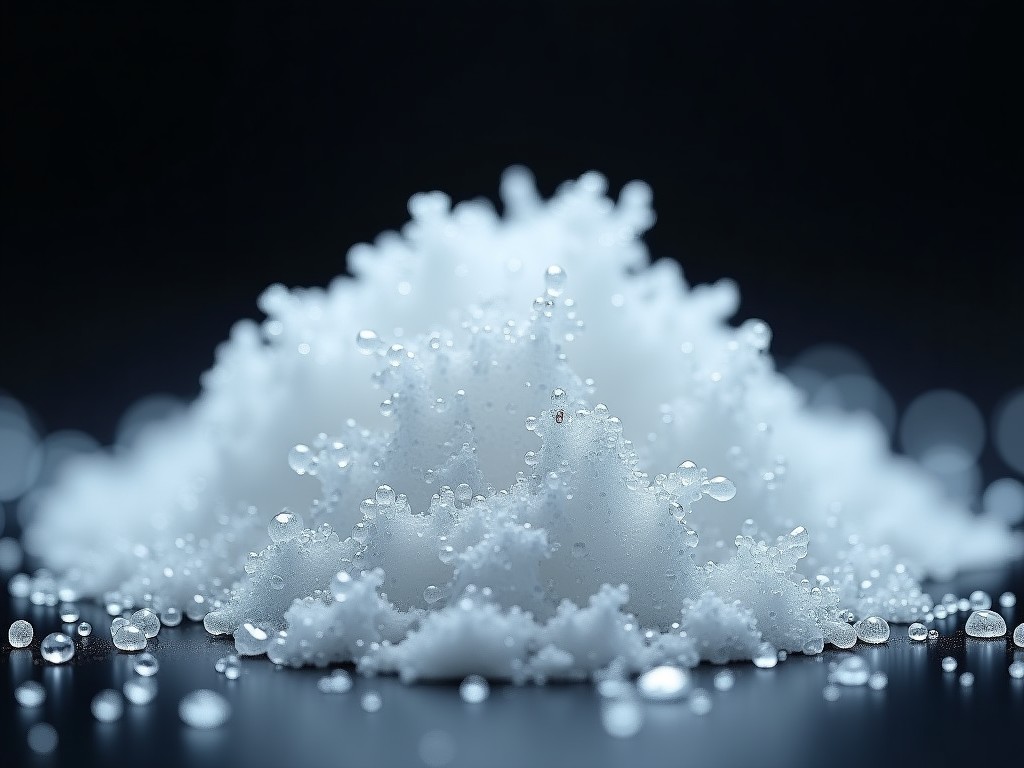
Hydrophobic Fumed Silica For Sale
Hydrophobic Fumed Silica for Sale
Hydrophobic fumed silica is a nanostructured silicon dioxide whose surface has been modified with silane-based agents to reduce affinity for water. This treatment converts the naturally hydrophilic silica into a material that disperses readily in non‑polar matrices while retaining the reinforcing effects of fumed silica.
The primary function of the hydrophobic coating is to prevent agglomeration caused by moisture, thereby preserving the high surface area and reinforcing capability in applications such as silicone rubber, polyurethane coatings, and epoxy systems.
Key Technical Characteristics
Typical values are derived from standard test methods (ASTM, ISO) and can be adjusted according to the specific silane treatment level required by the customer.
| Property | Typical Value | Test Method |
|---|---|---|
| Specific Surface Area (BET) | 150–250 m²/g | ASTM D3663 |
| Bulk Density | 40–60 kg/m³ | ASTM D1210 |
| pH (5% slurry) | 3.5–5.0 | ISO 787-9 |
| Loss on Drying (2 h @ 105 °C) | ≤0.5 wt% | ASTM D1208 |
| Water Contact Angle (on pressed pellet) | 110°–130° | ISO 19403‑1 |
| Treated Silane Content | 1–3 wt% (customizable) | Thermogravimetric Analysis |
Applications and Performance Rationale
In silicone rubber formulations, hydrophobic fumed silica acts as a reinforcing filler that improves tear strength and elongation without causing moisture‑induced cure inhibition. The silane‑treated surface prevents silica‑silica hydrogen bonding, which would otherwise lead to filler aggregation and uneven stress distribution.
For polyurethane coatings, the low moisture uptake extends pot life and reduces bubble formation during curing, while the high surface area contributes to anti‑settling and sag resistance. In epoxy systems, the hydrophobic nature improves compatibility with non‑polar resins, enhancing gloss and reducing viscosity rise over storage.
- Silicone elastomers – tensile strength, tear resistance, durometer stability.
- Polyurethane coatings – improved flow, reduced foaming, extended shelf life.
- Epoxy adhesives – lower viscosity, better wetting of fillers, enhanced mechanical properties.
- Sealants and caulks – reduced moisture sensitivity, consistent cure depth.
- Plastic compounds – anti‑blocking agent, rheology modifier in polyolefins.
Quality Assurance and Customization
Each batch undergoes laser diffraction for particle size distribution, BET analysis for surface area, and thermogravimetric analysis to verify silane loading. Hydrophobicity is quantified by contact angle measurement on pressed pellets, ensuring consistent performance across lots.
Customers can specify the degree of hydrophobicity (contact angle range), target surface area, or alternative silane chemistries (e.g., methyl, phenyl, or fluorinated groups) to match specific polymer compatibilities. Packaging options include multi‑wall paper bags with inner polyethylene liners, bulk flexible intermediate bulk containers (FIBCs), or moisture‑barrier drums for hygroscopic environments.
Request a Quote or Sample
To obtain a formal quotation, technical data sheet, or arrange a sample shipment, please provide your application details, required quantity, and any specific surface treatment specifications. Our technical team will respond with a tailored proposal within one business day.