
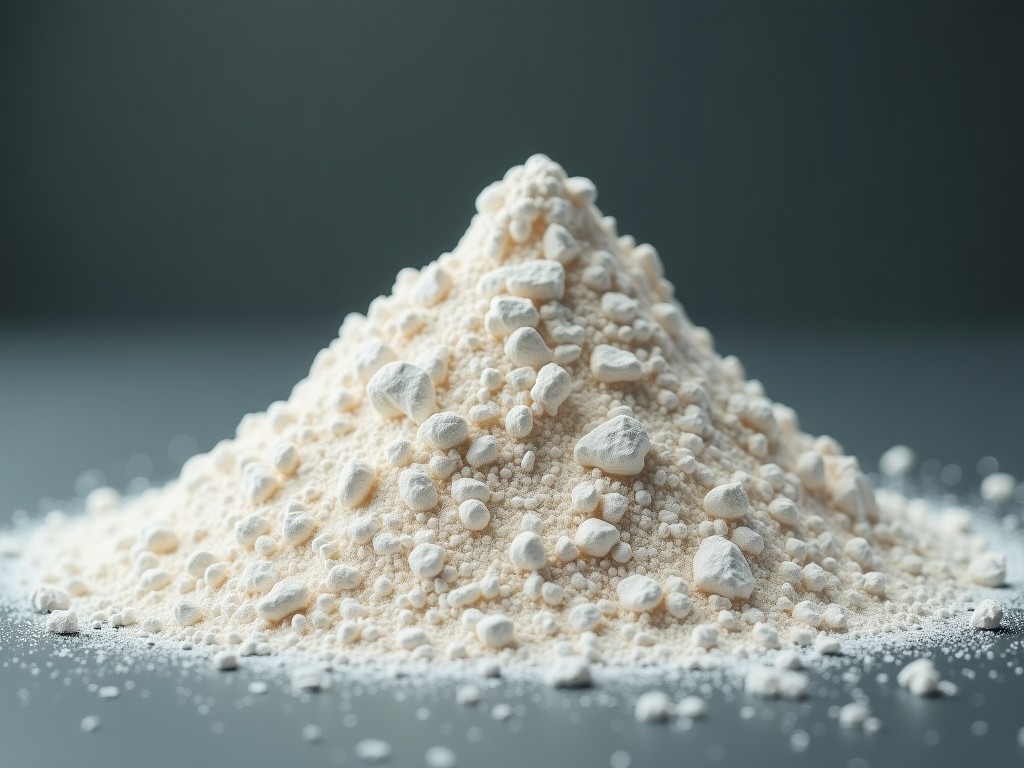
Oem Diatomaceous Earth For Demodex Mites On Humans
OEM Diatomaceous Earth for Demodex Mites on Humans
Diatomaceous earth (DE) is a naturally occurring sedimentary rock composed of fossilized diatom skeletons, primarily amorphous silica. When processed to specific particle size and purity grades, it exhibits mechanical properties that can interfere with the physiology of small arthropods such as Demodex folliculorum and Demodex brevis mites that inhabit human sebaceous follicles.
Material Composition and Purity
The product consists of >95% amorphous silicon dioxide (SiO₂) with trace amounts of aluminum oxide, iron oxide, and calcium carbonate typical of freshwater diatomite sources. Heavy metal limits are maintained below 10 ppm for lead, arsenic, cadmium, and mercury, meeting cosmetic‑grade specifications. Loss on drying is controlled to <5% to ensure stability in aqueous or emulsion formulations.
Particle Size Distribution and Porosity
Mechanical efficacy depends on controlling the size of the silica fragments so they are large enough to physically disrupt mite cuticles yet small enough to remain dispersed in topical carriers. Typical laser diffraction results for the standard OEM grade are shown below.
| Parameter | Typical Value | Test Method |
|---|---|---|
| D10 (µm) | 4.5 | Laser diffraction |
| D50 (µm) | 12.0 | Laser diffraction |
| D90 (µm) | 28.0 | Laser diffraction |
| Specific Surface Area (m²/g) | 45‑55 | BET nitrogen adsorption |
| Moisture Content (%) | <5 | Thermogravimetric analysis |
Mechanism of Action Against Demodex Mites
The primary mode is physical: sharp silica edges abrade the waxy cuticle of the mite, increasing permeability and leading to desiccation. Simultaneously, the high surface area adsorbs lipids and waxes from the mite’s outer layer, further compromising its barrier function. Because the action is mechanical, resistance development is unlikely, and the material remains inert toward human skin when formulated at appropriate concentrations (<5% w/w).
Quality Control and Testing
Each lot undergoes:
- Particle size verification by laser diffraction (D10, D50, D90).
- Surface area measurement via BET.
- Purity assessment using X‑ray fluorescence for trace metals.
- Microbial limits (total aerobic count <10³ CFU/g, yeast/mold <10² CFU/g).
- Loss on drying and pH of a 10% aqueous dispersion.
Certificates of Analysis include these data points, enabling OEMs to confirm compliance with cosmetic ingredient regulations (e.g., EU CosIng, FDA GRAS for topical use).
Customization Options for OEM
The base material can be tailored to match specific formulation requirements:
- Particle size grading: fine (D50 < 8 µm) for sprayable suspensions, standard (D50 ≈ 12 µm) for creams, coarse (D50 > 20 µm) for powder‑based applications.
- Surface treatment: optional silanization to reduce agglomeration in polar emulsions or to improve compatibility with silicone bases.
- Packaging: multi‑wall polyethylene bags (25 kg), fiber drums with inner liners, or pre‑weighed sachets (5 g, 10 g) for direct‑to‑consumer kits.
- Documentation: REACH registration, COSMOS‑approved, ISO 9001 quality management records available upon request.
Packaging and Storage
The product is hygroscopic; therefore, it is packed in moisture‑barrier bags with desiccant packs and sealed under nitrogen when required. Recommended storage conditions are 15 °C – 25 °C, relative humidity <60%, away from direct sunlight. Under these conditions, stability studies show no significant change in particle size or surface area over 24 months.
Applications in Dermatological Products
When incorporated at 1‑4% w/w, the silica particles remain suspended in emulsions, gels, or anhydrous sticks, providing a physical barrier that reduces mite viability without systemic absorption. Compatibility testing shows no adverse interaction with common actives such as zinc oxide, niacinamide, or tea tree oil. The material’s inert nature allows it to be used in leave‑on formulations (creams, lotions) as well as rinse‑off products (cleansers, shampoos).
Frequently Asked Questions
- Can the particle size be adjusted for specific viscosity requirements?
- Yes. Laser diffraction grading can be customized to achieve target D50 values ranging from 5 µm to 30 µm, which directly influences rheology in aqueous or oleaginous bases.
- What information is needed to receive a quotation?
- Required details include desired particle size range, any surface treatment, order quantity (kg or tonnes), packaging preference, and destination for freight cost estimation.
- Is the material certified for cosmetic use?
- The base diatomaceous earth meets the purity criteria of the CosIng database and can be supplied with a COSMOS‑approved dossier; final product certification remains the responsibility of the formulator.
- How are export shipments protected against moisture?
- Shipments are sealed in multilayer polyethylene bags with optional nitrogen purge and desiccant; containers are loaded on pallets with waterproof stretch film.
For technical data sheets, sample requests, or to discuss a custom grade, please contact our technical sales team.
Request a Technical Data Sheet or Sample