
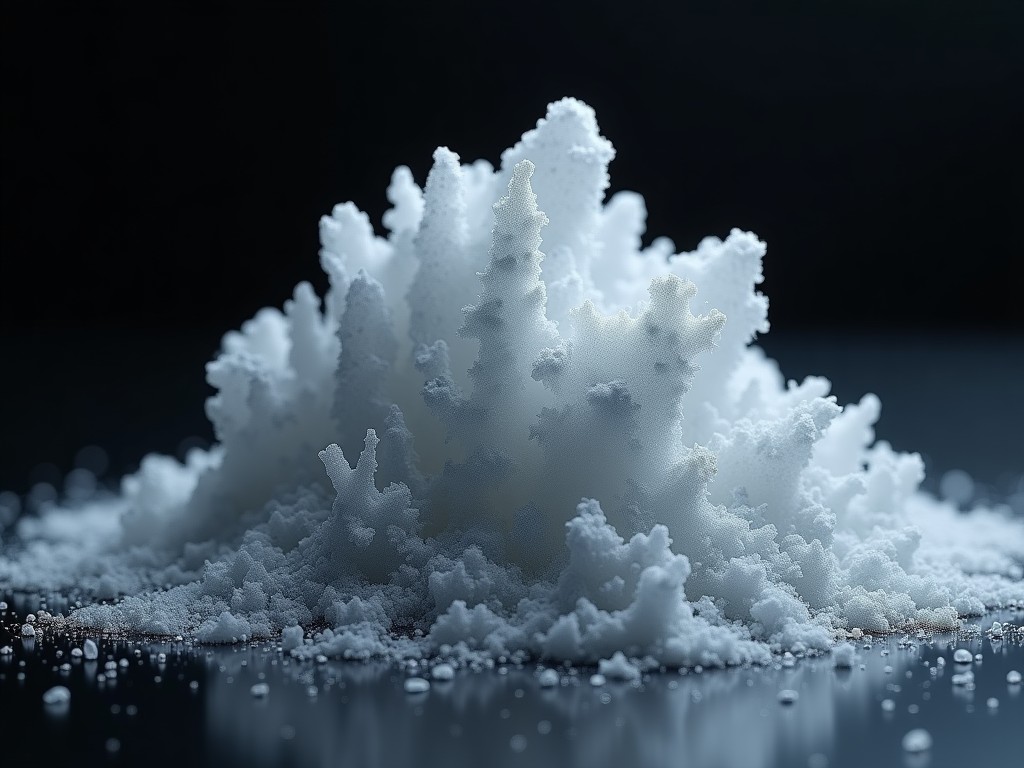
Oem Mono Molten Nano Silicon Dioxide
OEM Mono Molten Nano Silicon Dioxide
This material consists of amorphous silicon dioxide particles produced by melting high‑purity quartz in a controlled inert atmosphere and rapidly quenching the melt. The “mono” designation indicates a single‑phase product free of crystalline polymorphs such as quartz or cristobalite, which can affect downstream processing.
Chemical and Physical Characteristics
The product is predominantly SiO₂ (>99.8 % trace metal basis) with residual alkali metals below 10 ppm. Particle size distribution is typically 15–80 nm (D50 ≈ 35 nm) as measured by laser diffraction, yielding a specific surface area of 120–180 m²/g (BET). The amorphous structure is confirmed by broad halo in X‑ray diffraction and absence of sharp peaks.
- Loss on ignition (1000 °C, 2 h) < 0.5 wt %
- pH of 5 wt % aqueous suspension: 6–8
- Density (tap): 0.35–0.45 g/cm³
- Moisture content (Karl Fischer): < 0.1 wt %
Manufacturing Overview
High‑purity silica sand is fed into a resistance‑heated graphite crucible under argon or nitrogen. Temperature is raised to >2000 °C to achieve complete melting, followed by a controlled quench using a high‑velocity inert gas stream. The rapid cooling suppresses nucleation of crystalline SiO₂, yielding a uniform amorphous nano‑powder that is subsequently milled under dry conditions to break agglomerates and achieve the target size distribution.
Typical Applications
In semiconductor processing, the powder serves as a filler for low‑k dielectrics where its amorphous nature reduces stress during thermal cycling. In coatings, it provides UV scattering and reinforcement without affecting transparency due to its refractive index (~1.46). The material is also used as a thickening agent in silicone elastomers, where the high surface area improves filler‑polymer interaction and enhances tear strength.
Specification Table
| Property | Typical Value |
|---|---|
| SiO₂ Purity (wt %) | ≥ 99.8 |
| Particle Size D50 (nm) | 30–40 |
| Specific Surface Area (m²/g) | 130–160 |
| Loss on Ignition (wt %) | < 0.5 |
| pH (5 wt % suspension) | 6–8 |
Quality Assurance Approach
Each lot undergoes laser diffraction for particle size, BET analysis for surface area, and ICP‑MS for trace metals. X‑ray diffraction is performed to confirm the absence of crystalline phases. Moisture and loss on ignition are measured by thermogravimetric analysis. Results are recorded in a batch‑traceable certificate of analysis that accompanies every shipment.
Customization Options
Particle size can be shifted by adjusting quench rate or post‑mill classification, offering ranges from 10 nm to 200 nm D50. Surface modification with silanes (e.g., aminopropyl, methyl) is available to improve compatibility with specific polymer matrices. Packaging options include multi‑layer polyethylene bags (25 kg), fiber drums with inner liners (100 kg), or bulk pneumatic tanker transfer for volume users.
Frequently Asked Questions
Can the product be supplied with a specific surface area target? Yes, surface area is adjustable via milling time and classifier settings; specify the desired m²/g range during quotation.
What information is needed for a tailored quote? Provide required particle size distribution, any surface treatment, packaging preference, and estimated annual volume.
How is the material tested for amorphous content? Wide‑angle X‑ray scattering is used; the presence of only a broad halo confirms amorphous silica.
What is the typical lead time? Standard grades ship within 2–3 weeks after purchase order confirmation; custom sizes or treatments may extend to 4–6 weeks.
Are samples available for evaluation? Yes, 100‑gram samples can be arranged upon request; shipping costs are borne by the requester.
To discuss technical requirements or request a formal quotation, please use the contact form linked below.
Contact Technical Sales