
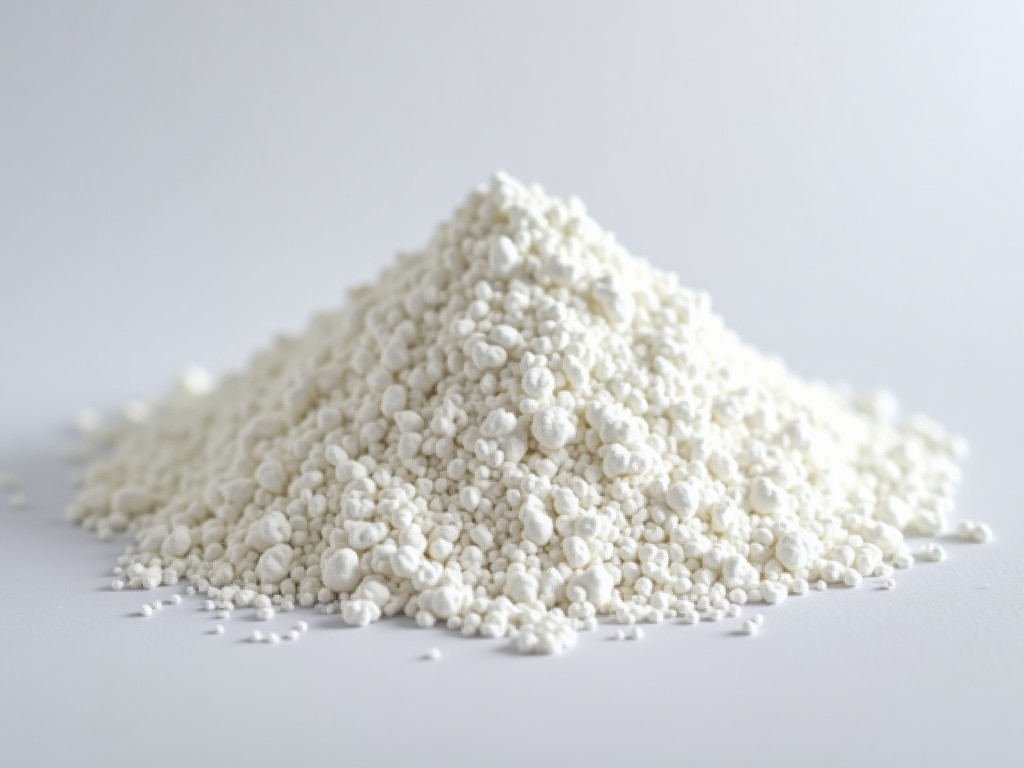
Oem Silicon Dioxide Powder For Sale
OEM Silicon Dioxide Powder for Sale
Silicon dioxide (SiO₂) powder supplied as an OEM material is produced to meet specific particle‑size, purity, and surface‑area requirements for downstream processing.
The material originates from high‑purity quartz sand that undergoes controlled thermal treatment and milling to achieve the desired granulometry.
Chemical Composition
Typical impurity levels are kept low to ensure compatibility with sensitive applications such as semiconductor wafer polishing and specialty coating formulations.
| Component | Typical Maximum | Units |
|---|---|---|
| Fe | 10 | ppm |
| Al | 5 | ppm |
| Na | 20 | ppm |
| Loss on Ignition (LOI) | 0.5 | % |
Physical Properties
Key parameters are adjusted according to the target application, ranging from fine abrasives to thickener precursors.
| Property | Typical Range | Units |
|---|---|---|
| D50 (median particle size) | 1 – 45 | µm |
| Specific Surface Area (BET) | 5 – 300 | m²/g |
| Bulk Density | 0.3 – 0.6 | g/cm³ |
| pH (5% slurry) | 4 – 7 | – |
Manufacturing Process
Raw quartz is first crushed and washed to remove surface contaminants.
The cleaned material undergoes a controlled flame‑hydrolysis or vapor‑phase oxidation step to produce amorphous SiO₂ nuclei.
Resulting particles are milled in jet or ball mills under inert atmosphere to avoid agglomeration, then classified via air‑sieving to obtain the requested cut‑points.
Final product passes through a magnetic separator and a final de‑dusting stage before packaging.
Applications
The powder serves as a polishing agent for silicon wafers where particle hardness and shape uniformity directly influence scratch‑free surface finish.
In coating formulations, the silica acts as a rheology modifier, providing sag resistance and film hardness without compromising transparency.
- Semiconductor chemical‑mechanical planarization (CMP) slurries – requires tight D50 control and low metal content.
- Silicone rubber fillers – benefits from high surface area for improved reinforcement.
- Toothpaste abrasives – particle size kept below 10 µm to ensure enamel safety.
- Food anti‑caking agent – demands food‑grade certification and moisture content below 0.1 %.
Quality Control
Each lot is sampled for laser diffraction particle‑size distribution, ICP‑MS trace metal analysis, and BET surface area measurement.
Results are compared against the agreed specification sheet; any deviation triggers a hold and investigation before release.
Certificates of Analysis (CoA) accompany every shipment, detailing the actual values for the aforementioned parameters.
Packaging Options
Product is shipped in moisture‑barrier bags to prevent uptake of ambient humidity, which could affect dispersion stability.
- 25 kg multilayer polyethylene bags with inner aluminum foil liner.
- 500 kg polypropylene bulk bags equipped with discharge spout.
- Customizable: 5 kg resealable pouches for laboratory trials or 1 tonne ISO containers for bulk consignments.
Customization
Particle‑size distribution can be tuned by adjusting milling time and classifier speed, enabling production of nano‑scale (<100 nm) or coarse (>50 µm) grades.
Surface modification options include silanization with alkyl or amino silanes to improve compatibility with organic matrices.
Additional drying steps can lower moisture content to below 0.02 % for hygroscopic‑sensitive processes.
All custom requirements are discussed during the quotation phase to confirm feasibility and lead‑time impact.
FAQ
- Can the particle size be customized? Yes, D50 values from 1 µm to 45 µm are routinely achievable; tighter tolerances are available upon request.
- What information is needed for a quotation? Required details include target particle‑size range, desired surface area, any surface‑treatment specifications, quantity, and preferred packaging.
- Which purity grades are offered? Standard grades meet ≤10 ppm Fe and ≤5 ppm Al; higher purity (≤1 ppm Fe) can be arranged for specialized applications.
- How is quality verified? Each batch undergoes laser diffraction, ICP‑MS, BET, and LOI testing; results are documented in the CoA.
- What lead time should be expected? Standard lead time is 2–3 weeks after PO receipt; customized surface treatments may extend to 4 weeks.
To discuss your specific silica‑powder requirements or to request a formal quotation, please contact our technical sales team.