
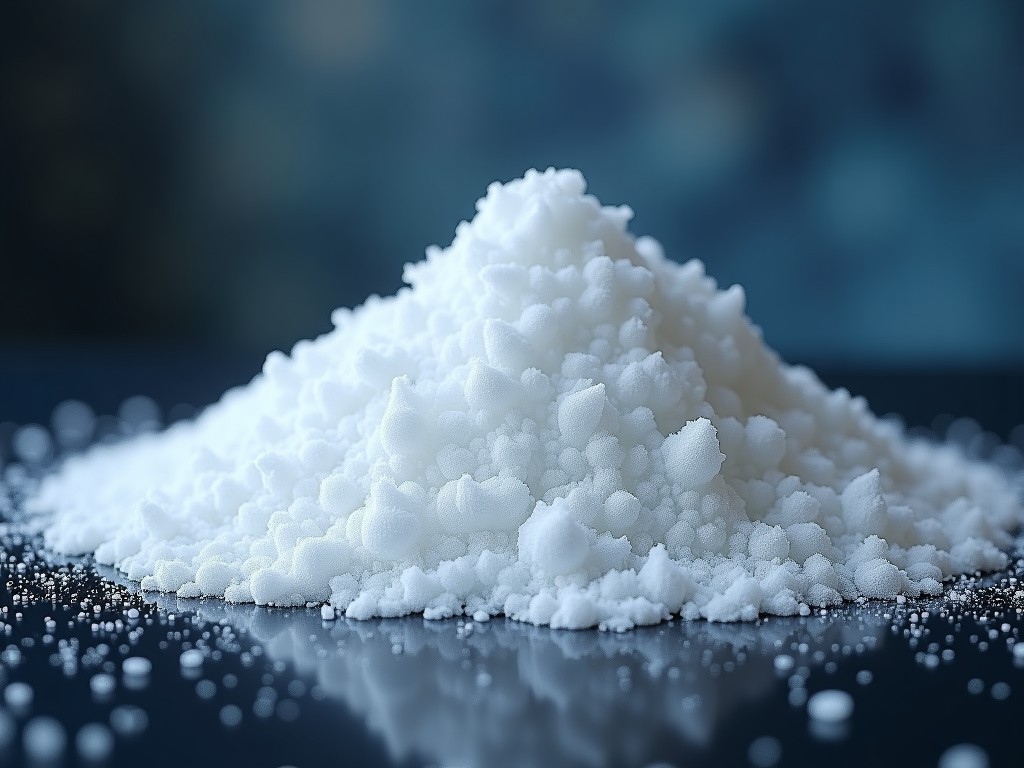
Silicon Dioxide What Is It Used For
Silicon Dioxide: What Is It Used For?
Silicon dioxide (SiO₂), also known as silica, is an inorganic compound composed of silicon and oxygen atoms arranged in a tetrahedral network. It exists abundantly in nature as quartz and is produced synthetically in various engineered forms to meet specific industrial requirements.
Key Engineering Characteristics
Typical commercial grades are defined by measurable parameters such as purity (often >99.5 % SiO₂), particle size distribution (D50 ranging from 0.1 µm for fumed silica to 50 µm for ground quartz), specific surface area (BET from 20 m²/g for dense powders to >300 m²/g for fumed silica), bulk density (0.2–0.6 g/cm³ for low‑density grades up to 1.6 g/cm³ for fused silica), Mohs hardness (≈7), refractive index (≈1.46), and thermal stability (usable up to 1000 °C for fused silica).
Common Forms and Their Distinguishing Traits
- Fused silica: amorphous, high purity, low thermal expansion, produced by melting quartz.
- Fumed silica: pyrogenic, ultra‑fine primary particles (5–50 nm), high surface area, used as rheology modifier.
- Precipitated silica: produced via acid‑silicate reaction, controllable particle size (5–30 µm), used as filler and anti‑caking agent.
- Colloidal silica: stable suspension of nano‑sized SiO₂ particles (5–100 nm) in water, employed in polishing slurries and binders.
- Quartz powder: crushed crystalline silica, narrow size distribution, high abrasion resistance.
Industrial Applications Explained
In semiconductor manufacturing, high‑purity fused silica serves as a substrate for photomasks and as a filler in polishing slurries because its low coefficient of thermal expansion minimizes wafer distortion during high‑temperature processes.
The ceramics industry incorporates silica as a refractory filler; its high melting point (≥1700 °C) and chemical inertness improve the thermal shock resistance of kiln furniture and crucibles.
Paints and coatings benefit from fumed silica’s thixotropic behavior: at rest it increases viscosity to prevent sagging, while under shear it flows easily, allowing uniform film formation without settling of pigments.
Adhesive and sealant formulations use precipitated silica as a reinforcing agent; its surface silanol groups interact with polymer matrices to enhance tensile strength and modulus while maintaining flexibility.
In food and pharmaceutical grades, silica functions as an anti‑caking agent; its porous structure absorbs moisture, keeping powders free‑flowing, and it is recognized as GRAS when purity exceeds 99.8 % and heavy‑metal limits are met.
Typical Specification Ranges
| Property | Typical Range | Unit |
|---|---|---|
| Purity (SiO₂) | 99.5 – 99.99 | % |
| D50 Particle Size | 0.1 – 50 | µm |
| Specific Surface Area (BET) | 20 – 350 | m²/g |
| Bulk Density | 0.2 – 1.6 | g/cm³ |
| Loss on Ignition (1000 °C) | ≤0.5 | % |
| pH (5 % slurry) | 4 – 9 | – |
Quality Control Philosophy
Each lot is verified by laser diffraction for particle size distribution, BET analysis for surface area, inductively coupled plasma (ICP) for trace metals, and loss‑on‑ignition testing to quantify volatile content. Results are recorded against the specification table above, and certificates of analysis are provided with every shipment.
Customization Options
Surface treatment can be applied to render silica hydrophobic (e.g., silanization with alkylsilanes) or to introduce specific functional groups for compatibility with polar polymers. Particle size can be narrowed through classification or widened by blending grades. Moisture content is controlled via drying schedules, typically targeting <0.05 % for electronic grades.
Frequently Asked Questions
Can dimensions be customized?
Yes. Particle size distribution, specific surface area, and moisture content are adjustable according to the end‑use specifications provided during quoting.
What information is required before quotation?
Desired purity, target D50 or D90, any surface treatment, required packaging (e.g., multi‑wall bags, drums, bulk tanker), and applicable regulatory standards (e.g., FDA, SEMICON).
How is quality inspected?
Inspection includes laser diffraction, BET, ICP‑OES, loss‑on‑ignition, and visual inspection for foreign particles; a full certificate of analysis accompanies each lot.
Get a Technical Quote
To discuss how silicon dioxide can meet your specific performance requirements, please contact our technical sales team.
Request Quote