
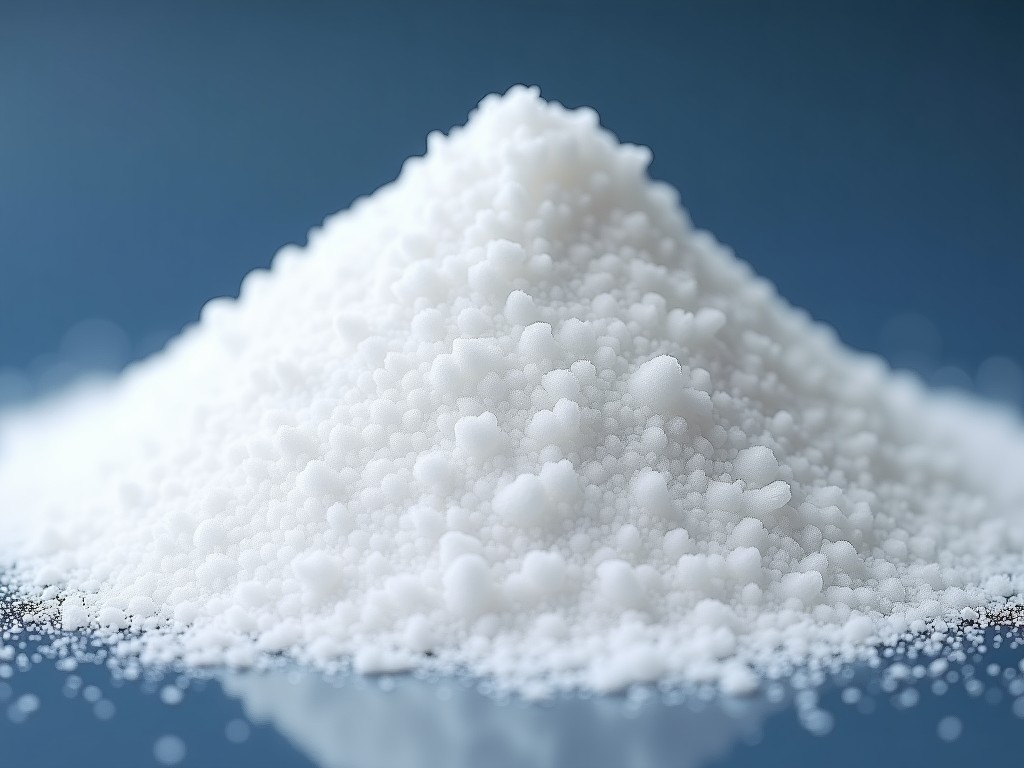
White Silica Sand For Aquarium Sale
White Silica Sand for Aquarium — B2B Supply, Custom Grain Sizes & Bulk Packaging
White silica sand destined for the aquarium market differs from construction-grade or foundry-grade silica in ways that matter at the particle level. The two properties buyers evaluate first are iron oxide content and grain-size distribution. A 0.06% Fe₂O₃ reading keeps the substrate bright without staining tank glass or disturbing the visual clarity of the display. Grain sizes between 0.5–2.0 mm provide sufficient void space for nitrifying bacteria to colonize the substrate surface while remaining small enough that fish and invertebrates do not ingest excessive quantities during natural foraging behavior. Everything else—whiteness percentage, dust fraction, packaging format, labeling—is a downstream decision that follows from those two primary parameters.
This page is written for procurement managers, aquarium brand owners, and marine/freshwater supply distributors who need to source white silica sand in volumes ranging from a few hundred kilograms for a retail product line up to full container loads for large-scale distribution. Specification sheets, sample arrangements, and packaging configurations are covered below so that a first inquiry can move directly to a quotation without a back-and-forth on basic parameters.
What “White” Actually Means in Silica Sand Specifications
Whiteness in silica sand is not a single measured value; it is the combined effect of low ferric iron (Fe₀ compounds), minimal manganese dioxide inclusions, and the absence of dark silicate minerals such as amphibole or biotite. A sand that reads 95%+ whiteness under standard D65 lighting typically sits around 0.03–0.08% Fe₂O₃ on an XRF analysis. For aquarium substrates specifically, the target is usually ≤0.05% Fe₂O₃ so that the material remains visually clean over the product’s shelf life without yellowing in humid warehouse storage.
Another variable buyers often overlook is the silicon content. Sand with ≥95% SiO₂ and low calcium carbonate contamination will not slowly raise the pH of a freshwater system the way limestone-fragmented sand can. For marine aquarists running precise alkalinity cycles, that distinction between a pure quartz substrate and one containing 3–5% calcite inclusions is the difference between a stable tank and a pH drift of 0.3–0.5 units over a six-week maintenance interval.
Material Properties That Matter for Aquatic Substrates
Before a buyer approves a sand lot for aquarium use, the following properties are typically verified through third-party or in-house laboratory testing. Not every parameter carries equal weight—iron content and grain-size distribution drive most purchasing decisions—but the full set gives a procurement team the confidence to specify a repeatable product across seasons and source changes.
- Silica (SiO₂) content: commonly ≥95.0% for the white-visual-grade range; ≥99% available upon request for premium retail packaging.
- Iron oxide (Fe₂O₃): ≤0.05% to maintain whiteness; ≤0.03% for the highest cosmetic standard.
- pH of aqueous extract (1:10, DI water): 6.5–7.5, essentially neutral so the substrate does not act as a buffer in closed systems.
- Grain-size distribution: available in 0.25–0.5 mm, 0.5–1.0 mm, 1.0–2.0 mm, 2.0–3.0 mm, or custom sieved blends. The 0.5–2.0 mm range is the most requested for freshwater planted tanks; 1.0–3.0 mm is common for large-fish and reef setups.
- Loss on ignition (<1000 °C): ≤0.3%, indicating minimal organic or carbonate residue.
- Dust fraction (<75 µn;): ≤1.0% by weight after a standard wash cycle. Excess dust clouds the water column and settles on filter media.
- Heavy metals (Pb, As, Cd, Hg): below detection limits for the relevant aquatic-safety thresholds; certificates available on request.
All grains in the white-visual range pass through a tumbling or tumbler-rounding process that smooths sharp crystal edges. This step is not cosmetic. A fractured quartz fragment can abrade the lateral line of small tetras or the delicate fins of butterflyfish over months of substrate contact. Rounded grains reduce that mechanical wear to a negligible level while preserving the same chemical inertness of the quartz lattice.
Typical Specification Summary
| Parameter | Standard Grade | Premium Retail Grade | Custom / Project-Specific |
|---|---|---|---|
| SiO₂ content | ≥95.0% | ≥99.0% | Customizable according to project requirements |
| Fe₂O₃ | ≤0.08% | ≤0.03% | Customizable according to project requirements |
| pH (aq. extract) | 6.5–7.5 | 6.8–7.2 | Customizable according to project requirements |
| Grain size (most requested) | 0.5–2.0 mm | 0.5–1.5 mm | 0.25–3.0 mm or sieved blends |
| Dust (<75 μm) | ≤1.0% | ≤0.5% | Customizable according to project requirements |
| Packing | 25 kg / 50 kg PE bags, 1 MT bulk bag | Branded retail bags (1 kg–10 kg), shrink-wrap pallets | Custom per buyer’s packaging spec |
Why White Silica Sand Sits in the Aquarium Substrate Slot
Aquarium substrates face a narrow set of constraints that construction sand or industrial filter media do not. The material must be chemically inert in both chloride and freshwater matrices, non-toxic at contact levels, free of dissolved-salt surprises that spike conductivity, and visually neutral so that the substrate does not compete with the aquatic life being displayed. White silica sand satisfies all four of these simultaneously because its surface chemistry is essentially unreactive above pH 5.5, its solubility in water is below 0.001 g/L, and its color provides a high-contrast background that makes coloration of fish and corals read accurately under LED or T5 lighting.
In planted freshwater tanks, the 0.5–2.0 mm fraction creates a layered substrate profile: coarser grains at the top give shrimp and small catfish a foraging surface that is stable under root disturbance, while the finer layer beneath provides the low-void-space zone where anaerobic methanogens and denitrifying bacteria establish a biofilm. A mixed-size custom blend—for example, 40% 0.25–0.5 mm and 60% 1.0–2.0 mm—reproduces that stratification in a single pour and is a common specification from retail brand owners building “planted-tank kits.”
For marine and reef applications the logic shifts slightly. Coral aquarists need a substrate that will not buffer alkalinity. A silica sand with <0.5% calcium carbonate passes that test comfortably and keeps the dosing schedule predictable. The grain size in reef tanks tends to run 1.0–3.0 mm to prevent sand-sifting crabs from becoming trapped between particles. The same silica source, re-sieved at a coarser cut, serves that market without a change in material origin.
Quality Control & Incoming Inspection
Each production lot is screened before packaging. The standard inspection sequence covers XRF for elemental composition, sieve analysis across three mesh sizes, a LOI furnace test at 1000 °C, and a pH extraction in deionized water. For premium retail grades, an additional heavy-metal ICP-MS panel (Pb, As, Cd, Hg, Cr₃) is run and the results are retained on file. Certificates of Analysis accompany each shipment or are available as a per-lot document on request, depending on the buyer’s QA workflow.
Two practical points that reduce post-delivery surprises: first, a moisture content reading of ≤5% before bagging prevents clumping during 6–12 week ocean freight; second, a final rinsing and centrifugal-drying step at the plant removes the residual dust fraction that would otherwise turn the top few millimeters of a retail bag grey within days of opening. Buyers who specify “pre-washed and dried” in their order notes typically see a noticeable reduction in customer complaint rates about cloudy water after first use.
Packaging, Labelling & Logistics
- Standard B2B bags: 25 kg and 50 kg PE-lined polypropylene bags, palletized at 40–48 bags per 1,200×1,000 mm pallet. Shrink-wrapped and strapped.
- Bulk bags (FIBC): 1,000 kg (1 MT) jumbo bags with PE liners for bulk buyers and aquaculture integrators.
- Retail co-packing: 1 kg, 2 kg, 5 kg, 10 kg printed poly bags; shrink-wrap pallets of 50–100 units. Custom brand artwork, barcodes, and multilingual labelling available upon submission of print files.
- Export protection: desiccant packs inside each bag, VCI-compatible liners for long ocean routes, and fumigation-free packaging (silica sand is non-organic). ISPM 15 applies to wooden pallets only; plastic pallets are available as an alternative.
Lead time for standard-grade sand in stock configurations typically runs 15–25 working days from order confirmation to port of loading. Custom grain-size blends or branded retail packaging add 10–15 working days for tooling, print-approval, and additional QA cycles. For buyers running just-in-time inventory, a standing monthly allocation against a long-term contract locks in a consistent lot profile and shortens the order-to-shipment window to roughly 10–14 working days.
Frequently Asked Questions from Procurement Teams
Can grain size and whiteness be customized to a brand spec?
Yes. Sieve cuts can be adjusted within the 0.25–3.0 mm range, and blended distributions (e.g., a 50/50 split of 0.5 mm and 1.5 mm fractions) are produced to match a buyer’s internal spec sheet. Whiteness can be tightened to ≤0.03% Fe₂O₃ for premium retail lines. Send the target specification and a representative sample reference; a matched lot is produced and tested before commercial supply begins.
What information do we need to request a quotation?
Four data points speed up the process: target grain-size range (or blended distribution), annual volume in kilograms or tonnes, packaging configuration (bag size, retail vs. bulk, printing requirements), and destination port. With those four items, a technical and commercial quotation can be prepared within 3–5 working days.
How are samples arranged and what do they cover?
A standard sample pack includes 500 g of each requested grain size, a one-page CoA with XRF and pH results, and a photograph reference of the bulk material in open bags. Samples are shipped via express courier; the cost is typically recoverable against the first commercial order. For retail buyers, a printed-bag proof is issued before mass packaging begins.
Is the sand safe for sensitive species like shrimp, invertebrates, and coral?
White silica sand with ≥95% SiO₂ and <0.5% calcite does not leach measurable quantities of calcium, magnesium, or dissolved inorganic carbon into a closed aquatic system. The rounded grain geometry eliminates sharp-edge abrasion. For species that require a strictly neutral-to-slightly-acidic substrate (certain cichlids, dwarf shrimp biotopes), confirm the pH extraction value on the CoA; the standard grade sits at 6.5–7.5, which is within the comfort range for most freshwater and marine invertebrates. If a buyer’s target species demands a pH below 6.0 at the substrate interface, that is a tank-management parameter rather than a sand specification issue.
What is the minimum order quantity?
The MOQ depends on packaging. For 25 kg or 50 kg standard bags, the minimum is typically one full 20-foot container (approximately 15–18 tonnes). For 1 MT bulk bags, the minimum is one 40-foot high-cube container (roughly 25–28 tonnes). Smaller trial quantities of 200–500 kg in 5 kg retail bags are available for brand launch or distributor trial, though unit pricing adjusts at lower volumes.
How is the sand protected during ocean freight?
PE inner liners in each bag prevent moisture ingress from container condensation. Pallet shrink-wrap with UV-stabilized film and polyester strapping keeps the load stable through port handling. Desiccant packets are placed between bag layers on the pallet. For routes exceeding 30 days, a container-internal hygro meter is available as an add-on. The material itself is inorganic and non-hygroscopic above 8% RH, so the protection is against mechanical shift and label damage rather than chemical degradation.
Start a Technical Inquiry
If you are specifying white silica sand for a retail product line, an aquarium brand, or a wholesale distribution channel, the fastest path to a matched lot is to send your target grain-size distribution, annual tonnage, and packaging format. A technical response with relevant CoA data, available source options, and a preliminary lead-time estimate follows within 3–5 working days.
Request a Sample Pack & QuotationFor buyers requiring a formal RFQ with Incoterms, payment-structure options, and a dedicated account contact, submit an RFQ via the contact page or request a call slot directly from the sales engineering team.