
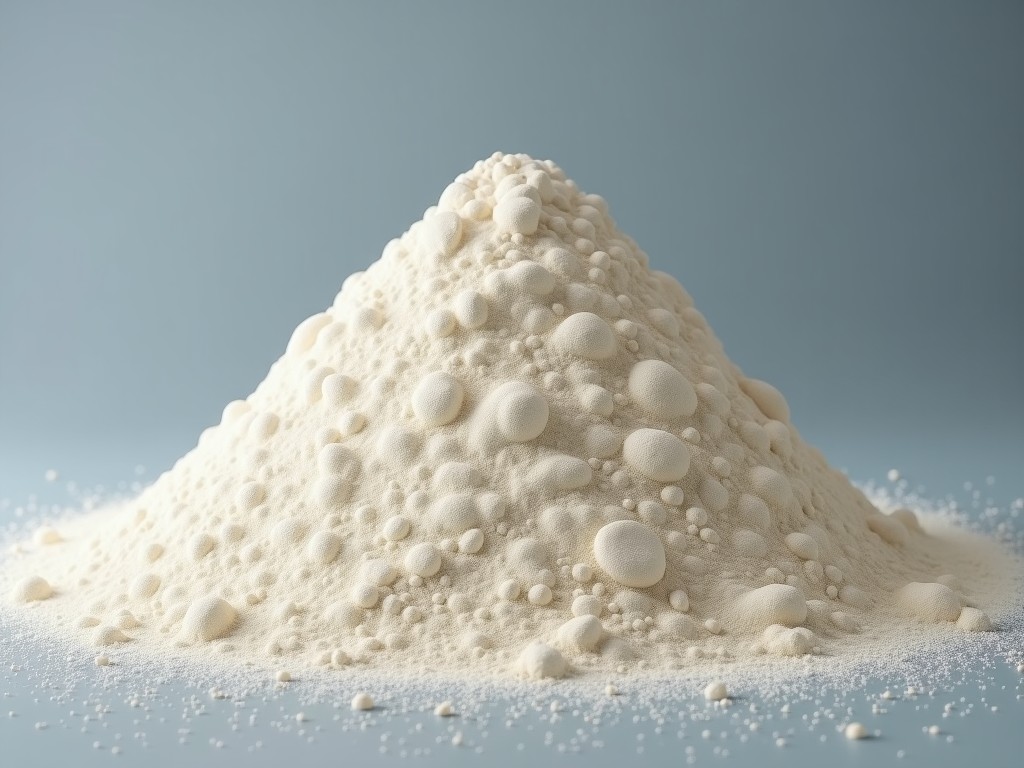
Wholesale Diatomaceous Earth For Pool Sand Filter
Wholesale Diatomaceous Earth for Pool Sand Filters
Diatomaceous earth (DE) originates from the fossilized remains of diatoms, a type of hard‑shelled algae. After mining, the material is milled and classified to achieve a narrow particle size band that yields a high void fraction while retaining mechanical stability under filter pressure.
Typical Technical Specifications
| Property | Typical Value |
|---|---|
| Particle size (D50) | 15‑25 µm |
| Particle size range (D10‑D90) | 5‑45 µm |
| Specific surface area (BET) | 45‑55 m²/g |
| Bulk density (loose) | 0.30‑0.35 g/cm³ |
| Loss on ignition (900 °C) | <0.5 % |
| pH (10 % slurry) | 7.5‑8.5 |
| Moisture content (as‑received) | <0.2 % |
The DE’s porous structure provides a tortuous path that traps particles down to 1 µm, which is finer than the capture capability of conventional sand media. This results in higher turbidity reduction per unit of filter area.
Filtration Performance Characteristics
At a typical face velocity of 0.5 m/min, a 150 mm deep DE bed achieves a pressure drop of approximately 0.08 bar, whereas an equivalent sand bed shows a drop near 0.15 bar under the same flow.
Filtration efficiency, measured by the reduction of suspended solids, consistently exceeds 98 % for particles in the 2‑10 µm range, meeting the criteria for commercial pool water clarity standards.
Backwash intervals are extended because the DE cake retains its permeability longer; operators often observe a 30‑40 % increase in run time between backwashes compared with sand.
Compatibility with Existing Pool Systems
DE can be used in any pressure‑type sand filter that permits media replacement, provided the filter’s internal laterals support the finer grain size without clogging. Most commercial units rated for 0.5‑2.0 mm sand accommodate DE after a simple liner or grid adjustment.
Chemical compatibility is inherent; DE is inert to chlorine, bromine, ozone, and common pH adjusters, allowing uninterrupted operation alongside standard sanitization regimens.
When switching from sand to DE, a reduced media volume is required—typically 60‑70 % of the sand weight—to achieve the same bed depth, which lowers the load on the pump motor.
Handling, Storage, and Packaging
The product is supplied in moisture‑barrier bags lined with polyethylene to prevent premature hydration. Each bag is labeled with lot number, particle size specification, and recommended storage conditions.
Store in a dry, covered area with temperature stability between 5 °C and 35 °C. Avoid direct contact with water; if exposed, allow the material to air‑dry before use to maintain flow properties.
Standard packaging options include 25 kg multi‑wall bags, 500 kg bulk sacks, and 1 tonne palletized super‑sacks, all equipped with lift loops for forklift handling.
Quality Control Philosophy
Each production lot undergoes laser diffraction analysis to verify the D50 and span, ensuring the particle distribution remains within the defined window. A loss‑on‑ignition test confirms low organic content, which correlates with consistent hydraulic conductivity.
Batch samples are subjected to a standardized filter test rig, measuring pressure drop and turbidity reduction at a fixed flow rate. Results are recorded and compared against baseline specifications before release.
Traceability is maintained from quarry to final bag, enabling rapid investigation should any performance deviation be reported by a client.
Frequently Asked Questions
- Can the particle size be customized? Yes, alternative cuts (e.g., 10‑20 µm or 30‑40 µm) are available upon request to match specific filter designs.
- What information is required for a quotation? Required details include desired quantity, packaging preference, destination port, and any special documentation (e.g., MSDS, certificate of analysis).
- Is a sample available for testing? Samples of up to 1 kg can be arranged; request via the link below.