
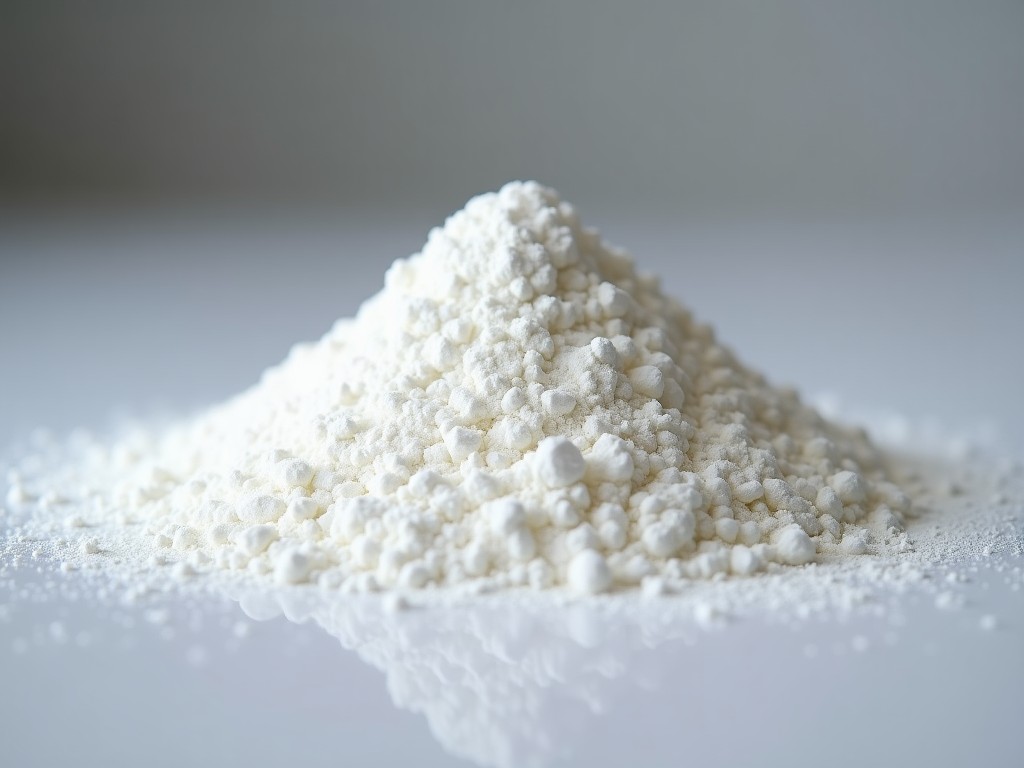
Bulk Purified Talc Powder Company
Bulk Purified Talc Powder
Product Overview
Purified talc powder is a magnesium silicate mineral processed to achieve high purity and consistent particle characteristics suitable for demanding industrial applications. The material undergoes rigorous beneficiation to remove impurities such as iron, aluminum, and calcium carbonates, resulting in a product with low loss on ignition and controlled brightness. This section outlines the key attributes that influence performance in downstream processes.
Chemical Composition and Physical Properties
Typical chemical composition includes SiO₂ around 60%, MgO approximately 30%, with trace amounts of Al₂O₃, Fe₂O₃, and CaO kept below 0.1% each after purification. Loss on ignition (LOI) is generally under 0.5%, indicating minimal volatile content. The specific surface area, measured by BET, ranges from 5 to 12 m²/g depending on milling grade.
Particle size distribution is controlled via air classification or jet milling, offering D50 values from 2 µm for fine grades to 20 µm for coarser grades. Brightness (ISO Blue reflectance) typically exceeds 92% for high‑purity grades, while pH of a 10% aqueous suspension remains neutral between 7 and 8. Mohs hardness remains at 1, preserving the soft, lubricating nature of talc.
Manufacturing Process
Raw talc ore is first crushed and screened to remove oversized fragments. Subsequent stages include magnetic separation to extract ferrous contaminants and flotation to reduce silicate impurities. The purified concentrate is then dried and milled using jet mills or ball mills equipped with classifiers to achieve the target particle size distribution.
Final purification may involve acid leaching or thermal treatment to further lower LOI and improve brightness. Throughout the process, inline laser diffraction monitors particle size, while X‑ray fluorescence (XRF) checks chemical composition. The finished powder is stored in climate‑controlled silos to prevent moisture uptake before packaging.
Quality Control Philosophy
Quality assurance follows a statistical process control (SPC) approach, with each batch sampled for chemical analysis, particle size, and brightness. Acceptance criteria are defined in internal specifications that reference ISO 9237 for talc purity and ASTM C120 for loss on ignition. Non‑conforming material is diverted for reprocessing or rejected.
Traceability is maintained from ore source to final bag, enabling rapid investigation if a field issue arises. Regular internal audits and participation in proficiency testing programs provide external validation of measurement accuracy.
Industrial Applications
The low abrasion and inert nature of purified talc make it a functional filler in polymer compounds, where it improves stiffness, dimensional stability, and heat resistance. In polypropylene talc concentrations of 10‑30% by weight increase tensile modulus while maintaining impact strength.
In the paint and coatings industry, talc acts as a reinforcing extender that enhances scrub resistance, reduces gloss, and provides anti‑settling properties. Its lamellar morphology contributes to barrier performance in inks and sealants.
- Polyolefin compounds (PP, PE) – stiffness and creep resistance
- PVC profiles – impact modification and surface finish
- Rubber compounds – reinforcement and processing aid
- Ceramic glazes – suspension control and glaze fit
- Pharmaceutical excipients – glidant and anti‑caking agent (food‑grade talc)
Technical Data Table
| Property | Typical Range | Test Method |
|---|---|---|
| SiO₂ (wt%) | 58 – 62 | XRF |
| MgO (wt%) | 28 – 32 | XRF |
| Loss on Ignition (wt%) | ≤ 0.5 | ASTM C120 |
| Brightness (ISO Blue) | ≥ 92% | ISO 2470 |
| D50 (µm) | 2 – 20 (grade dependent) | Laser Diffraction |
| Specific Surface Area (m²/g) | 5 – 12 | BET |
| pH (10% suspension) | 7 – 8 | ASTM D1293 |
Packaging and Shipping
Bulk purified talc is available in multiple packaging options to suit handling facilities and downstream processing lines. Standard options include 25 kg multi‑wall paper bags with polyethylene inner liner, 500 kg polypropylene bulk bags (FIBC) with dust‑proof spouts, and loose bulk in pneumatic tankers for direct silo feed.
All packages are sealed to prevent moisture ingress and labeled with batch number, net weight, and relevant safety data. For export shipments, containers are fitted with desiccant bags and secured with straps to minimize shifting during transit.
- 25 kg bag – ideal for small batch laboratories
- 500 kg FIBC – suited for medium‑scale manufacturers
- Loose bulk – continuous feed to extrusion or compounding lines
Frequently Asked Questions
Can the particle size be customized?
Yes. Jet milling parameters and classifier settings are adjusted to achieve target D50 values ranging from 2 µm to 20 µm. Custom size distributions require a technical discussion and sample approval.
What information is needed for a quotation?
To provide an accurate quote we need the required quantity, preferred packaging, target particle size or D50, any specific brightness or LOI limits, and the destination for freight calculation.
How is quality verified before shipment?
Each batch undergoes a full certificate of analysis (CoA) that includes chemical composition, particle size distribution, brightness, LOI, and pH. The CoA is issued after final inspection and can be provided electronically.