
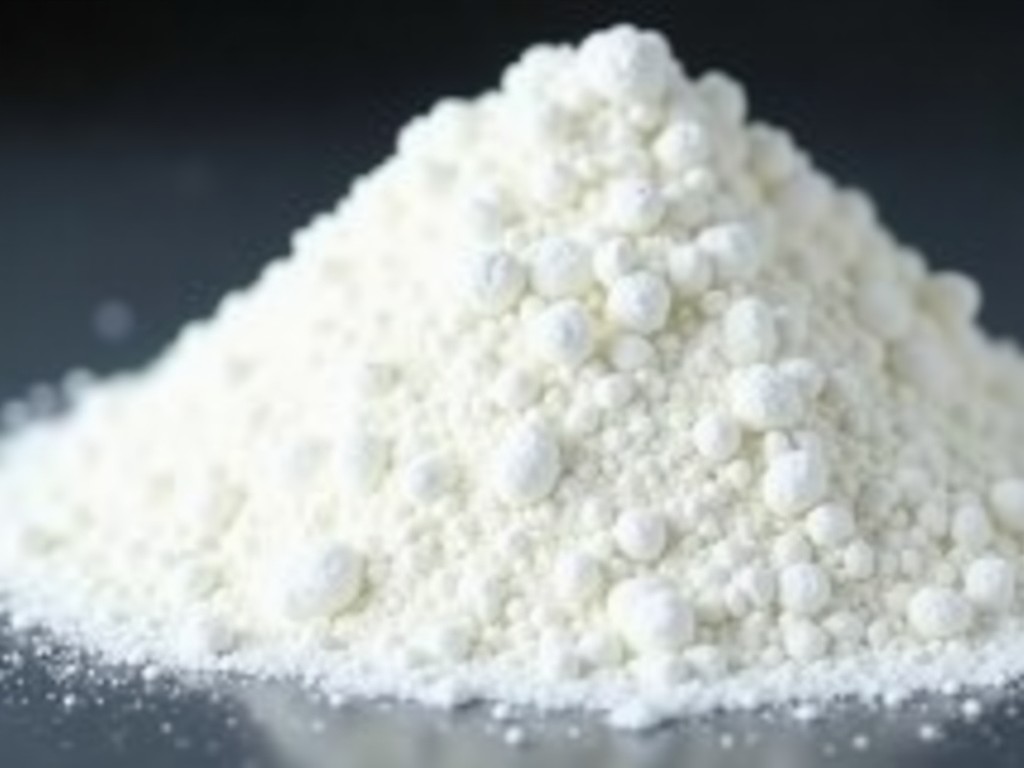
Bulk Talc Powder For Sale Factory
Bulk Talc Powder for Sale – Factory Direct
Bulk talc powder is a naturally occurring magnesium silicate mineral processed to meet strict industrial specifications.
Chemical Composition and Physical Properties
Typically, the material consists primarily of hydrated magnesium silicate with trace amounts of calcium, iron, and aluminum oxides.
In addition, the specific gravity measures approximately 2.75 g/cm³, and the Mohs hardness is 1, providing a soft, lubricating feel.
Loss on ignition (LOI) typically ranges from 4% to 6%, reflecting bound water content, while brightness exceeds 85% on the ISO scale.
| Parameter | Typical Value | Test Method |
|---|---|---|
| Magnesium Oxide (MgO) | 30‑32% | XRF |
| Silicon Dioxide (SiO₂) | 60‑62% | XRF |
| Loss on Ignition (LOI) | 4‑6% | TG‑A |
| Specific Gravity | 2.75 g/cm³ | ASTM D792 |
| Brightness (ISO) | ≥85% | ISO 2470 |
Particle Size Distribution
To achieve a controlled top‑size, the powder is milled to produce a narrow distribution that influences flowability and surface area.
Generally, D50 values range from 5 µm to 15 µm, with D97 below 45 µm; custom grind sizes are available upon request.
Typical Industrial Applications
Talc’s platy morphology and chemical inertness make it suitable as a functional filler, reinforcing agent, and processing aid.
- Polypropylene and polyethylene compounds – improves stiffness, reduces shrinkage, and enhances heat resistance.
- Paint and coating formulations – provides anti‑settling, improves sandability, and contributes to matting effect.
- Paper manufacturing – increases opacity, reduces abrasion on machinery, and improves ink holdout.
- Ceramic glazes and bodies – acts as a flux, reduces firing temperature, and controls thermal expansion.
- Rubber compounds – reinforces the matrix, improves aging resistance, and reduces compound viscosity.
Quality Control and Testing
Each lot undergoes a defined inspection protocol to verify compliance with the agreed specification sheet.
- Raw material assay – XRF for major oxides, ICP‑MS for trace metals.
- Particle size analysis – laser diffraction, reported as D10, D50, D97.
- Loss on ignition – thermogravimetric analysis at 1000 °C.
- Whiteness and brightness – spectrophotometric measurement.
- Moisture content – Karl Fischer titration.
A certificate of analysis (CoA) accompanies each shipment, detailing actual test results versus specification limits.
Packaging Options
To ensure product integrity, bulk talc is packaged to protect against moisture uptake and contamination.
- 25 kg multi‑wall paper bags with inner polyethylene liner – suited for manual or semi‑automated discharge.
- 500 kg polypropylene bulk bags (FIBC) with top spout and bottom discharge – ideal for high‑volume feeding systems.
- 1000 kg super sacks with conductive liner for static‑sensitive applications.
- Loose bulk in pneumatic tankers or railcars for direct plant silo transfer.
All packaging options can be printed with customer‑specific labels and include palletization for stable transport.
Ordering Information and Lead Times
Orders are accepted based on a formal quotation that outlines quantity, packaging, particle size grade, and any required additives or surface treatments.
Standard production lead time is 2‑3 weeks for stocked grades; custom grind sizes or special packaging may extend the schedule to 4‑6 weeks.
Minimum order quantity varies by packaging type: 1 ton for bagged product, 5 tons for FIBC, and 10 tons for bulk tanker shipments.
Frequently Asked Questions
Can the particle size distribution be customized?
Yes. The milling circuit can be adjusted to achieve target D50 values between 3 µm and 25 µm, with corresponding adjustments to the D97 cutoff.
What information is needed to receive a quotation?
Please provide the desired quantity, packaging type, particle size grade (or range), any required additives (e.g., stearic acid coating), and the destination port or address for freight calculation.
How is quality inspected before shipment?
Prior to shipment, each lot undergoes full chemical assay, particle size analysis, LOI, whiteness, and moisture testing.
What packaging methods are available for export shipments?
Export‑ready options include heat‑sealed FIBC with UV‑stabilized liner, palletized 25 kg bags in seaworthy cartons, and bulk container liners for tanker loading.
What is the typical production lead time?
Stocked grades ship within 2‑3 weeks after purchase order confirmation; custom particle sizes or special packaging typically require 4‑6 weeks.
Request a Quote or Technical Data Sheet
For a formal quotation, sample request, or technical discussion, please contact our sales engineering team.
Contact Sales Team