
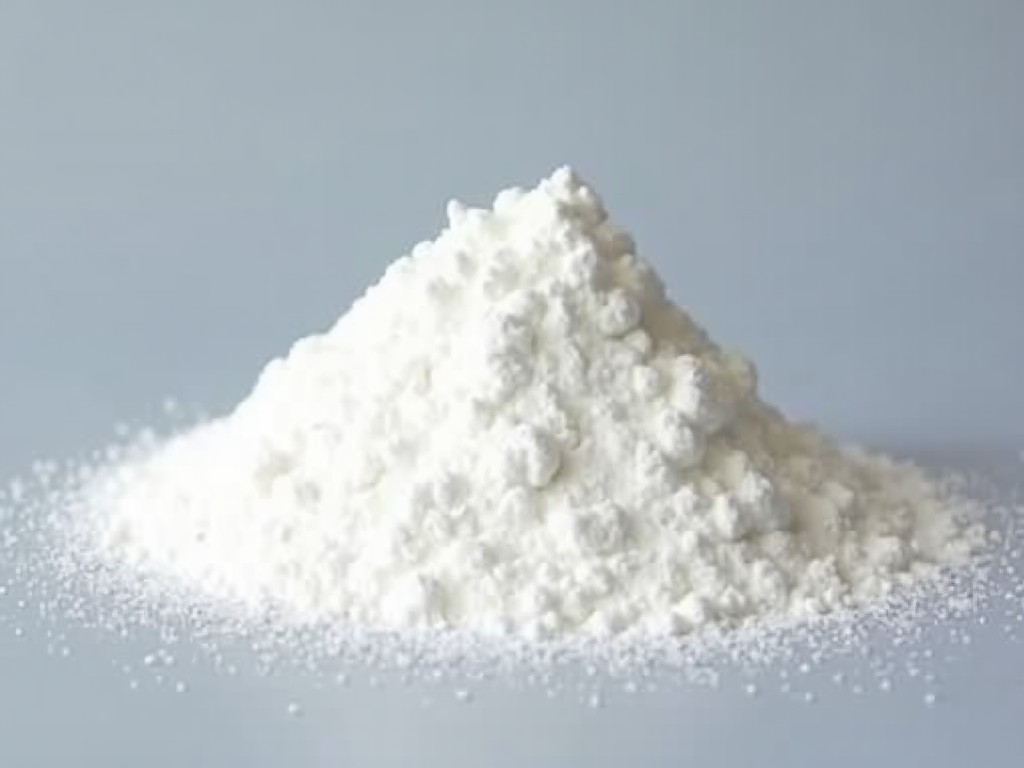
Ce Certification Real Talcum Powder Supplier
CE Certification Real Talcum Powder Supplier
CE certification confirms that a talcum powder meets the essential safety, health, and environmental requirements of the European Economic Area. For suppliers, this certification demonstrates compliance with relevant directives such as REACH and the Cosmetics Regulation when the powder is intended for use in personal care or pharmaceutical formulations.
What CE Certification Entails for Talcum Powder
The certification process involves an assessment of the product's chemical composition, purity levels, and potential contaminants such as heavy metals or asbestos fibers. Laboratories accredited under EU regulations perform tests including laser diffraction for particle size distribution, inductively coupled plasma mass spectrometry for trace elements, and polarized light microscopy for fibrous content.
Once testing is complete, a technical file is compiled that includes batch records, safety data sheets, and a declaration of conformity. The supplier must retain this documentation for at least ten years and make it available to market surveillance authorities upon request.
Key Material Characteristics
Talcum powder, primarily composed of hydrated magnesium silicate (Mg₃Si₄O₁₀(OH)₂), exhibits a platy morphology that contributes to its lubricating and absorbent properties. Typical particle size ranges from 1 to 20 µm, with a median (D50) often around 5 µm for grades used in cosmetics.
Specific surface area, measured by BET analysis, generally falls between 5 and 15 m²/g, influencing the powder's ability to absorb moisture and oils. The loss on ignition (LOI) at 1000 °C is typically below 5 %, indicating low volatile content and high thermal stability.
Industrial Applications and Rationale
In the plastics industry, talc acts as a nucleating agent and stiffness enhancer for polypropylene compounds. Its plate-like structure improves flexural modulus and dimensional stability, allowing manufacturers to achieve target mechanical performance with lower filler loading compared to spherical alternatives.
For rubber formulations, talc reduces viscosity during mixing and improves extrusion behavior. Its hydrophobic surface, when treated with silanes, enhances compatibility with elastomers such as EPDM and NBR, leading to better tensile strength and tear resistance in finished products.
In paint and coating systems, talc provides matting effects and sag resistance due to its lamellar particles orienting parallel to the substrate. The low oil absorption value of untreated talc (approximately 20‑30 g/100 g) enables formulators to maintain pigment concentration while adjusting rheology.
Quality Assurance and Control Philosophy
A robust quality system starts at the quarry, where selective mining minimizes exposure to asbestos-bearing formations. Extracted ore undergoes primary crushing, followed by milling in jet or ball mills under controlled temperature to avoid structural alteration.
In-process monitoring includes real‑time laser diffraction for particle size and X‑ray fluorescence for elemental composition. Final product verification involves third‑party testing for heavy metals (Pb, Cd, Hg, As) and asbestos via transmission electron microscopy, ensuring that each batch conforms to the CE technical file.
Documentation control is managed through an electronic batch record system that links raw material certificates, processing parameters, and test results to a unique lot number. This traceability facilitates rapid response to any non‑conformance and supports audit readiness.
Customization Options
Surface modification is available to tailor polarity and compatibility. Silane coupling agents (e.g., γ‑methacryloxypropyltrimethoxysilane) can be grafted onto talc particles to improve dispersion in polar matrices such as polyurethanes or epoxy resins.
Particle size distribution can be adjusted through jet milling parameters or air classification, enabling production of ultrafine grades (D90 < 2 µm) for high‑gloss coatings or coarser grades (D50 > 15 µm) for reinforcement in thermoplastic olefins.
Moisture content is controlled via drying stages; typical levels are below 0.05 % for hygroscopic‑sensitive applications, while higher levels (up to 0.5 %) may be supplied for cost‑effective filler use where slight moisture is tolerated.
Typical Specifications
| Property | Typical Value | Test Method |
|---|---|---|
| Chemical Formula | Mg₃Si₄O₁₀(OH)₂ | X‑ray Diffraction (XRD) |
| Loss on Ignition (1000 °C) | <5 % | Thermogravimetric Analysis (TGA) |
| Median Particle Size (D50) | 3‑8 µm (adjustable) | Laser Diffraction |
| Specific Surface Area (BET) | 5‑15 m²/g | BET Adsorption |
| Heavy Metals (Pb, Cd, Hg, As) | <10 ppm each | ICP‑MS |
| Asbestos (TEM) | Not Detected | Transmission Electron Microscopy |
Values are representative of standard grades; actual specifications can be customized according to project requirements.
Frequently Asked Questions
Can the particle size distribution be tailored?
Yes, jet milling and air classification allow adjustment of D10, D50, and D90 values to meet specific formulation needs.
What documentation accompanies CE‑certified talc?
Each shipment includes a declaration of conformity, safety data sheet, and batch test report covering chemical purity, particle size, and contaminant limits.
Is surface treatment available for hydrophobic applications?
Silane‑based treatments can be applied to improve compatibility with non‑polar polymers while maintaining the talc’s reinforcing effect.
For technical inquiries, sample requests, or to discuss how CE‑certified talcum powder can be integrated into your manufacturing process, please contact our engineering team.
Contact Us for Specification Details