
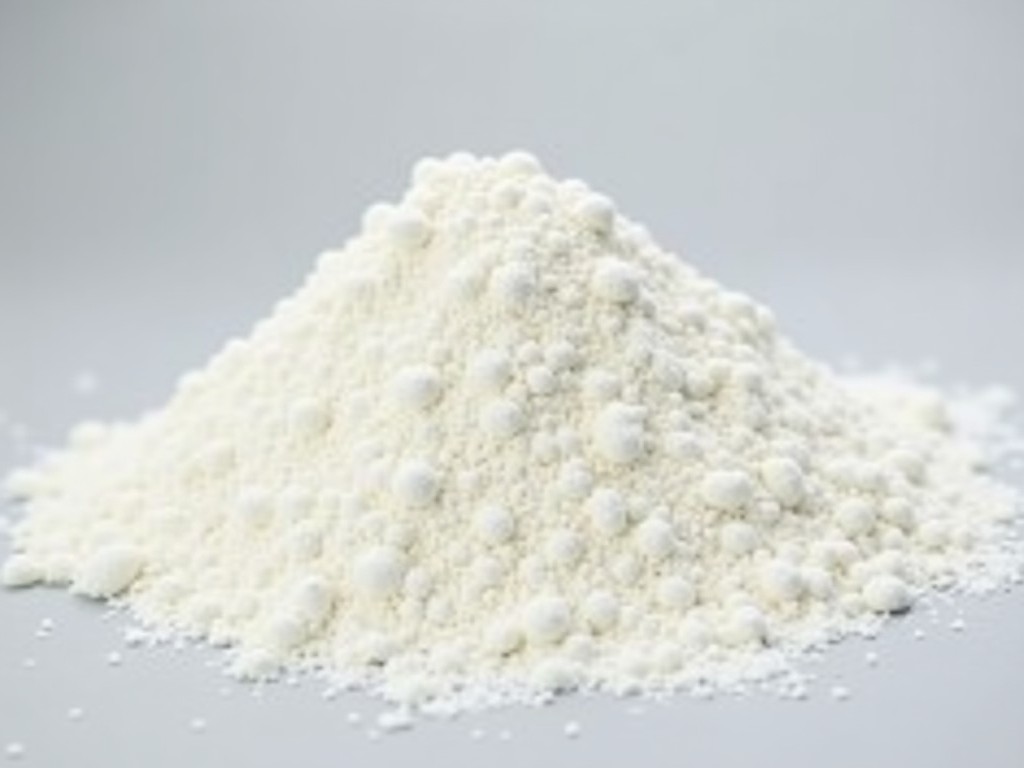
China Calcined Talc Powder For Sale
China Calcined Talc Powder for Sale
Calcined talc powder is produced by heating natural talc to temperatures between 800 °C and 950 °C, which drives off chemically bound water and carbonates. The resulting material exhibits increased whiteness, reduced loss on ignition, and a surface that is less hydrophilic, making it suitable for applications where moisture sensitivity and optical properties are critical.
Product Overview
The calcination process transforms the raw talc’s crystal structure, decreasing the basal spacing and enhancing particle-to-particle bonding. Typical outcomes include a loss on ignition (LOI) below 0.5 %, a whiteness index (ISO brightness) above 85 %, and a median particle size (D50) ranging from 5 µm to 15 µm depending on milling conditions. These attributes allow the powder to function as a functional filler rather than merely a bulk extender.
Technical Specifications
| Property | Typical Value |
|---|---|
| Magnesium oxide (MgO) | 28 % – 32 % |
| Silicon dioxide (SiO2) | 58 % – 62 % |
| Loss on ignition (LOI) | <0.5 % |
| Whiteness (ISO brightness) | >85 % |
| Median particle size (D50) | 5 µm – 15 µm |
| Specific surface area (BET) | 5 m²/g – 12 m²/g |
| pH (10 % slurry) | 8.0 – 9.0 |
| Moisture content | <0.05 % |
Applications
In polymer compounds, calcined talc acts as a reinforcing filler that increases flexural modulus and heat deflection temperature while reducing shrinkage. Its plate‑like morphology interferes with polymer chain mobility, leading to improved dimensional stability in polypropylene and ABS formulations.
For architectural paints and coatings, the powder contributes to sag resistance and anti‑settling properties. Its low oil absorption allows higher pigment loading without excessive viscosity increase, and the hydrophobic surface reduces water‑related defects such as blistering.
In ceramic bodies, the addition of calcined talc lowers the vitrification temperature and improves thermal shock resistance. The magnesium silicate component reacts with fluxes during firing to form a stable glassy phase that enhances mechanical strength of the fired product.
Rubber compounds benefit from the filler’s ability to increase tensile strength and abrasion resistance. The surface treatment obtained during calcination reduces polarity, which improves compatibility with non‑polar elastomers such as EPDM and SBR.
Quality Control
Each batch undergoes laser diffraction analysis to verify particle‑size distribution, X‑ray fluorescence for elemental composition, and spectrophotometric measurement of whiteness. Thermogravimetric analysis confirms LOI values, while moisture content is determined by Karl Fischer titration. Results are recorded against the specification limits shown in the table above.
Packaging and Storage
Standard packaging consists of three‑layer polyethylene bags (inner liner, middle barrier, outer woven polypropylene) containing 25 kg of product. For bulk shipments, 500 kg flexible intermediate bulk containers (FIBCs) with a moisture‑proof inner liner are available. Store in a dry environment with relative humidity below 40 % and temperature below 35 °C to prevent re‑absorption of moisture.
Ordering Information
To obtain a quotation or request a sample, provide the required particle‑size range, target quantity, and destination port. Our technical team can advise on suitable grades based on the intended application and can arrange third‑party testing if needed.