
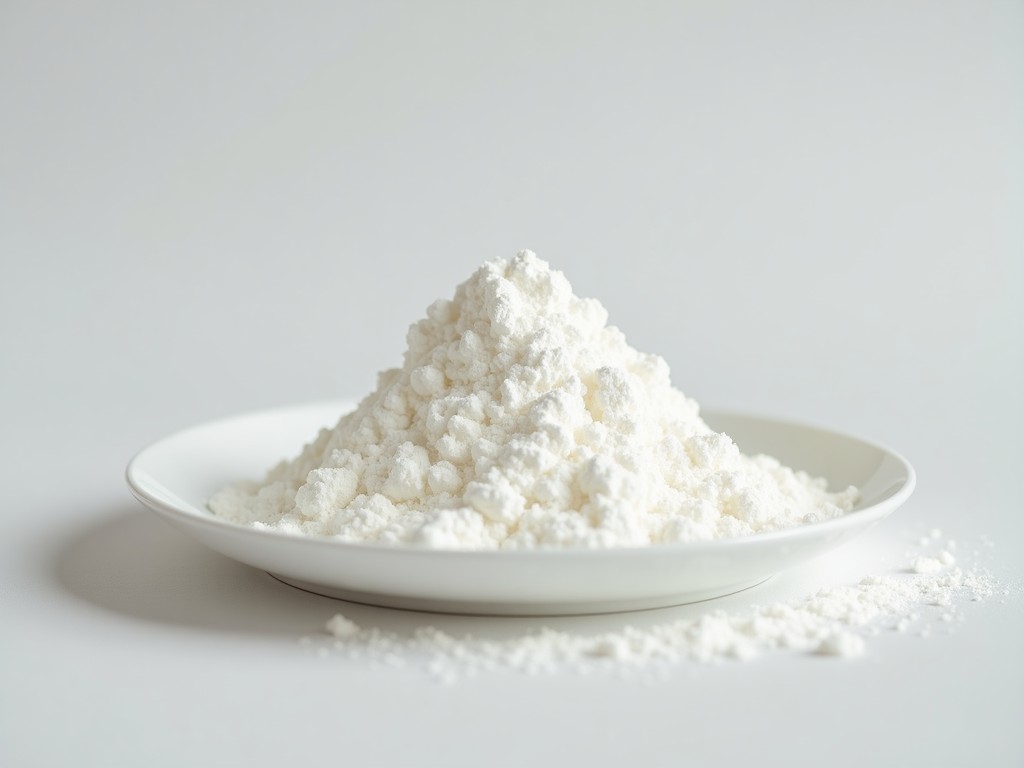
China High Quality Real Talcum Powder
China High Quality Real Talcum Powder
Talc is a naturally occurring magnesium silicate mineral with a platy crystal structure that imparts lubricity, chemical inertness, and thermal stability. When sourced from well‑controlled deposits in China and processed to tight specifications, it functions as a functional filler and reinforcing agent in a wide range of industrial formulations.
The mineral’s low abrasiveness and high aspect ratio allow it to improve mechanical properties without increasing wear on processing equipment, making it a preferred choice for applications where both performance and equipment longevity are considerations.
Chemical Composition and Physical Properties
The ideal formula for pure talc is Mg₃Si₄O₁₀(OH)₂, which translates to approximately 31.8 % MgO, 63.2 % SiO₂, and 4.5 % loss on ignition (LOI) when heated to 1000 °C. Commercial grades typically show MgO between 29‑32 %, SiO₂ between 60‑63 %, and LOI between 4‑5 % depending on the extent of carbonate or chlorite impurities.
Key physical attributes include a specific gravity of 2.70‑2.80, a refractive index of 1.58‑1.59, and a Mohs hardness of 1. Particle size distribution is commonly expressed as D50 (median diameter) ranging from 5 µm for fine grades to 20 µm for coarser grades, with aspect ratios often exceeding 10:1. Whiteness measured by ISO brightness typically falls between 85‑95 % for high‑purity material, while oil absorption values range from 35‑45 g/100 g.
Aqueous slurries (10 % w/v) exhibit a pH of 9‑10, indicating mild alkalinity that is compatible with most polymer matrices and coating systems. Moisture content after drying is kept below 0.5 % to prevent clumping during storage and feeding.
Manufacturing Process
Raw talc ore is extracted via open‑pit mining, then primary crushed to reduce lumps to under 50 mm. Secondary crushing and grinding employ roller mills or ball mills to achieve the desired particle size range.
The ground product undergoes air classification or cyclone separation to remove oversize fractions and to narrow the distribution. For grades requiring surface modification, a dry coating step with stearic acid or silane coupling agents may be applied before final classification.
Final drying in rotary or fluid‑bed dryers reduces moisture to target levels, after which the material is screened and conveyed to packaging lines. Throughout the process, inline laser diffraction monitors particle size, while X‑ray fluorescence checks chemical composition in real time.
Quality Control Philosophy
Quality assurance begins at the mine face with grade control sampling to confirm mineralogy and impurity levels. Each processing stage is sampled for particle size distribution, chemical assay, and whiteness.
Finished product is subjected to a battery of tests: laser diffraction for D10, D50, D90; XRF for major oxides; loss on ignition at 1000 °C; moisture content by Karl Fischer titration; pH measurement of a 10 % slurry; and ISO brightness assessment. Results are compared against internal specifications that reference ISO 3262‑1 and ASTM C120 standards.
Statistical process control charts track critical parameters, and any deviation triggers an investigation before material is released. This approach minimizes variability and provides traceability from ore to final bag.
Applications
- In polypropylene and PVC compounds, talc acts as a nucleating agent that increases stiffness, improves heat deflection temperature, and reduces cycle time during injection molding.
- Ceramic bodies (wall tiles, sanitaryware) benefit from talc’s low thermal expansion and its role as a flux that promotes vitrification while controlling drying shrinkage.
- Paints and coatings use talc as an extender to enhance viscosity stability, prevent pigment settling, and improve sanding properties without affecting gloss.
- Rubber formulations incorporate talc to reinforce the matrix, improve heat aging resistance, and provide a smooth surface finish in extruded profiles.
- Cosmetic powders rely on talc’s platy morphology for slip, absorbency, and a silky feel, while its chemical inertness ensures compatibility with fragrances and active ingredients.
- Pharmaceutical tablets employ talc as a lubricant and glidant, reducing friction between the tablet punch and die and supporting uniform weight distribution.
Technical Data
| Property | Typical Value | Unit | Note / Test Method |
|---|---|---|---|
| MgO | 30‑32 | % | XRF |
| SiO₂ | 60‑63 | % | XRF |
| Loss on Ignition (LOI) | 4‑5 | % | 1000 °C, 2 h |
| D50 (median particle size) | 5‑20 | µm | Laser diffraction |
| Whiteness (ISO Brightness) | 85‑95 | % | ISO 2470 |
| Specific Gravity | 2.70‑2.80 | — | Pycnometry |
| pH (10 % slurry) | 9‑10 | — | pH meter |
| Moisture Content | <0.5 | % | Karl Fischer |
| Oil Absorption | 35‑45 | g/100 g | ASTM D281 |
Packaging and Storage
The product is packed in multi‑wall kraft bags with an inner polyethylene liner to protect against moisture ingress. Standard net weight is 25 kg per bag; bulk options of 500 kg jumbo bags with discharge spouts are available upon request.
Storage conditions should be cool, dry, and well‑ventilated. Ambient temperature below 30 °C and relative humidity under 60 % help maintain flowability and prevent agglomeration. Bags should be kept off the floor on pallets and away from direct sunlight or sources of heat.
Request Information
For detailed specification sheets, sample requests, or to discuss a grade tailored to your formulation needs, please reach out to our technical team.
Contact us to begin the conversation.