
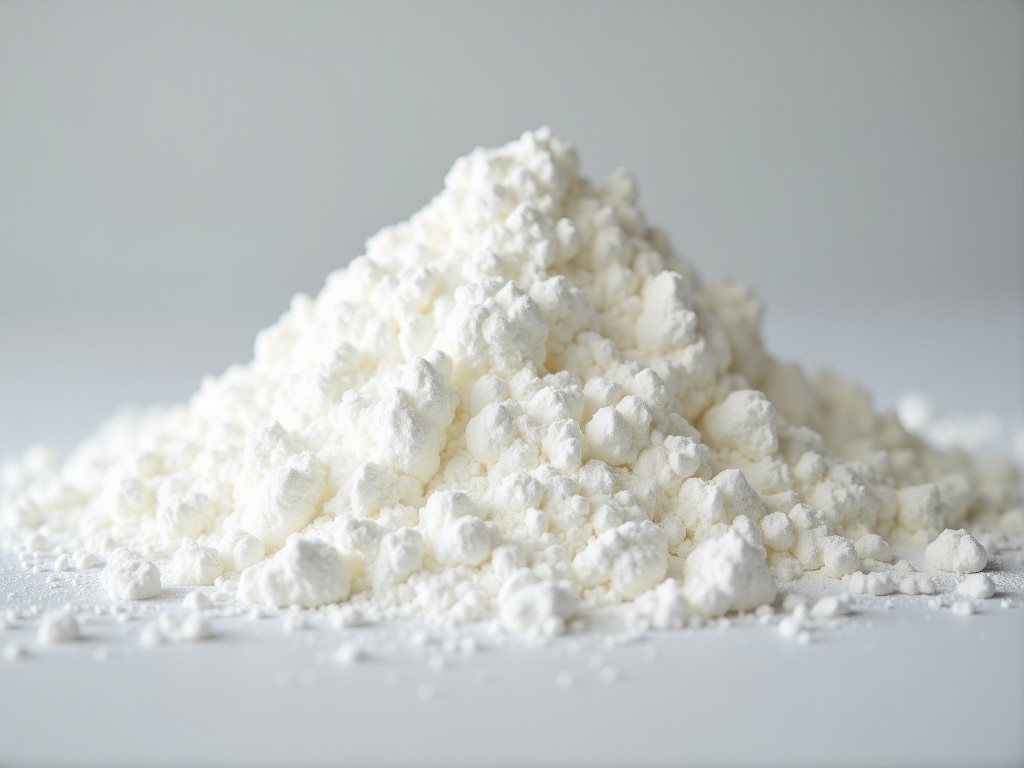
China Long Lasting Talcum Powder Exporter
China Long Lasting Talcum Powder Exporter
Talcum powder, chemically magnesium silicate hydroxide (Mg₃Si₄O₁₀(OH)₂), is extracted from metamorphic rock deposits. Its utility stems from lamellar crystal structure, low abrasiveness, and chemical inertness.
Chemical Composition
Typical analysis shows magnesium oxide (MgO) between 28% and 32%, silicon dioxide (SiO₂) around 60%, and trace amounts of iron, aluminum, and calcium oxides. Loss on ignition (LOI) reflects bound hydroxyl groups and usually ranges from 4.5% to 5.5%.
Impurity limits are controlled to ensure suitability for sensitive applications: iron oxide <0.02%, calcium carbonate <0.01%, and moisture content maintained below 0.5% after drying.
Physical Properties
Particle size distribution influences rheology and surface area. Commonly supplied grades are classified by d₅₀ (median diameter) and specific surface area (BET).
| Property | Typical Range | Test Method |
|---|---|---|
| d₅₀ (microns) | 2 – 25 | Laser diffraction |
| Brightness (ISO) | 85 – 98% | ISO 787/1 |
| Specific gravity | 2.7 – 2.8 g/cm³ | ASTM D792 |
| pH (10% slurry) | 8 – 10 | ASTM D1208 |
Values are provided as typical ranges; actual specifications are confirmed per lot and can be adjusted according to project requirements.
Manufacturing Considerations
Raw talc ore undergoes primary crushing, followed by grinding in jet or ball mills to achieve target fineness. Classification via air separators removes oversize fractions. Subsequent drying reduces moisture to prescribed levels.
Surface treatment options include silane or stearic acid coating to improve hydrophobicity and compatibility with polymer matrices. Treatment levels are expressed as weight percent of coating agent, typically 0.5% to 2.0%.
Applications
The lamellar morphology provides reinforcement and barrier functionality in polypropylene and polyethylene compounds, enhancing stiffness while reducing weight.
- In PVC, talc acts as a nucleating agent, improving impact resistance and reducing shrinkage.
- For coatings, it contributes to sag resistance, gloss control, and corrosion protection.
- In rubber formulations, it improves processing characteristics and reduces compound viscosity.
- Pharmaceutical grades serve as glidant and anti-caking agent in tablet manufacturing.
- Cosmetic grades provide slip and absorbency in powders and pressed products.
Selection criteria focus on particle size, brightness, and surface treatment to match the performance demands of each end-use.
Quality Control
Each batch undergoes systematic testing: laser diffraction for particle size distribution, spectrophotometry for brightness, thermogravimetric analysis for LOI, and ICP‑OES for elemental impurities.
In‑process controls monitor grinding temperature and air classifier settings to maintain consistency. Final product is stored in climate‑controlled silos to prevent moisture uptake.
Certificates of Analysis (CoA) accompany shipments, detailing actual test results against the agreed specification sheet.
Packaging & Export
Standard packaging options include multi‑wall polyethylene‑lined polypropylene bags (25 kg) and flexible intermediate bulk containers (FIBCs) of 500 kg or 1 tonne capacity.
- Valve‑type bags for automated filling lines.
- Open‑top bags with inner PE liner for moisture barrier.
- FIBCs with spout top and bottom discharge for bulk handling.
Palletization uses heat‑treated wooden pallets, stretch‑wrapped and secured with straps. Containers are loaded with desiccant packs and lined with polyethylene film to protect against humidity during transit.
Lead times depend on order volume and customization; typical production cycles range from 10 to 20 working days after receipt of confirmed purchase order.
Frequently Asked Questions
Can particle size be tailored to specific processing equipment?
Yes. Grinding parameters and classifier cuts are adjusted to achieve target d₅₀ ranges, from fine grades under 5 µm for coatings to coarser grades above 20 µm for reinforcement applications.
What information is required before a quotation is issued?
Required details include intended application, desired particle size distribution, brightness or whiteness specification, any surface treatment needs, packaging preference, and estimated annual volume.
How is product quality verified for each shipment?
Each lot is sampled per ISO 2859‑1 standards, tested for the parameters listed in the CoA, and results are reviewed before release. Customers may request third‑party verification.
What export documentation is provided?
Standard set includes commercial invoice, packing list, certificate of origin, bill of lading or airway bill, and the CoA. Additional documents such as fumigation certificates or REACH compliance statements are supplied upon request.
For technical consultation or to request a sample with specific specifications, please reach out to our export team.
Contact Us