
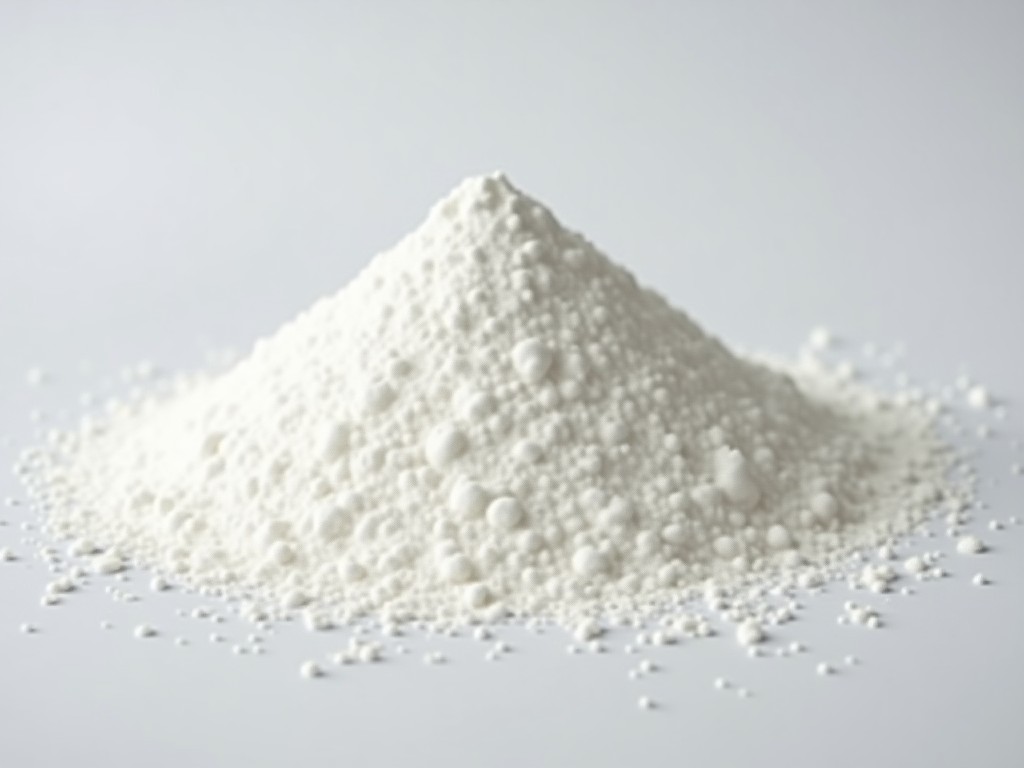
High Quality Long Lasting Talcum Powder Product
High Quality Long Lasting Talcum Powder Product
Talcum powder, chemically magnesium silicate hydroxide (Mg₃Si₄O₁₀(OH)₂), is employed as a functional filler where plate‑like morphology contributes to reinforcement and barrier performance. Its low abrasiveness and chemical inertness allow extended service life in demanding polymer, ceramic, and coating systems.
Chemical Composition and Purity
Typical commercial grades contain ≥ 99 % pure talc with minor constituents such as calcite, dolomite, or quartz below detection limits of 0.02 % by weight. Loss on ignition (LOI) measured at 1000 °C remains under 0.5 %, confirming minimal volatile content and high thermal stability.
Physical Properties
Key engineering parameters include particle size distribution (D₅₀ ≈ 5 µm, D₉₇ ≈ 20 µm), specific surface area (BET ≈ 6 m²/g), oil absorption (≈ 35 g/100 g), and pH of aqueous suspension (8.5 – 9.5). Moisture content is controlled to ≤ 0.05 % (w/w) to prevent agglomeration during processing.
| Parameter | Typical Range | Test Method |
|---|---|---|
| D₅₀ (laser diffraction) | 4 – 6 µm | ISO 13320‑1 |
| D₉₇ | 15 – 25 µm | ISO 13320‑1 |
| Specific Surface Area (BET) | 5 – 8 m²/g | ASTM D3663 |
| Oil Absorption | 30 – 40 g/100 g | ASTM D281 |
| Moisture Content | ≤ 0.05 % | Karl Fischer Titration |
| pH (10 % slurry) | 8.5 – 9.5 | ISO 787‑9 |
Performance in Key Applications
In polypropylene compounds, talc’s plate‑like particles increase flexural modulus by 15‑25 % and improve heat deflection temperature, reducing warpage during injection molding. For PVC cable compounds, the low moisture content and acid‑scavenging ability extend dielectric strength and lower dielectric loss factor.
- Polypropylene & polyethylene – stiffness, impact resistance, dimensional stability.
- PVC & cable compounds – dielectric performance, moisture resistance.
- Ceramic glazes & bodies – rheology control, firing shrinkage reduction, surface smoothness.
- Powder coatings – flow enhancement, anti‑settling, film hardness.
- Rubber compounds – reinforcement, heat aging improvement, processing aid.
Quality Control and Consistency
Each batch undergoes laser diffraction for particle size, ICP‑OES for elemental purity, and thermogravimetric analysis for LOI. In‑process monitoring includes real‑time moisture sensors and online pH meters to maintain tight tolerances across production runs.
Customization Options
Surface treatment with silane or stearic acid improves compatibility with polar polymers, reducing agglomeration and enhancing mechanical bonding. Particle size can be re‑graded to meet specific D₅₀ targets ranging from 2 µm for nano‑filled systems to 30 µm for coarse filler applications. Moisture levels can be adjusted via controlled drying to suit hygroscopic or non‑hygroscopic processing environments.
Packaging, Storage and Handling
Standard packaging consists of 25 kg multi‑wall paper bags with an inner polyethylene moisture barrier, palletized and stretch‑wrapped for shipment. For bulk users, 500 kg FIBCs with liners are available. Storage in a dry, temperature‑controlled environment (≤ 30 °C, RH < 60 %) preserves product properties for ≥ 24 months.
Frequently Asked Questions
| Question | Answer |
|---|---|
| Can particle size distribution be tailored? | Yes, custom milling and classification allow D₅₀ adjustments from 2 µm to 30 µm per project requirements. |
| What surface treatments are offered? | Silane, stearic acid, and zirconate treatments are available to improve polymer compatibility and dispersion. |
| What information is needed for a quotation? | Required details include target application, desired particle size, any surface treatment, order quantity, and packaging preference. |
| How is batch‑to‑batch consistency verified? | Each lot is accompanied by a certificate of analysis reporting LOI, purity, D₅₀, D₉₇, and moisture content per ISO/ASTM standards. |
| What lead times can be expected? | Standard lead time is 2‑3 weeks for stocked grades; customized grades typically require 4‑6 weeks depending on treatment complexity. |
For technical datasheets, sample requests, or to discuss specific formulation challenges, please contact our application engineering team.
Request Technical Consultation