
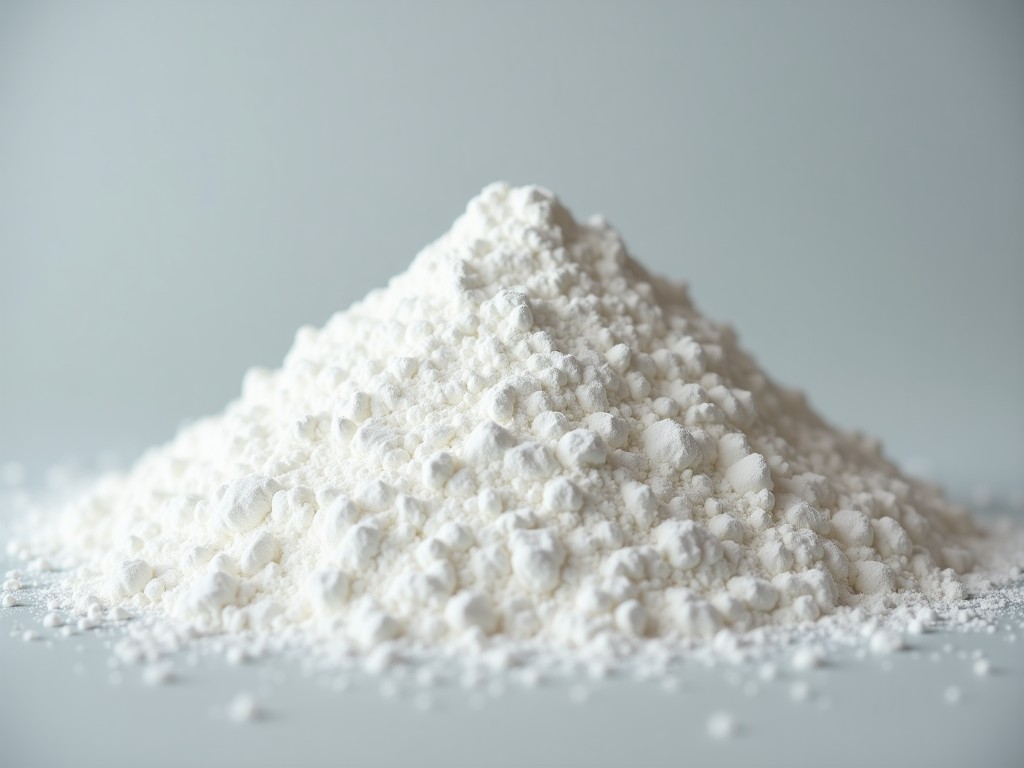
Long Lasting Talcum Powder Suppliers
Long Lasting Talcum Powder – Supplier Overview
Talcum powder is a naturally occurring magnesium silicate used as an inert filler and functional additive in many industrial formulations. Its longevity in service depends on chemical stability, low moisture uptake, and resistance to mechanical breakdown under processing stresses.
Typical material composition is Mg3Si4O10(OH)2 with trace oxides. Loss on ignition (LOI) measured at 1000 °C is generally below 0.5 %, indicating minimal volatile content that could affect polymer curing or coating adhesion.
Performance metrics relevant to long‑term use include thermal stability up to 450 °C without significant weight loss, a specific surface area of 4–6 m²/g (BET), and an abrasiveness value lower than 0.1 mm³/N·m when tested against steel counterspecimens.
Typical Specifications
| Parameter | Typical Value | Test Method |
|---|---|---|
| Particle size D50 | 5–10 µm | Laser diffraction |
| Moisture content | <0.1 % | Gravimetric at 105 °C |
| Loss on ignition (LOI) | 0.2–0.4 % | Thermogravimetric at 1000 °C |
| Whiteness (L*) | 92–95 | CIE L*a*b* |
| Specific gravity | 2.7–2.8 | Pycnometry |
| pH (10 % slurry) | 7–9 | Electrometric |
Industrial Applications
In polymer compounding, talc acts as a nucleating agent that raises the crystallization temperature of polypropylene, improving stiffness and dimensional stability. The low abrasiveness reduces wear on extruder screws and dies during long production runs.
Rubber manufacturers use talc as a processing aid and anti‑blocking agent. Its plate‑like morphology interferes with polymer chain entanglement, lowering Mooney viscosity and facilitating mold release without compromising tensile strength.
In architectural coatings, talc contributes to sag resistance and hides surface imperfections. Its chemical inertness prevents interference with pigment dispersion and extends shelf life of water‑based systems.
Pharmaceutical and food‑grade talc, after additional purification, serves as a glidant and anti‑caking agent in powdered formulations, where low moisture uptake is critical for maintaining flow properties over months of storage.
Manufacturing Considerations
Raw talc ore is extracted from metamorphic deposits and subjected to primary crushing to reduce lump size below 50 mm. Subsequent milling in jet or ball mills achieves the target particle‑size distribution, with air classification removing oversize fractions.
For applications requiring surface modification, a thin layer of stearic acid or silane coupling agent can be applied in a controlled reactor, improving compatibility with polar polymers. The treatment level is typically 0.5–2.0 % by weight and is verified by thermogravimetric analysis.
Throughout the process, inline moisture sensors monitor humidity to prevent re‑absorption, and final product is stored in climate‑controlled silos before packaging.
Quality Assurance
Each batch undergoes laser diffraction analysis to confirm D50, D10, and D90 values within the agreed range. Loss on ignition is measured using a calibrated thermogravimetric analyzer, with acceptance criteria set at <0.5 %.
Whiteness and colorimetric properties are evaluated with a spectrophotometer under standardized illumination (D65, 10° observer). pH of a 10 % aqueous slurry is checked to ensure compatibility with aqueous systems.
Inspection records are retained for traceability, and a certificate of analysis accompanies each shipment, detailing the test methods and results.
Customization Options
- Particle‑size grading (e.g., D50 2–4 µm for fine coating applications or D50 12–20 µm for reinforcement)
- Surface treatment types (stearic acid, silane, zirconate) and dosage levels
- Moisture‑barrier packaging (multilayer polyethylene bags with inner foil)
- Bulk container options (flexible intermediate bulk containers, IBCs, or pneumatic tanker loads)
Packaging and Logistics
Standard packaging consists of 25 kg multi‑wall paper bags with an internal polyethylene liner, providing protection against moisture ingress during transit and storage. For bulk shipments, 1000 kg IBCs with polyethylene inner liners are used, allowing efficient discharge via gravity or pneumatic conveying.
Palletized loads are stretch‑wrapped and corner‑protected to prevent shifting. Export containers are fitted with desiccant units when destination climates exhibit high relative humidity, ensuring the product arrives within the specified moisture limits.
Frequently Asked Questions
Can the particle size be customized? Yes, milling and classification parameters can be adjusted to meet specific D50, D10, or D90 targets. Samples are provided for approval before full‑scale production.
What information is required for a quotation? Required details include desired particle‑size range, any surface treatment, order quantity, packaging preference, and delivery destination.
Which purity grades are available? Grades range from industrial (LOI < 0.5 %) to pharmaceutical/food (LOI < 0.2 %, heavy‑metal limits per USP < 10 ppm).
How is quality verified? Each lot is tested for particle size, loss on ignition, whiteness, and pH. A certificate of analysis is issued with the shipment.
What packaging methods protect against moisture? Multilayer bags with inner polyethylene liners, sealed IBCs, and optional desiccant packs in containers are standard options.
What is the typical lead time? Production lead time is generally 2–4 weeks after receipt of a confirmed purchase order, depending on order size and customization.
Request a Quote or Sample
To discuss your specific requirements, provide the technical specifications outlined above, and receive a formal quotation, please use the contact form linked below.
Contact Us for Quote or Sample