
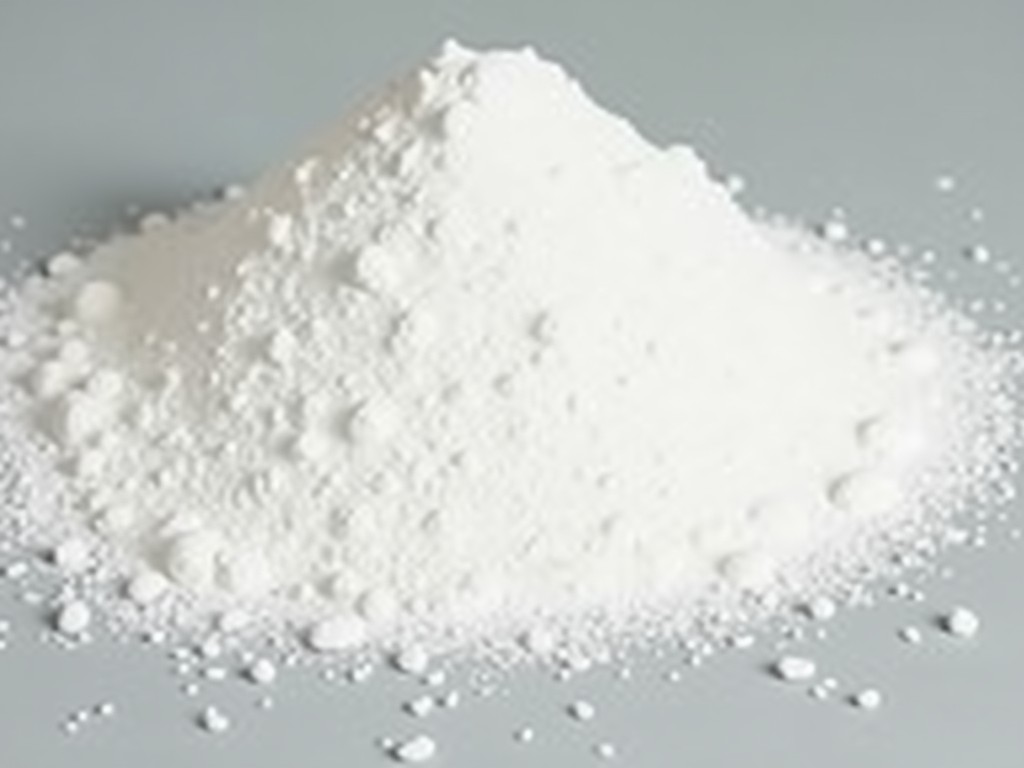
Oem Long Lasting Talcum Powder Price
OEM Long Lasting Talcum Powder: Technical Overview
Talcum powder used in OEM applications is a finely ground magnesium silicate hydroxide (Mg₃Si₄O₁₀(OH)₂) with controlled particle size distribution and low moisture content. Its primary value lies in providing consistent lubrication, anti‑caking, and filler performance across polymers, coatings, and rubber compounds.
Technical Characteristics
The powder’s performance is defined by measurable parameters such as median particle size (D50), specific surface area, bulk density, and loss on ignition. These values are adjusted during milling and classification to meet the tolerance bands required by downstream processes.
| Parameter | Typical Range | Test Method |
|---|---|---|
| D50 (microns) | 4 – 12 | Laser diffraction (ISO 13320) |
| Specific surface area (m²/g) | 4 – 9 | BET nitrogen adsorption |
| Bulk density (g/cm³) | 0.25 – 0.35 | ASTM B329 |
| Loss on ignition (% wt) | ≤ 0.5 | Thermogravimetric analysis (TGA) |
| pH (10% slurry) | 8.5 – 9.5 | ISO 787‑9 |
Applications and Functional Rationale
In thermoplastic compounding, talc acts as a nucleating agent that raises crystallization temperature and improves stiffness without sacrificing impact resistance. The plate‑like morphology reinforces the polymer matrix, while the low surface energy reduces melt viscosity, facilitating extrusion and injection molding.
For rubber formulations, the powder’s hydrophobic surface minimizes water uptake, thereby preserving vulcanization kinetics and preventing blooming. Its lamellar structure also improves tear resistance and reduces heat buildup during dynamic flexing.
In powder coatings, talc contributes to sag resistance and edge coverage by increasing the coating’s yield stress. Its inertness ensures no interference with curing agents, allowing stable gloss and color development over the coating’s service life.
To explore how these functional benefits translate to your specific formulation, contact our technical team for a feasibility review.
Manufacturing and Quality Control Philosophy
Raw talc ore is first subjected to selective crushing and magnetic separation to remove ferrous impurities. Subsequent jet milling under controlled airflow achieves the target particle size while minimizing temperature rise that could alter surface chemistry.
Inline laser diffraction monitors the D50 in real time, triggering automatic adjustments to classifier speed. Final product is stored in climate‑controlled silos with nitrogen blanketing to maintain moisture below 0.05 % wt, ensuring long‑term stability during storage and transport.
Each batch undergoes a full certificate of analysis (CoA) that includes particle size distribution, loss on ignition, pH, and heavy‑metal screening. Statistical process control charts track key variables, and any deviation beyond ±2 sigma triggers a hold and investigation.
Customization Options
- Particle size tailoring: D50 from 2 µm (ultrafine) to 20 µm (coarse) via jet milling or air classification.
- Surface treatment: silane or stearic acid coating to modify polarity for specific polymer compatibility.
- Moisture control: optional drying to achieve loss on ignition <0.1 % wt for moisture‑sensitive processes.
- Packaging formats: multi‑wall paper bags (25 kg), bulk FIBCs (500 kg), or pneumatic tanker delivery.
Packaging and Shipping
Standard packaging uses three‑ply kraft bags with inner polyethylene liner, providing barrier protection against humidity and contaminants. For bulk shipments, FIBCs are equipped with spout tops and bottom discharge valves, facilitating clean transfer to silos or hoppers.
All pallets are stretch‑wrapped and fitted with corner boards to prevent shifting during transit. Export containers are lined with desiccant packs and equipped with temperature loggers to verify that the cargo remains within the specified 5 °C – 30 °C range throughout the journey.
Frequently Asked Questions
Can the particle size distribution be adjusted after quotation?
Yes. The milling and classification parameters are adjusted per customer specifications before final production. A revised CoA is issued once the target D50 is confirmed.
What information is required to receive a formal quote?
Required details include intended application, target particle size (D50 range), any surface treatment preference, annual volume, and delivery destination. Providing these enables accurate pricing and lead‑time estimation.
How is long‑term stability verified?
Stability is assessed through accelerated aging studies at 40 °C/75 % RH for 90 days, monitoring loss on ignition, pH, and particle size shift. Results show <0.02 % wt moisture uptake and <0.5 µm D50 drift under these conditions.
Next Steps
To obtain a detailed quotation, technical datasheet, or sample arrangement, please reach out via the link below. Our engineering team will review your requirements and respond with a tailored proposal within one business day.