
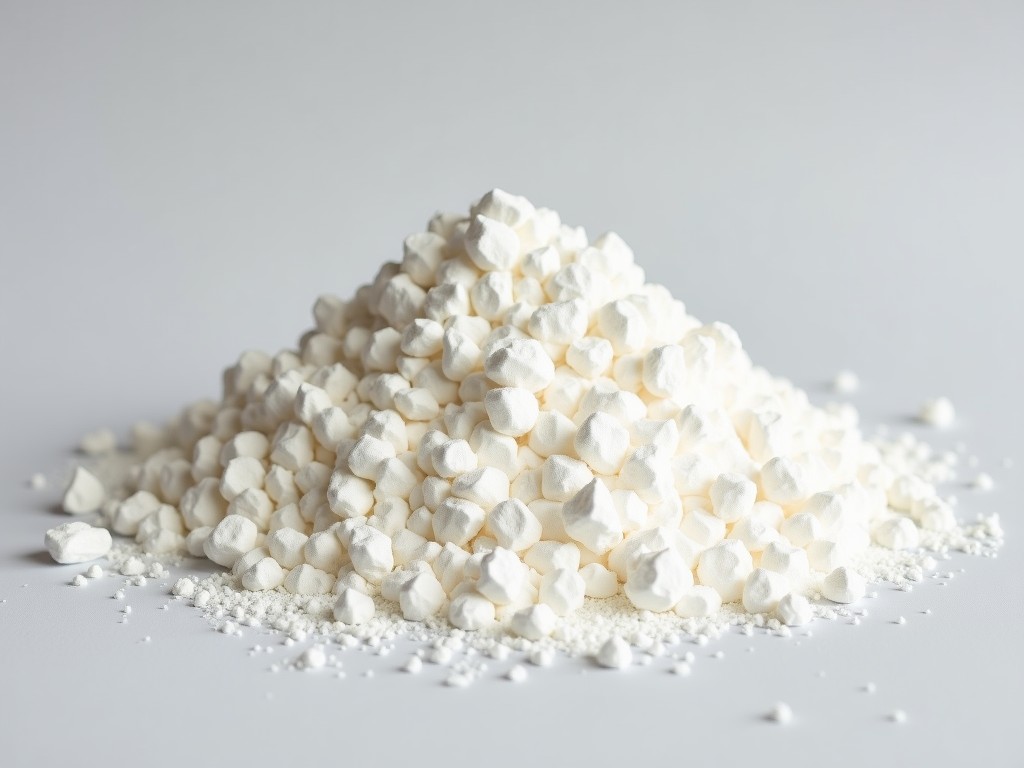
Oem Talc Powder For Paint Plastic Rubber
OEM Talc Powder for Paint, Plastic, and Rubber Applications
Talc powder is a naturally occurring magnesium silicate mineral that is milled to controlled particle sizes for use as a functional filler in polymer‑based systems. Its platy morphology provides reinforcement while its low abrasiveness minimizes wear on processing equipment.
In paint formulations, talc contributes to sag resistance, improves hiding power, and enhances wet scrub durability without significantly increasing viscosity. In plastics, it acts as a nucleating agent that can raise stiffness and dimensional stability, especially in polypropylene and PVC compounds. For rubber compounds, talc reduces hysteresis, improves tear strength, and aids in processing by acting as a release agent.
Chemical Composition and Purity
The talc supplied for OEM use typically contains 45‑55 % SiO₂, 30‑35 % MgO, and trace amounts of Al₂O₃, Fe₂O₃, and CaO, depending on the source deposit. Loss on ignition (LOI) is kept below 2 % to ensure minimal volatiles during high‑temperature processing.
Purity levels are verified by X‑ray fluorescence (XRF) and inductively coupled plasma (ICP) analysis, with typical impurity limits: Fe₂O₃ ≤ 0.15 %, Al₂O₃ ≤ 0.5 %, and CaO ≤ 0.3 %. These specifications support consistent performance across batches.
Particle Size Distribution and Morphology
Particle size is characterized by laser diffraction, yielding D10, D50, and D90 values that can be tailored to the end‑use. For paint applications a finer grade (D50 ≈ 2 µm) is common to maintain gloss, whereas plastics and rubber often use a medium grade (D50 ≈ 5‑8 µm) to balance reinforcement and processability.
The platy shape is quantified by aspect ratio (length/thickness) typically ranging from 8:1 to 12:1. This geometry contributes to barrier properties in coatings and improves load transfer in polymer matrices.
Typical Performance Values
| Property | Paint (Typical) | Plastic (Typical) | Rubber (Typical) |
|---|---|---|---|
| Loading (wt %) | 5‑20 | 10‑30 | 5‑15 |
| Tensile Strength Increase | - | +10‑25 % | +5‑15 % |
| Flexural Modulus Increase | - | +15‑35 % | +8‑20 % |
| Melt Flow Index Change (PP) | - | -10‑30 % | - |
| Scrub Resistance (cycles) | +20‑40 % vs. baseline | - | - |
Values are indicative and vary with base resin, processing conditions, and exact talc grade. Actual performance should be validated through trial runs.
Customization Options
Particle size can be adjusted via jet milling or air classification to meet specific D50 targets ranging from 1 µm to 15 µm. Surface treatment with silanes, stearates, or titanates is available to improve compatibility with polar resins or to reduce moisture sensitivity.
Packaging options include multi‑wall paper bags (25 kg), valve bags, bulk sacks (500 kg), and pneumatic tanker delivery for high‑volume users. Moisture barrier liners can be added upon request.
Quality Control and Testing
Each lot undergoes a standardized test protocol: laser diffraction for particle size, XRF for chemical composition, loss on ignition, and whiteness measurement (ISO 787‑1). Results are recorded in a batch‑specific certificate of analysis.
Process control includes regular monitoring of mill temperature and airflow to prevent over‑grinding, which could alter aspect ratio. Statistical process control (SPC) charts are maintained for key parameters to ensure batch‑to‑batch consistency.
Frequently Asked Questions
- Can the talc be supplied with a specific surface treatment?
- Yes, silane, stearate, or titanate coatings are available; details depend on resin compatibility requirements.
- What information is needed for a quotation?
- Desired particle size (D50), loading level, any surface treatment, packaging type, and annual volume.
- How are export shipments protected?
- Bags are placed on pallets, stretch‑wrapped, and equipped with moisture‑barrier liners when required; full container load (FCL) options are available.
For technical data sheets, sample requests, or to discuss a tailored talc grade for your formulation, please contact our engineering team.
Submit Inquiry