
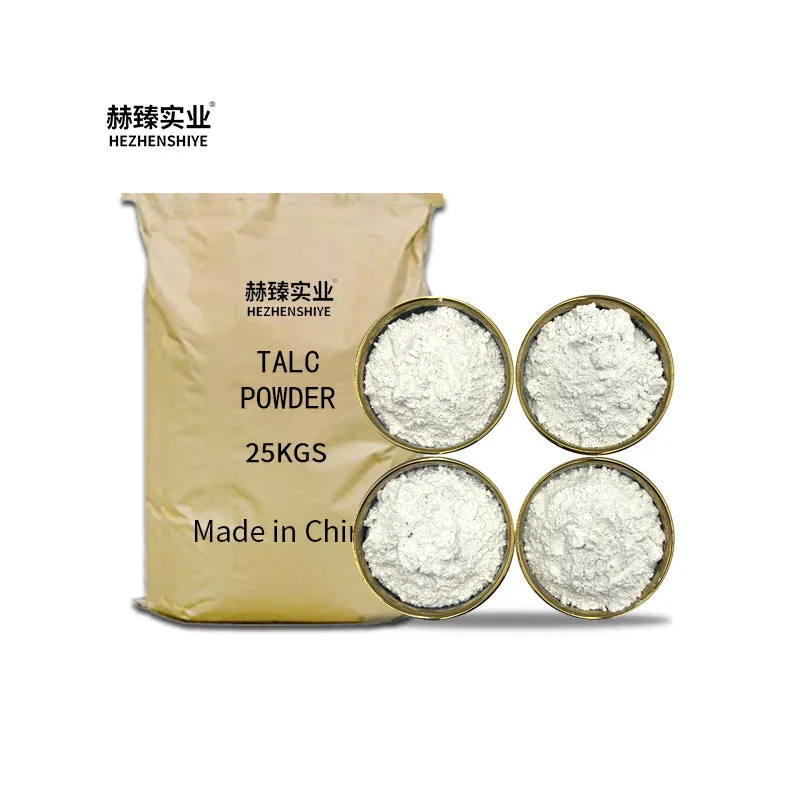
Plastic Filled Rubber Coating Calcined Talc
Product Description
Introduction to Calcined Talc for Rubber Coatings
In plastic-filled rubber formulations, calcined talc acts as a reinforcing agent, significantly improving the tensile strength, tear resistance, and wear properties of the coating. Its unique platelet structure allows for effective stress distribution, which enhances the overall mechanical performance of the material. This makes it an indispensable additive for manufacturers seeking to produce durable, high-performance rubber coatings for demanding applications such as automotive seals, industrial belts, and protective liners.
Mechanical Performance Enhancement
Moreover, calcined talc improves the processing characteristics of plastic-filled rubber coatings. It acts as a nucleating agent, promoting the formation of smaller, more uniform rubber particles during compounding. This leads to smoother, more consistent coatings with fewer defects. The resulting material exhibits superior elongation at break and modulus, making it suitable for applications that require flexibility combined with high strength. Industries such as automotive, aerospace, and construction benefit from these enhanced mechanical properties.
Aesthetic and Surface Quality
The high whiteness and purity of calcined talc also contribute to the aesthetic appeal of plastic-filled rubber coatings. It provides a clean, uniform appearance that enhances the visual appeal of coated products. This is particularly important for consumer-facing goods where surface finish matters, such as flooring, automotive interior components, and household items. The fine particle size ensures a smooth texture that can be easily pigmented or color-matched.
Chemical Resistance and Thermal Stability
Additionally, calcined talc is known for its excellent chemical inertness and thermal stability. These properties make it an ideal choice for applications requiring resistance to chemicals, heat, and UV radiation. In aggressive environments such as chemical processing plants or outdoor installations, coatings containing calcined talc maintain their integrity longer than those using alternative fillers. It also helps reduce the coefficient of thermal expansion, minimizing stress cracking during temperature fluctuations.
Conclusion and Application Versatility
In conclusion, calcined talc is a valuable addition to plastic-filled rubber coatings, offering enhanced mechanical performance, improved processing characteristics, and superior aesthetic appeal. Its versatility makes it a go-to ingredient for formulating high-quality, durable coatings across various industries. Whether used in protective coatings for pipelines, adhesion primers for rubber-to-metal bonding, or specialized sealants, calcined talc delivers consistent results. For technical specifications or custom formulations, our team provides tailored solutions to meet exact requirements.
| Cas No. | 14807-96-6 |
| Place of Origin | China |
| Color | White/Gray |
| Shape | Powder |
| Purity | 90-95% |
| Grade | industrial Grade Food Grade |
| Package | 25kg/bag,customized package |
| MOQ | 1kg |