
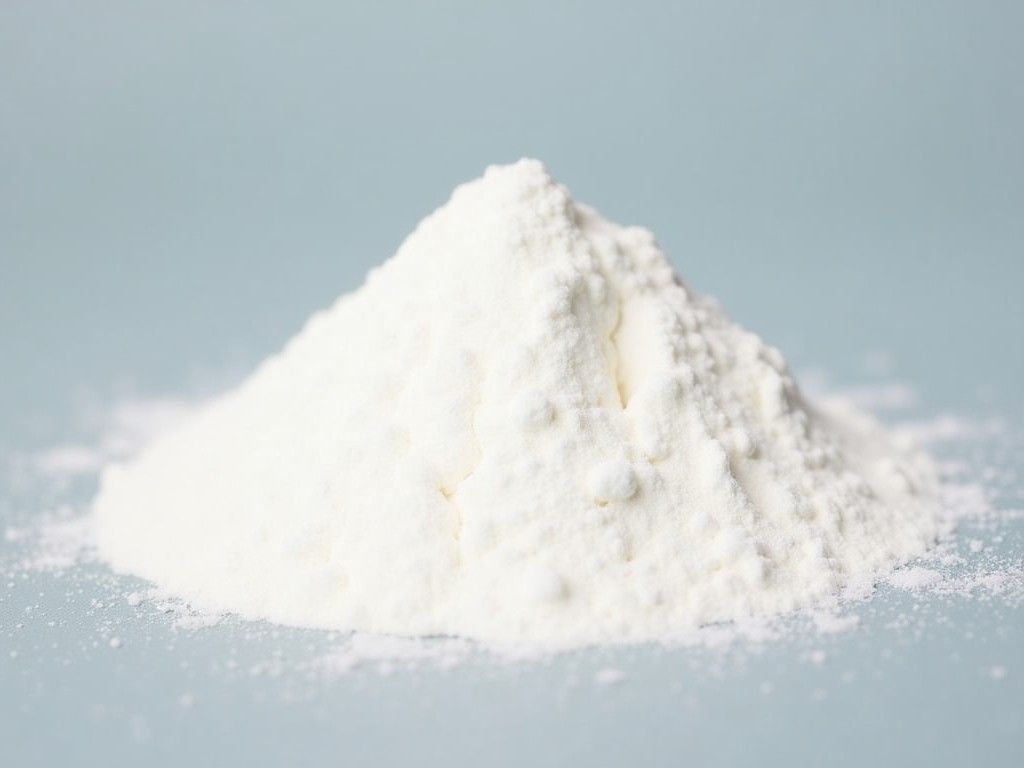
Wholesale Purified Talc Powder Manufacturer
Wholesale Purified Talc Powder Manufacturer
Purified talc powder is a magnesium silicate mineral processed to remove impurities such as iron, aluminum, and carbonates. The purification steps typically involve crushing, milling, air classification, and sometimes acid leaching or magnetic separation to achieve a specific chemical composition and particle size distribution. This material serves as a functional filler, reinforcing agent, or processing aid in various industrial formulations.
Product Description
The talc offered is supplied in bulk quantities directly from the production line, allowing customers to integrate it into continuous processes without intermediate repackaging. Its purity level is expressed as a percentage of magnesium silicate (Mg₃Si₄O₁₀(OH)₂) after removal of accessory minerals. The product is delivered as a dry, free‑flowing powder with controlled moisture content to prevent agglomeration during storage and handling.
Technical Specifications
| Property | Typical Value | Test Method |
|---|---|---|
| Magnesium Silicate Content | ≥ 98 % (wt) | X‑ray Fluorescence (XRF) |
| Particle Size (d50) | 5–15 µm | Laser Diffraction |
| Loss on Ignition (LOI) | ≤ 0.5 % (wt) | Thermogravimetric Analysis (TGA) |
| Moisture Content | ≤ 0.2 % (wt) | Karl Fischer Titration |
| pH (10 % slurry) | 8.5–9.5 | Electrometric Measurement |
| Whiteness (Hunter L) | ≥ 90 | Spectrophotometry |
Typical Applications
- Plastics compounding – improves stiffness, heat resistance, and reduces shrinkage in polypropylene and PVC formulations.
- Paints and coatings – acts as an extender and anti‑settling agent, enhancing corrosion resistance and film durability.
- Rubber manufacturing – reinforces vulcanizates, reduces hysteresis loss, and improves processing characteristics.
- Ceramics – functions as a flux and filler, lowering firing temperature and increasing green strength.
- Agricultural chemicals – serves as a carrier for pesticides and fertilizers, providing uniform particle distribution.
Quality Control & Testing
Each batch undergoes a defined inspection protocol before release. Chemical composition is verified by XRF, while particle size distribution is measured using laser diffraction to confirm conformance to the specified d50 range. Moisture and LOI are assessed by thermogravimetric methods to ensure stability during storage. All test results are recorded and available upon request as part of the product documentation.
Packaging and Shipping
The talc powder is packaged in multi‑wall polyethylene bags with an outer polypropylene liner, each bag holding 25 kg net weight. Bags are stacked on pallets, stretch‑wrapped, and secured for transport. For bulk shipments, the product can be loaded directly into pneumatic tankers or bulk containers equipped with moisture‑proof liners. All packaging materials comply with food‑grade and pharmaceutical standards where applicable.
Customization Options
- Particle size tailoring – finer or coarser grades achievable through adjusted milling and classification parameters.
- Surface treatment – optional stearic acid or silane coating to improve hydrophobicity or compatibility with specific polymer matrices.
- Additive blending – incorporation of anti‑static agents, pigments, or functional fillers per customer formulation.
- Private labeling – customized bag printing and pallet markings for brand identification.
Frequently Asked Questions
Can the particle size distribution be adjusted for specific applications?
Yes, milling time, classifier speed, and feed rate can be modified to target d50 values ranging from 2 µm to 30 µm, depending on the required performance in the end‑use formulation.
What information is needed to receive a quotation?
Please provide the desired quantity, target particle size or range, any surface treatment requirements, preferred packaging, and delivery destination. This enables accurate pricing and lead‑time estimation.
How is product consistency maintained across batches?
Statistical process control monitors key parameters such as feed rate, mill power, and classifier airflow. Real‑time adjustments keep the chemical composition and particle size within the defined specification limits.
What are the typical lead times for bulk orders?
Lead times generally range from 2 to 4 weeks for standard grades, with variations based on order size, customization requests, and current production scheduling.