
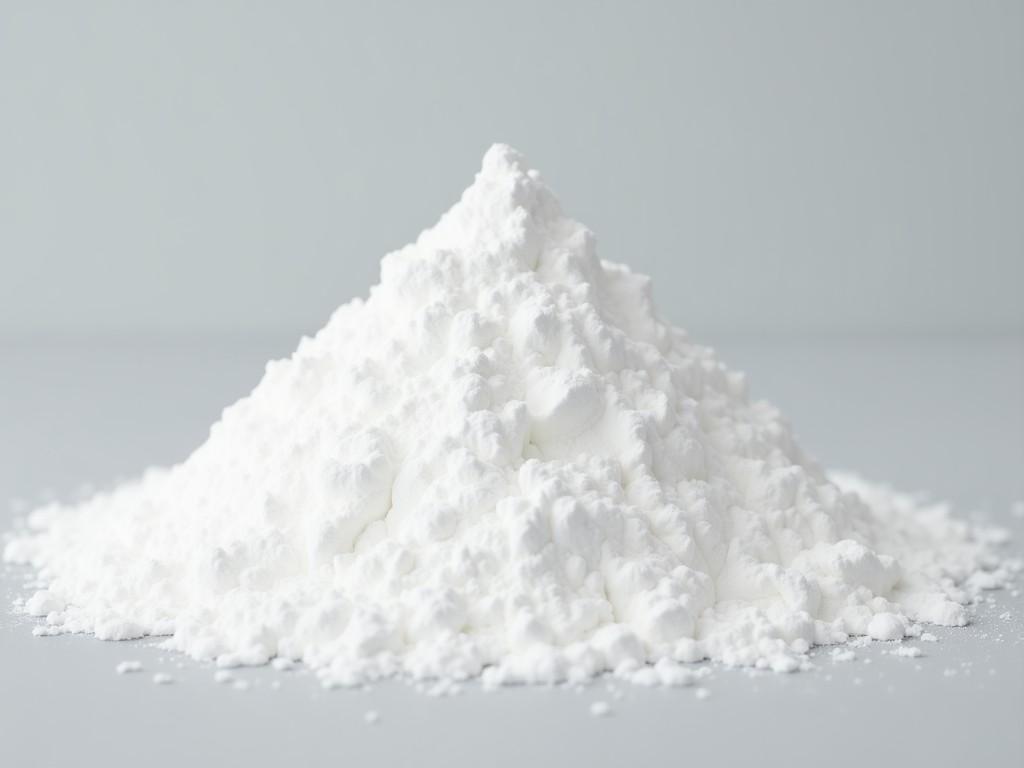
Wholesale Safe Talcum Powder Supplier
Wholesale Safe Talcum Powder Supplier
Talcum powder (talc) is a naturally occurring hydrous magnesium silicate with the chemical formula Mg₃Si₄O₁₀(OH)₂. In industrial grades, purity is expressed as the percentage of talc content after removal of associated minerals such as dolomite, calcite, and quartz.
Chemical Composition and Purity
Typical wholesale grades specify a talc basis of 95 %–99 % by weight, with the remainder consisting of trace oxides and moisture. Key impurity limits are often set for iron (Fe₂O₃) < 0.02 %, aluminum (Al₂O₃) < 0.05 %, and calcium carbonate (CaCO₃) < 0.1 %. These limits are determined by gravimetric analysis and ICP‑OES.
| Parameter | Typical Range | Test Method |
|---|---|---|
| Talc content (wt %) | 95 – 99 | Gravimetric loss on ignition |
| Moisture (wt %) | ≤ 0.5 | Karl Fischer titration |
| pH (10 % slurry) | 8 – 10 | ISO 787-9 |
| Bulk density (g/cm³) | 0.4 – 0.6 | ASTM C110 |
Particle Size Distribution and Morphology
Industrial talc is classified by its d₅₀ (median particle size) and d₉₇ (upper cutoff). For filler applications in plastics, a d₅₀ of 3–6 µm is common, whereas cosmetic grades target d₅₀ < 2 µm. Wholesale safe grades for industrial use often specify d₅₀ ≤ 10 µm with a narrow span to ensure consistent rheology.
Particle shape is typically platy, with aspect ratios ranging from 5:1 to 15:1. Scanning electron microscopy shows that the basal surfaces are relatively smooth, which influences shear thinning behavior in suspensions.
Typical Industrial Applications
- Polypropylene and polyethylene compounding – talc acts as a nucleating agent, increasing stiffness and heat deflection temperature.
- PVC cable fillers – improves electrical insulation properties and reduces cost.
- Rubber formulations – enhances tear resistance and reduces hysteresis loss.
- Paint and coatings – provides matting, anti‑settling, and barrier properties.
- Ceramic glazes – contributes to thermal expansion control and surface smoothness.
Safety Profile and Regulatory Status
Wholesale safe talc is sourced from deposits with low levels of asbestiform fibers. Suppliers provide a certificate of analysis confirming that respirable crystalline silica is < 0.01 % and that amphibole asbestos is not detected by TEM/SEM methods (detection limit 0.001 %).
The material complies with REACH Annex XVII restrictions on talc containing asbestos, and with FDA 21 CFR 184.1400 for indirect food contact when appropriate purity grades are used. For cosmetics, additional testing for heavy metals (Pb, As, Cd, Hg) < 10 ppm is typical.
Quality Control Philosophy
Each batch undergoes a defined sampling plan: one composite sample per 20 tonnes is taken for full chemical assay, particle size laser diffraction, and moisture content. Control charts track talc basis, d₅₀, and pH; any deviation beyond ±2 σ triggers a hold and investigation.
Final inspection includes a visual check for foreign matter, a sieve test for agglomerates, and a bulk density measurement. Packaging is sealed only after all parameters are within the agreed specification limits.
Packaging and Storage
- Multi‑wall paper bags with inner polyethylene liner – 25 kg net weight, suitable for palletizing.
- Flexible intermediate bulk containers (FIBCs) – 500 kg or 1000 kg capacity, with dust‑proof spout.
- Super‑sack bulk bags – 1500 kg, equipped with lift loops and optional antistatic treatment.
Storage conditions recommend a dry, ventilated area with relative humidity below 60 % to prevent caking. Temperature should be kept below 35 °C to avoid any phase changes in associated minerals.
Customization and Logistics Support
Wholesale suppliers can adjust talc basis, particle size cut‑points, and surface treatment (e.g., stearic acid coating) according to downstream process requirements. Lead times typically range from 2–4 weeks for standard grades, with express options available for urgent projects.
Technical data sheets, safety data sheets, and sample shipments are provided upon request. Documentation includes batch numbers, test results, and origin certification to support traceability.
Frequently Asked Questions
- Can the particle size be tailored to specific milling equipment?
- Yes. Laser diffraction data can be used to define a target d₅₀ and span; the supplier can adjust milling parameters and classify the product accordingly.
- What information is required before a quotation is issued?
- Required details include intended application, desired talc basis, particle size range, packaging type, order volume, and destination for freight calculation.
- Are samples available for evaluation?
- Sample quantities of up to 2 kg can be arranged, typically shipped via express courier with a corresponding SDS.
Request a Quote or Technical Consultation
To discuss your specifications, obtain a formal quotation, or arrange a sample shipment, please use the contact form below. Our technical team will respond within one business day.
Contact Supplier