
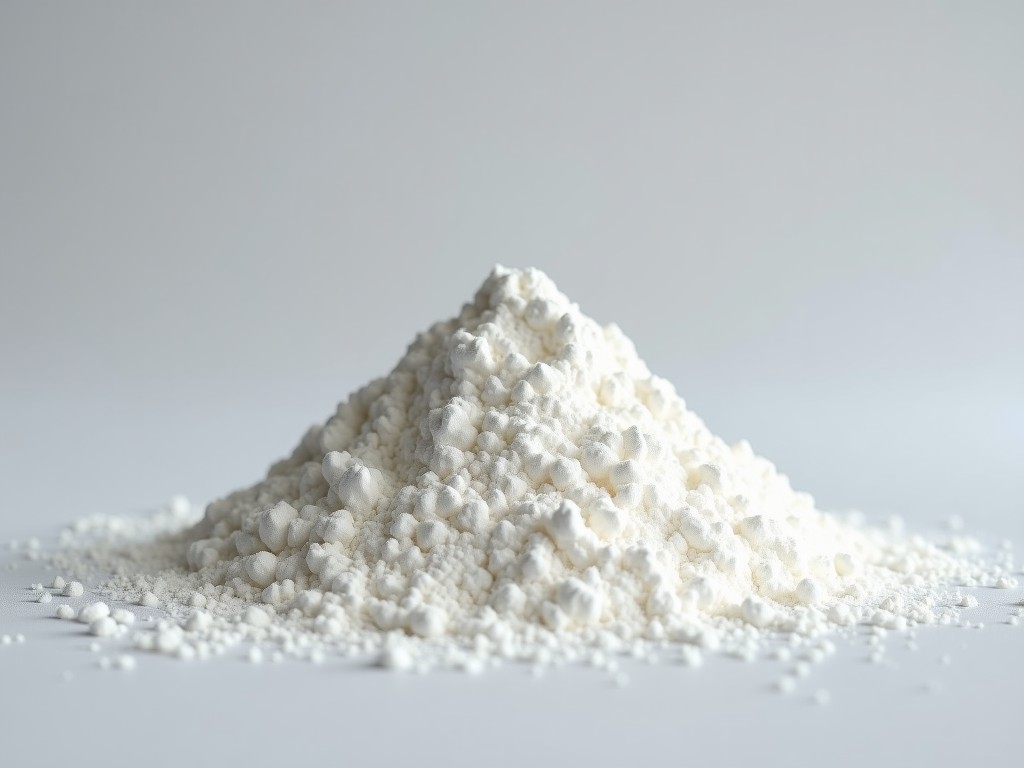
Wholesale Small Talcum Powder Service
Wholesale Small Talcum Powder Service
Talcum powder, also known as talc, is a naturally occurring magnesium silicate mineral processed to achieve controlled particle size distribution and high chemical purity. In wholesale small‑lot service, the material is milled to a tight top‑size cutoff, typically below 10 µm, and screened to remove oversized fractions that could affect downstream processing.
Typical Technical Specifications
| Parameter | Typical Value | Test Method |
|---|---|---|
| Median particle size (D50) | 5 µm (±1 µm) | Laser diffraction (ISO 13320) |
| Top size (D98) | ≤15 µm | Laser diffraction |
| Moisture content | ≤0.5 % wt | Karl Fischer titration |
| Loss on ignition (LOI) | ≤2.0 % wt | Thermogravimetric analysis (TGA) at 1000 °C |
| Bulk density | 0.45–0.55 g/cm³ | ASTM B212 |
| pH (10% slurry) | 8.0–9.5 | Electrometric measurement |
These specifications ensure consistent flowability in polymer compounding, low abrasiveness in cosmetic formulations, and minimal interference with active pharmaceutical ingredients. The low moisture content reduces risk of clumping during storage and improves shelf‑life stability.
Typical Industrial Applications
In thermoplastic masterbatch production, talc acts as a nucleating agent that increases stiffness and heat deflection temperature while reducing cycle time. The fine particle size (<10 µm) promotes uniform dispersion without causing excessive wear on extruder screws.
For pressed powders and foundations in cosmetics, the talc provides a silky feel, oil absorption, and matte finish. Its chemical inertness minimizes irritation risk, and the controlled particle size prevents a gritty sensation on skin.
In pharmaceutical tablet formulations, talc functions as a glidant and anti‑adherent, improving powder flow during die filling and reducing sticking to punches. The low LOI ensures it does not interfere with drug stability under accelerated aging conditions.
Quality Control Philosophy
Each batch undergoes systematic sampling at the mill outlet, followed by laser diffraction particle size analysis to verify D50 and D98 limits. Moisture content is measured by Karl Fischer titration on three subsamples, and loss on ignition is determined via thermogravimetric analysis under nitrogen atmosphere.
Bulk density and pH are tested on composite samples representing the full lot. Results are recorded in a batch traceability system, and any deviation from specification triggers a hold and investigation before release.
Customization Options
- Particle size adjustment: target D50 from 2 µm to 8 µm achievable via jet milling or air classification.
- Surface treatment: silane or stearic acid coating to improve hydrophobicity for polymer compatibility.
- Moisture control: optional drying to <0.2 % wt for hygroscopic applications.
- Packaging: multi‑wall paper bags with inner polyethylene liner, or bulk FIBCs with antistatic coating.
Packaging and Logistics
Standard wholesale units are 25 kg net weight bags, palletized at 40 bags per pallet (1 metric ton). For larger orders, 500 kg flexible intermediate bulk containers (FIBCs) are available, equipped with dust‑tight spouts and UV‑stabilized fabric.
All packaging materials comply with food‑grade and pharmaceutical‑grade standards where required, and are labeled with lot number, production date, and specification sheet reference.
Lead Time and Ordering Process
Typical production lead time for standard grades is 7‑10 business days after receipt of purchase order, assuming raw material availability. Customized particle sizes or surface treatments may extend lead time to 12‑18 business days due to additional milling and qualification steps.
Quotations are based on net weight, packaging type, and destination. To receive a formal quote, provide the required quantity, preferred packaging, and any special specifications such as target D50 or coating type.
Frequently Asked Questions
Can the particle size be tailored to specific application needs?
Yes. Jet milling and air classification allow adjustment of D50 between 2 µm and 8 µm, with corresponding changes in D98. The exact achievable range depends on the feed material and desired throughput.
What information is required before a quotation can be issued?
We need the requested quantity (kg or tons), preferred packaging (25 kg bags, FIBCs, etc.), target particle size or D50 range, any surface treatment requirements, and the destination port or address for freight calculation.
How is product quality verified before shipment?
Each lot undergoes full specification testing as outlined in the technical table. A certificate of analysis (CoA) is generated and attached to the shipping documentation.
Request a Quote or Technical Discussion
Our engineering team is available to review your formulation requirements and recommend the appropriate talc grade. To initiate a conversation, please use the contact form below.
Contact Us