

fumed silica performance analysis
Selecting the right rheology modifier can be the difference between a sealant that fails under environmental stress and one that maintains a permanent, airtight bond. In high-performance rubber formulations, the precision of particle distribution and surface chemistry determines the final mechanical integrity of the product.
The shift toward nanomaterials has introduced a level of reinforcement that traditional fillers cannot achieve. By manipulating the interaction between the polymer matrix and the additive, manufacturers can now customize moisture resistance, tensile strength, and aesthetic clarity without compromising functional durability.
One of the most critical tools in this process is fumed silica, a synthetic amorphous form of silicon dioxide that provides unique thixotropic properties and reinforcement. This article examines how these specialized powders are integrated into industrial sealants to solve common engineering challenges.
Structural Fundamentals of Nano-Silica
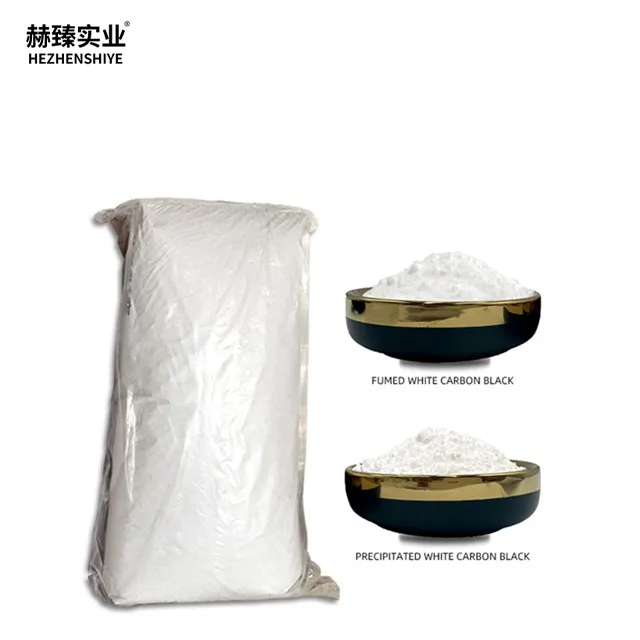
Fumed silica is produced through the flame hydrolysis of silicon tetrachloride in an oxygen-hydrogen flame. This process creates discrete primary particles that aggregate into a three-dimensional chain-like structure. This unique geometry allows the powder to create a network within a liquid or semi-solid matrix, which effectively prevents the sedimentation of other fillers and controls the viscosity of the mixture.
Unlike precipitated silica, the fumed variety has a higher surface area and a more consistent purity level (typically 95-99%). When integrated into rubber sealants, it acts as a bridge between polymer chains, significantly increasing the modulus and providing the structural stability required for vertical applications where "sagging" must be eliminated.
Mechanisms of Reinforcement in Polymers
The reinforcement provided by nano-silica is primarily a result of its high surface-to-volume ratio. In a rubber matrix, the small particle size ensures a massive contact area between the filler and the polymer. This creates strong physical and chemical bonds that inhibit the movement of polymer chains under stress, which directly translates to higher tear strength and better abrasion resistance.
Beyond simple reinforcement, these materials introduce thixotropy. A thixotropic material is fluid when shaken or stirred but thickens when standing still. For sealants, this means the product flows easily through a nozzle during application but sets quickly once in place, maintaining the bead shape and ensuring a precise seal against the substrate.
Hebei Hezhen Industrial Co., Ltd. leverages advanced processing technology to ensure these mineral powders meet strict purity and grade requirements. By controlling the particle morphology, the resulting additives can provide consistent performance across various batches, which is essential for industrial users who rely on automated dispensing systems.
Hydrophilic vs. Hydrophobic Variants
The surface chemistry of fumed silica can be modified to change its interaction with water and other polar solvents. Standard fumed silica is hydrophilic, meaning it has a high affinity for water due to the presence of silanol groups on its surface. This makes it ideal for water-based systems or applications where water absorption is a functional requirement.
The choice between hydrophilic and hydrophobic nanomaterials is the primary lever for controlling environmental resistance. Hydrophilic versions enhance water-binding capacity, whereas hydrophobic treatments replace silanol groups with non-polar organic groups, creating a barrier against moisture ingress.
In rubber sealants exposed to harsh outdoor conditions, hydrophobic varieties are typically preferred. They prevent the sealant from absorbing atmospheric moisture, which would otherwise lead to swelling, loss of adhesion, or premature degradation of the polymer matrix. This chemical tailoring allows manufacturers to specify a material that is perfectly aligned with the intended end-use environment.
Performance Impact Metrics
Evaluating the effectiveness of a functional filler requires looking at several key performance indicators (KPIs). The most critical are the impact on viscosity, the increase in tensile strength, and the change in hardness. When replacing standard fillers with nano-silica or white carbon black, a significant reduction in filler loading is often possible while achieving the same or better mechanical properties.
The following evaluation index demonstrates the relative influence of different nanomaterials on sealant performance. While values vary by formulation, the trend shows that fumed silica typically offers the highest impact on thixotropic control and moisture barrier efficiency.
Figure 2. Relative Performance Index of Functional Fillers
Practical Application Scenarios
In a typical industrial setting, such as the production of automotive weatherstripping or aerospace gaskets, the requirement for both functionality and aesthetics is paramount. Here, white carbon black is often utilized alongside fumed silica. While fumed silica manages the flow and structural stability, white carbon black provides the distinct white coloration and similar reinforcement benefits, ensuring the final product looks professional while meeting rigid technical specifications.
Another critical scenario is the formulation of high-grade construction sealants. In these cases, the material must withstand extreme temperature cycles and UV exposure. By integrating hydrophobic nano-silica, manufacturers can ensure that the sealant does not degrade when exposed to rain or high humidity, thereby extending the service life of the building envelope and reducing maintenance costs.
Evolution of Functional Powder Processing
The industry is moving away from bulk filling toward "precision dosing." Historically, mineral powders were added in large quantities to reduce costs, often resulting in brittle materials. Modern processing focuses on the synergistic effect of combining different powders—such as Kaolin, Talc, and Silicon Dioxide—to create a composite filler system that optimizes both cost and performance.
Technological advancements in milling and surface treatment have allowed for tighter control over purity. With industrial grades now reaching 95-99% purity, the risk of contamination—which can cause premature curing or "seeds" in clear sealants—has been drastically reduced. This level of control is a hallmark of modern non-metallic mineral processing.
The trend toward sustainability is also driving the development of more efficient dispersion methods. Reducing the energy required to mix high-viscosity powders into polymers not only lowers the carbon footprint of the manufacturing process but also prevents the mechanical degradation of the polymer chains during the mixing phase.
Material Selection Framework
Choosing the correct powder requires a balance between the desired rheology, the environmental exposure of the final product, and the budget. A common mistake is selecting a filler based solely on purity without considering the surface chemistry (hydrophilic vs. hydrophobic), which can lead to total product failure in moist environments.
Engineers should evaluate the trade-off between reinforcement and processability. While higher loading of fumed silica increases strength, it can make the mixture too viscous for standard pumping equipment. This necessitates a calculated approach to filler ratios, often combining nano-silica with other materials like Calcium Carbonate or Diatomite to maintain flow.
The following framework provides a qualitative comparison of common functional fillers used in sealant formulations to guide the selection process based on specific project requirements.
| Filler Type | Primary Role | Moisture Interaction | Relative Cost |
|---|---|---|---|
| Fumed Silica | Thixotropy & Strength | Customizable | High |
| White Carbon Black | Reinforcement & Color | Low Affinity | Medium |
| Calcium Carbonate | Bulk Filling & Stability | Hydrophilic | Low |
| Kaolin Clay | Opacity & Texture | Moderate | Low |
| Talc Powder | Lubrication & Flow | Hydrophobic | Medium |
| Diatomite | Absorption & Porosity | High Affinity | Medium |
Questions & Answers
Fumed silica is produced via flame hydrolysis in a gas phase, resulting in a non-porous, chain-like structure with extremely high surface area. Precipitated silica is made through a chemical precipitation process in a liquid phase, producing more spherical, porous particles. Fumed silica is generally superior for controlling thixotropy and viscosity in sealants, whereas precipitated silica is more common in tires and toothpaste.
Hydrophobic fumed silica is treated to replace surface hydroxyl groups with non-polar groups. This prevents the sealant from absorbing water from the air or the substrate. In practical terms, this prevents the sealant from swelling or losing its adhesive bond when exposed to rain or high humidity, significantly increasing the durability of the seal in outdoor industrial applications.
Not directly. While both provide reinforcement and can be used in rubber sealants, they serve different primary roles. Fumed silica is mainly used for its rheological properties (controlling flow and sag), while white carbon black is often chosen for its reinforcing strength and its ability to provide a clean, white aesthetic. They are most effective when used together in a balanced formulation.
For most industrial applications, a purity of 95-99% is required. Higher purity ensures that there are no metallic impurities or uncontrolled organic residues that could interfere with the curing process of the rubber or polymer. Impurities can lead to inconsistent viscosity or a reduction in the final tensile strength of the sealant.
Standard industrial packaging is typically 10-25kg per bag, though customized packaging is often available for larger contracts. Minimum Order Quantities (MOQ) can be as low as 1kg for sampling and R&D purposes, allowing manufacturers to test different grades before committing to full-scale production runs.
The aggregated, chain-like structure of fumed silica creates high resistance to flow when at rest. To achieve proper dispersion, high-shear mixing is required to break these aggregates and distribute the primary particles throughout the polymer matrix. Poor dispersion can lead to "clumps," which act as stress concentrators and can cause the sealant to fail prematurely under load.
Final Thoughts
The integration of nano-scale fillers like fumed silica and white carbon black has transformed the capabilities of industrial sealants. By focusing on the intersection of surface chemistry and particle morphology, manufacturers can create products that are not only stronger and more durable but also easier to apply and visually consistent.
As the non-metallic mineral industry continues to evolve, the shift toward specialized, high-purity powders will allow for even more tailored solutions. For those formulating high-performance rubbers, the priority remains a precise balance of hydrophilic and hydrophobic properties to ensure long-term reliability in any environment.