


Silica Fume Performance Analysis
The demand for high-performance concrete and advanced refractory materials has shifted the focus of civil engineering toward ultra-fine pozzolanic additives. Among these, silica fume stands out as a critical component for achieving extreme durability and compressive strength in infrastructure projects.
Unlike standard mineral fillers, these micron-sized particles act both physically and chemically to densify the matrix of cementitious composites. This transformation is particularly vital in environments where chloride penetration and chemical erosion threaten the structural integrity of bridges, dams, and industrial foundations.
Understanding the selection criteria and technical application of these functional powders allows engineers to optimize material costs while maximizing lifespan. This analysis explores the mechanics of silica fume and how its integration impacts modern industrial manufacturing.
Particle Morphologies and Material Origin

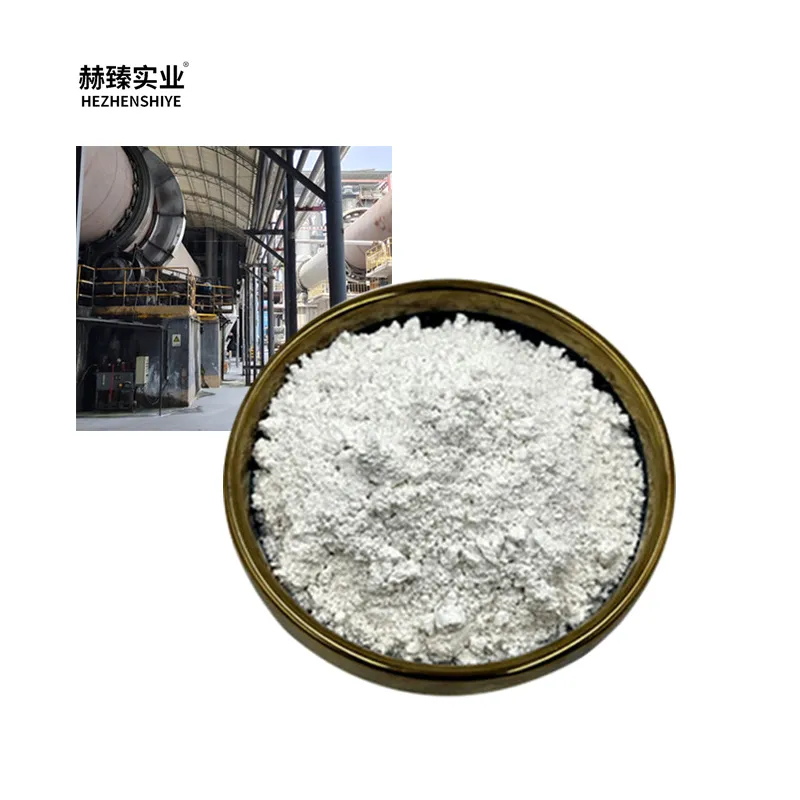
Silica fume is primarily produced as a byproduct of the reduction of quartz with carbon in electric arc furnaces. The resulting ultra-fine powder consists of spherical particles that are significantly smaller than cement grains—typically 100 times smaller. This unique geometry allows the powder to fill the microscopic voids between cement particles.
The purity of the silicon dioxide (SiO2) content is the primary determinant of its efficacy. In the context of non-metallic mineral processing, achieving a consistent chemical composition is essential to prevent unwanted reactions that could lead to structural cracking or instability in the final cured material.
The Pozzolanic Reaction Mechanism
The primary value of silica fume lies in its pozzolanic activity. When mixed with water and cement, the calcium hydroxide (CH) produced during cement hydration reacts with the amorphous silica in the fume. This reaction transforms a relatively weak and soluble compound into calcium silicate hydrate (C-S-H), the main binding phase responsible for strength.
Beyond chemistry, the "filler effect" provides immediate physical benefits. By occupying the spaces between larger aggregates and cement grains, it reduces the permeability of the concrete. This prevents the ingress of water and aggressive ions, which is critical for protecting steel reinforcement from corrosion.
For manufacturers specializing in industrial fillers and functional powders, such as those integrated into Hebei Hezhen Industrial Co., Ltd.'s processing capabilities, the goal is to ensure that the powder remains unagglomerated. This ensures that the maximum surface area is available for reaction, maximizing the strength-to-weight ratio of the resulting composite.
Performance Optimization Metrics
Evaluating the quality of a functional powder requires more than a simple purity check. Engineers must look at the specific surface area (measured by the Blaine method) and the carbon content, as excessive carbon can lead to air entrainment issues and reduce the overall compressive strength.
The efficiency of silica fume is not defined by the volume added, but by the optimization of the particle size distribution relative to the cement grade, creating a dense, impermeable microstructure.
When integrating these materials into a mix, the water-to-binder ratio must be carefully managed. Because the ultra-fine particles increase the water demand to maintain workability, the use of high-range water reducers is typically required to prevent shrinkage and ensure a smooth finish.
Comparative Impact on Matrix Density
Comparing silica fume to other mineral additives like fly ash or ground granulated blast-furnace slag reveals a stark difference in reaction speed and densification. While fly ash improves long-term strength and workability, silica fume provides a rapid increase in early-age strength and superior resistance to chemical attack.
The following relative assessment illustrates how different functional powders influence key performance indices. These indices represent qualitative scoring based on common industrial application outcomes rather than a single fixed metric.
Figure 2. Relative Performance Index of Functional Mineral Powders
Critical Application Scenarios
In high-exposure environments, such as marine piers or chemical processing plants, the use of silica fume is non-negotiable. The material's ability to block the capillaries in concrete prevents the penetration of seawater salts, which otherwise would cause the internal steel to rust and the concrete to spall.
Beyond construction, these functional powders find use in specialized refractory linings. When combined with other mineral series, they help create heat-resistant barriers that can withstand extreme thermal cycling without losing structural cohesion, making them essential for industrial kiln and furnace manufacturing.
Future Shifts in Functional Powders
The industry is moving toward "tailored mineralogy," where the blend of powders is customized based on the specific environmental stressors of a project. We are seeing a trend where silica fume is used in tandem with other minerals—such as calcium carbonate or bentonite—to balance cost and performance.
Environmental regulations are also driving the adoption of carbon-neutral additives. The challenge for producers is to maintain the high purity levels of SiO2 while optimizing the energy intensity of the processing and collection phases.
As digital twin technology enters construction, the precise dosing of mineral additives will be managed by AI to predict long-term durability. This requires suppliers to provide extremely tight technical specifications and consistent batch-to-batch quality, a standard pursued by established non-metallic mineral processors.
Material Selection Framework
Choosing the right mineral powder involves a trade-off between immediate strength, long-term durability, and overall project budget. While silica fume offers the highest performance, its higher cost per ton means it is typically used as a partial replacement for cement rather than a bulk filler.
The selection process should begin with an analysis of the environmental exposure: is the structure facing saltwater, sulfuric acid, or extreme heat? Each scenario dictates a different requirement for particle size and chemical purity.
To simplify this decision, the following framework compares common industrial fillers based on their primary functional contribution to a mineral composite.
| Material Type | Primary Function | Key Limitation | Ideal Scenario |
|---|---|---|---|
| Silica Fume | Permeability Reduction | Higher Cost | Marine Infrastructure |
| Kaolin | Plasticity/Filling | Moderate Strength | Ceramics/Paper |
| Bentonite | Water Binding | High Shrinkage | Drilling/Sealing |
| Calcium Carbonate | Volume Filler | Low Reactivity | General Plastics |
| Talc Powder | Lubrication/Softness | Poor Bonding | Cosmetics/Polymer |
| Diatomite | Absorption/Filtration | Fragility | Water Treatment |
Questions & Answers
Unlike sand, which acts as a structural aggregate to provide bulk and stability, silica fume is a pozzolanic additive. It is significantly smaller in particle size and reacts chemically with the cement hydration products to create a denser, stronger matrix. While sand fills large gaps, silica fume fills the microscopic pores between cement grains.
Typically, silica fume is used as a replacement for 5% to 15% of the total cement weight. Exceeding 15% can lead to increased water demand and a higher risk of plastic shrinkage cracking. The exact amount depends on the desired compressive strength and the specific environmental conditions the structure will face.
While it can be used, it is often overkill for standard residential slabs. It is most cost-effective in "critical" areas, such as basement walls in high-water-table areas or driveways exposed to heavy chemical de-icing salts, where its ability to prevent penetration provides a significant long-term advantage over standard concrete.
High carbon content (often found in lower-grade fumes) can act as an air-entraining agent, creating unwanted bubbles in the concrete. This increases permeability and reduces the compressive strength. High-purity, "densified" silica fume is preferred to ensure consistent performance and structural reliability.
Undensified silica fume is extremely light and dusty, making it difficult to handle and prone to loss during transport. Densified silica fume has been processed to increase its bulk density, making it easier to store, transport, and dose accurately into mixing equipment without losing material to the wind.
It is often paired with fly ash to combine the early strength of silica fume with the long-term strength and workability of fly ash. In some industrial ceramics, it may be blended with kaolin or talc to achieve specific thermal expansion coefficients and surface smoothness requirements.
Final Thoughts
The integration of silica fume into modern industrial materials represents a fundamental shift toward durability-centric engineering. By leveraging both the filler effect and the pozzolanic reaction, manufacturers can create structures that resist the harshest environments on earth.
As the industry evolves, the synergy between different functional powders—from mica flakes to silicon dioxide—will continue to define the boundaries of material science. Success lies in the precision of the mineral processing and a deep understanding of the chemical interactions within the composite matrix.